





Connecting the Dots with Suzane Lima Costa (Letters from Indigenous Peoples to Brazil project)
CtD_SuzaneCosta_WebsiteThumbnail.001
Letters as proof of life: 15 years rescuing Indigenous voices from colonial archives.
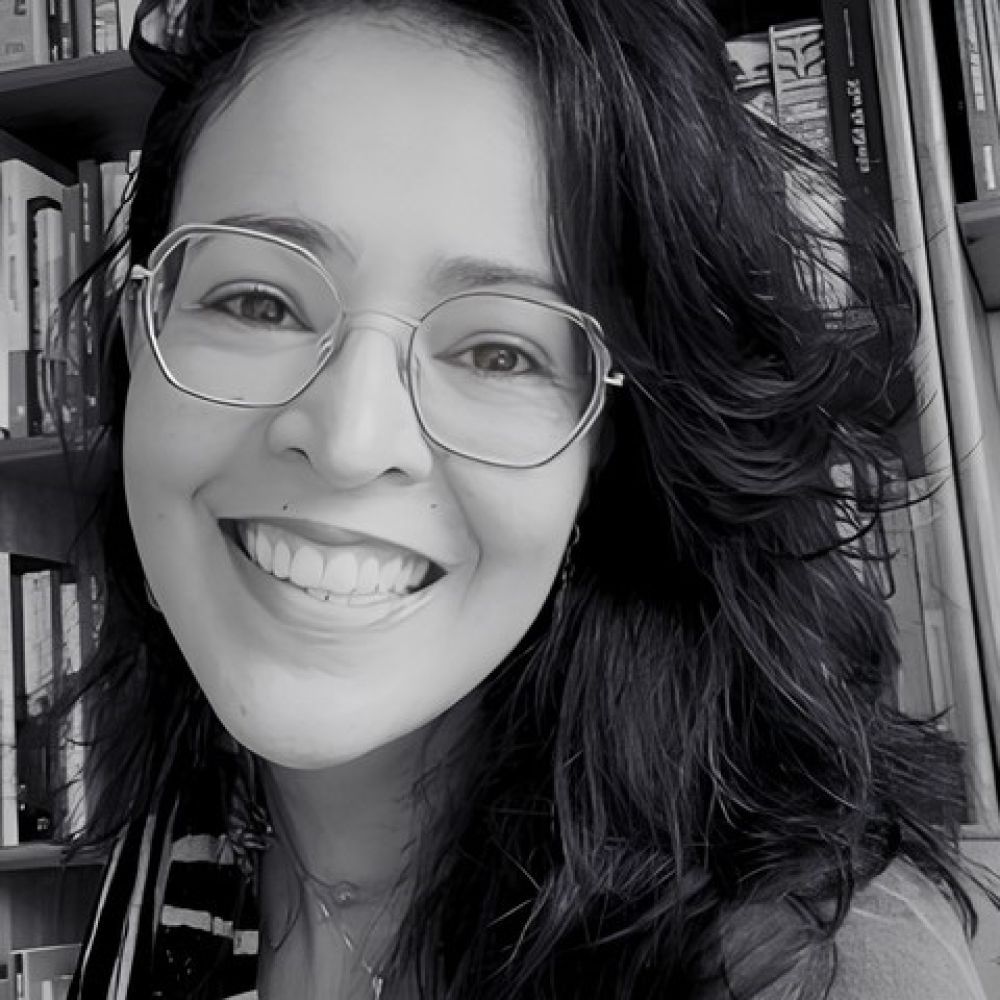
Suzane Lima Costa is a professor at the Federal University of Bahia, a researcher at CNPq, and coordinator of the project Letters from Indigenous Peoples to Brazil — an initiative that for 15 years has been collecting, organizing, and making publicly available letters written by Indigenous Peoples throughout different periods of Brazilian history.
The project, which now has more than 1,300 letters in its online archive, proposes a different reading of history, one that can only emerge in parallel with rescuing the Indigenous voices that colonial archives tend, by their very construction, to render invisible.
Azimuth met with Suzane Costa in Lisbon during a research mission that also included visits to other European archives in places such as The Hague and London, where the project team continues to rediscover Indigenous Peoples as authors. This is work for the general public, made available online, but the team also wants to bring it to schools and younger generations. It is, after all, an ambitious challenge, but one that is more necessary than ever: to unlock other imaginaries, to look at our place in the world in a different way.
Archives and Letters
Azimuth World Foundation
You are currently visiting archives in Europe, including in The Hague, London, and Lisbon, as part of your research. What brought you here, and what are you looking for in these colonial archives?
Suzane Lima Costa
I’m here because of a project called Letters from Indigenous Peoples to Brazil, which started 15 years ago. To explain the current stage of this research, I must talk about the journey that brought us to this point.
I am a professor at the Federal University of Bahia and a researcher with CNPq. My first encounter with this topic occurred even before I established a formal relationship with the university. At the time, I was working as a teacher in the Indigenous education program and was still pursuing my master’s degree. I taught in villages, training Indigenous teachers.
One day, as I was finishing one of my classes, I heard the students talking about a meeting they were about to hold, where they planned to write a letter. I asked to participate in this collective meeting, and they agreed. It was then that I witnessed, for the first time, the collective drafting of a letter addressed to the governor of the state of Bahia, in Brazil. In the letter, the Pataxó Indigenous People expressed what kind of Indigenous school they desired, at a time when this process was still in its early stages. This took place in 2007, almost twenty years ago.
That experience was very impactful, it was something entirely new to me. I was left with many questions after that meeting: was this a recurring practice—writing collectively in this way? Was it a practice specific to the Pataxó? Was it practiced by other Indigenous Peoples?
I was also struck by the format in which this collective writing was carried out, with everyone gathered together, as in an assembly. They elected the person who would be responsible for writing down what was discussed and agreed upon collectively. On that occasion, they invited me to assist Anari, a Pataxó Indigenous woman. While I took notes, Anari organized the final text based on what had been decided by the group. That was my first experience with this type of meeting.
View this post on Instagram
When I conducted an initial survey afterwards, I realized that this was a recurring practice. Many communities, belonging to different ethnic groups and situated in diverse contexts, carried out this process of collective writing. Through this initial and basic survey, I found nearly a hundred letters, dating from different periods in Brazilian history. It was at that moment that I thought: we need a deeper understanding about how this practice came to be.
Most of the letters identified in these surveys were signed collectively—for example, “the Pataxó People.” In other cases, numerous signatures were featured—seventy, eighty names—belonging to different individuals from the same People. There were also letters written on behalf of the collective—beginning with phrases such as “We are gathered here…”—and signed only by the chief. Thus, the very forms of signature and of establishing the document’s legitimacy revealed different modes of collective authorship.
Later, while conducting more in-depth studies, I found existing research that explored Indigenous letters, but it was focused on a very specific topic: the so-called letters in the Tupi language. These documents are widely referenced in some studies, but they are not yet taught in schools in Brazil, unfortunately. These are letters written in Tupi in the 17th century, between 1645 and 1646, exchanged among Potiguara chiefs during the conflict known as the Sugar War in colonial Brazil. The Potiguara were then considered a kind of “Indigenous elite” and exchanged correspondence because some groups fought alongside the Portuguese, while others sided with the Dutch. In many of these letters, one leader sought to convince the other to change sides and join his cause.
Within this broader group of studies I was then able to identify records of a 17th-century Indigenous assembly that had a similar format to the contemporary meeting I had witnessed. The work of some Brazilian historians helped me greatly in this research, even though a large part of these studies did not directly address Indigenous writing. These records show us that collective writing was not an uncommon practice. In other words, it is not a recent or exclusively contemporary phenomenon. Based on these surveys and research, I then proposed the creation of a research group.
View this post on Instagram
At first, it wasn’t easy getting this project off the ground. My background is in Literature, not Anthropology. When I shared the proposal with fellow anthropologists, their initial reaction was negative. They told me: “No, this is a false problem. These letters weren’t written by Indigenous people.” In fact, this is one of the major issues that comes up regarding the Indigenous historical subject: the invalidation of his or her voice, as if they were not the ones producing it.
Even so, this rejection of my proposal was also productive. Instead of looking at rejection as a reason to quit, you can use it as a movement that sparks new questions. So at this point I began asking myself: why do Indigenous people sign these letters, if someone else is responsible for the physical writing of the text?
Around this time, Rafael Xukuru-Kariri joined the project. Meeting him was very significant. When we met, I asked Rafael if Indigenous people were, in fact, the ones writing these letters. Right away, Rafael told me: “Of course! I was writing letters like these when I was 10 years old. My parents gave me that role and asked me to be a messenger.” In this role, he was not responsible for the content of the message, nor was he the author of collective decisions. Rather, he was a vehicle for recording those decisions. It’s usually the most literate people in the community who take on this role. Rafael, who is acutely focused on archival work, played a fundamental role in all of this process, as he conducted our first major systematic survey of letters, through which we identified over a thousand documents produced between 1970 and 2020.
It was at this point that Rafael and I found an unpublished letter, written in 1654 by Antônio Paraupaba, that was being kept in an archive in The Hague. When we gained access to this document, it was written entirely in Old Dutch, which initially made deciphering it quite difficult. However, we knew it was a letter written by Paraupaba because in it we identified words of Indigenous origin, such as “caraíba.” Locating this document was challenging. In fact, researchers at Leiden University reacted with surprise upon learning of it, even though they study letters in the Tupi language and the presence of Indigenous people in the Netherlands. “My God, we can’t believe this has been right in front of us this whole time!”, they said.
The way we searched for and found this letter was also very significant. Our approach to the archives stems from an effort to give voice to what has been silenced or ignored over time. I had a particular interest in finding evidences of female presences—a search that continues to this day. That is why we conducted our research using the name “Paulina,” in reference to Paulina Paraupaba, the wife of Antônio Paraupaba. That is how we located the letter: in it, Antônio Paraupaba mentions Paulina Paraupaba while writing to Johan de Witt, who held a position equivalent to that of prime minister. In the correspondence, he requests permission to write to Paulina, expressing his desire to meet her and find out where she was. Based on this information, we came to understand that he was alone at that time—a conclusion that contrasts with previous interpretations of Antônio Paraupaba’s trajectory.
View this post on Instagram
This letter raised some new questions and reinforced others that were already part of our research focus. Questions that we had been investigating through a review of the literature on the topic, produced by scholars we hold in high regard, such as Professor Bartira Ferraz, Professor Bruno Miranda, Professor Huisman, Professor Rafael Ale Rocha, and Professor Eduardo Neumann. These researchers had already pointed to these interpretive possibilities. However, this mention – of this specific name – became a distinguishing factor: this was a letter that clearly listed an addressee and that clearly pointed to an Indigenous authorship being affirmed within that context.
This discovery changed the way we looked at our work and strengthened our desire to think of new ways of imagining the archive. Entering an archive involves dealing with a system organized according to a logic that historically served the interests of a colonial empire. If the archive is built according to these interests, it tends to preserve what somehow justifies and strengthens the maintenance of these powers throughout history. For this reason, it is necessary to maintain a watchful eye, for, in truth, we seek what often should not be there—or what has been silenced.
In this sense, everything interests us, including the physical absence of a letter. We work with the expanded concept of epistolary community, proposed by Lindsay Stanley. This concept encompasses everything involved in the practice of letter-writing, even the physical non-existence of the document, the traces of its existence. For example, I came to Portugal in search of the letters of Diogo de Souza, which, to date, have not been located. In Brazil, there is the Resgate Project, responsible for conducting surveys of much of the documentation related to Brazil that is preserved in Portugal. However, there are still a number of boxes and materials that are not properly catalogued, and it was precisely within this batch that I sought to conduct my investigation.
And it was precisely among these documents, while searching for Diogo de Souza’s letters, that I came upon a document associated with a priest. This document is cataloged as a letter written by Bishop Caetano to Queen Maria I. In this correspondence, the bishop describes the situation faced by Indigenous people in Pará, and warns that if no immediate actions were taken by the queen, these populations could be wiped out. In this context, he recounts the complaints presented to him by Diogo de Souza. Then, among these documents, there is a letter from Diogo de Souza himself, in which he describes the situation and questions the lack of response to his demands. At one point, he writes: “Why are my complaints not being heard? I haven’t received any response to my petitions.” He also describes the deplorable conditions in which these people lived.
What is particularly significant is that the Resgate Project has copies of this material in Brazil, but they are in very poor condition. Some sections barely legible. Without access to the original document, it wouldn’t be possible to make out certain key elements. If I hadn’t come all the way here to Portugal, I wouldn’t have been able to identify Diogo de Souza’s signature. These signatures are decisive, as they allow us to affirm the existence of an authorial body of work linked to this individual. It is not merely a matter of mediation, of using a scribe or messenger. There’s an actual signature there, which confirms this authorship.
View this post on Instagram
Azimuth World Foundation
And how does this process work? Does the project team sit down, open boxes, and go through each document?
Suzane Lima Costa
Generally speaking, yes. It is work that involves reading and interpreting manuscripts, drawing on knowledge related to paleography and philology—but also engaging with historical and anthropological approaches, which help situate these documents within broader contexts of production and circulation. These are highly complex fields. I come from a background in Literature and have been on a learning journey myself, supported by a dialogue with more specialized colleagues, such as Prof. Arys Sacramento and Prof. Rosineide Duarte. Reading the handwriting itself takes time, and there is the added challenge of Old Portuguese.
At the same time, my background in Literature also shapes the way I approach this material. There is a whole approach that considers the tensions between the documentary and the fictional, not in the sense of opposing them, but of perceiving how imagination, mediations, and gaps permeate what has been recorded. Working with these documents also involves dealing with what is not explicitly present—formulating hypotheses, reconstructing contexts, and following clues.
In the case of Diogo de Souza, we know that this is not exactly unpublished documentation. There is a mention in the work of Prof. Rafael Ale Rocha, for example. The contribution of our project is precisely to highlight something that has not always been emphasized: Indigenous participation in these processes.
This is an important point—recognizing that many Indigenous people, at different moments in Brazil’s history, were involved in practices associated with literate culture.
And participating in literate culture is not limited to mastering writing in the colonial way. There are dimensions that go beyond—and even predate—that. For example, the very act of turning to someone to draft a petition already indicates an awareness of rights. Records of this kind have existed since the late 17th century. The archive, in this sense, is merely a starting point. Our work also focuses on what is not explicitly recorded: the indirect evidence, the silences, the traces—everything that fell through the cracks.
Azimuth World Foundation
Apart from Paraupaba and Diogo de Souza, have you found other Indigenous authors in European archives?
Suzane Lima Costa
Yes—and that is one of the most interesting aspects of our research. As we delve deeper into the archives, these names begin to appear more frequently, albeit in a scattered manner.
One example is Antônio Marapirão, author of two letters from 1649 addressed to King João of Portugal. These are political documents in which he presents himself as a leader, a “chief Indian,” and, among other issues, takes a stand against the enslavement of Indigenous people.
But what is most important is to realize that he is not alone. There is a broader set of records pointing to Indigenous participation in writing practices, particularly through letters and petitions.
In this regard, the presence of Indigenous women—such as Josefina, Teresa Joaquina, Apolónia, and Joana Maria—who dictated letters and petitions addressed to the Portuguese monarchy is also noteworthy. Not only do these documents reveal forms of political participation mediated through writing, they also assert positions and serve the purpose of claiming for rights.
When we bring these traces together, the picture expands considerably. In a preliminary survey, I have already identified more than a hundred names referenced and about 30 petition letters throughout the 18th century. This moves us away from the idea of isolated cases and points to a broader and continuous set of practices of Indigenous participation in written culture.
Azimuth World Foundation
There is no awareness—in Portuguese schools, among Portuguese students—that an Indigenous person had the ability to negotiate with the king in this way.
Suzane Lima Costa
Exactly—and it’s important to remember that the king met with Indigenous people. And this isn’t an isolated case. There are records of other names that navigated these circles. For example, I’m trying to locate a letter from Domingos Pessoa Perrasco Arcoverde, which is likely in the “Reino” series. It is a very extensive collection—27 boxes—and, so far, I have only been able to consult a portion of it. Even so, I have already found his signature in the book of royal grants.
This type of research requires persistence. It is very meticulous work, pieced together from fragments. But once we begin putting all these names together, it becomes clear that quite a few Indigenous people went through these processes.
The very fact that a name appears in a book of royal grants is significant. These were definitely not records designed to highlight an Indigenous presence—yet it is there. And this suggests that these individuals were, to some extent, recognized as valid interlocutors within that structure.
At the same time, this does not imply equality. There is a difference between being part of the records and having one’s voice fully recognized. This tension is not merely historical—it persists. Even nowadays, in Brazil, certain groups—especially Indigenous people, Black people, and, even more so, Indigenous and Black women—face challenges when attempting to have their voices legitimized in institutional spaces.
So, looking at these archives is a way to understand both the forms of presence and the limits of this recognition.
View this post on Instagram
Peoples As Authors
Azimuth World Foundation
The creation of a collective letter is fascinating. In our Western framework, a letter is something intimate, personal, and related to the individual. Here, there seems to be an intimacy, but a collective one. Does this express a dichotomy between the Western world and the Indigenous world?
Suzane Lima Costa
It’s a very interesting question, because it directly challenges our idea of what a letter is. I come from a background in Literature; I study literary genres, and the most widespread notion of a letter is precisely that: a space of intimacy, of individual expression.
When we look at Indigenous works, especially those rooted in oral traditions, these notions begin to shift. As they transition to the written record, these forms of expression do not simply adapt to the “letter” genre—they reconfigure it. Instead of an isolated “I,” we often find a “we.” And this “we” does not eliminate the dimension of affection or subjectivity; on the contrary, it reorganizes it in a collective way.
You can see this very clearly in contemporary letters, for example, which begin with phrases such as “We, the Indigenous people, gathered here” or “We, the women gathered here.” Throughout the text, however, there are shifts in tone: direct interjections, vocatives, and questions emerge that invite the reader into a closer dialogue. There is a letter addressed to Dilma Rousseff that illustrates this well—at one point, the authors ask: “But Dilma, aren’t you a mother? Have you ever seen your child suffer?” This kind of shift creates a very particular closeness.
For this reason, when reading these letters one must pay attention to their internal dynamics. Often, the text is constructed in a collective voice, even though it’s signed by a single person. There is an interesting dynamic here: the signatory assumes formal responsibility, yet speaks on behalf of a collective.
If we look at it from a stricter definition of genre, we could say that these texts resemble manifestos. But they retain fundamental elements of the letter: they have an addressee, an address, a salutation, and, above all, a dialogue is at their core.
This might be one of the main points: when it comes to textual genres, the letter is among the most explicitly conversational. And this resonates deeply with Indigenous forms of expression, in which the construction of meaning involves listening, exchange, and relationship. Even in contexts of conflict and violence, there is often an openness to dialogue, an invitation: “let’s talk.”
In this sense, these letters are not merely documents or political statements. They are also spaces for dialogue. And perhaps, on many occasions, they were one of the primary means through which Indigenous voices managed to become part of written culture, and therefore to establish a dialogue.
View this post on Instagram
Azimuth World Foundation
And how has Indigenous authorship evolved over time?
Suzane Lima Costa
It isn’t fixed. It changes according to historical contexts, or to the way the writing is mediated. In older documents, for example, we find very evident traces of these mediations: there are records signed with an “X,” indicating that the text was dictated; in other cases, collective formulas appear, such as “The Indians say…,” without an individual signature.
At the same time, there are also documents signed by Indigenous people who held positions recognized by the colonial administration—especially those who received grants or held offices. In these cases, authorship appears in a more individualized form, albeit embedded within very specific power structures.
It is interesting to observe how this has evolved over time. In the 20th century, particularly from the 1960s and 1970s onward in Brazil, collective signatures became more frequent, associated with more organized forms of political organization. More recently, this has expanded into digital media, where this collective dimension is maintained despite the change in formats.
But at the same time, this doesn’t mean that individual authorship disappears. In a preliminary survey, we have already identified a significant number of letters signed by Indigenous people in their own names, which shows that these forms—collective and individual—do not replace one another, but coexist.
Therefore, when we speak about the People as author, we are not referring solely to the final text, to the letter itself. We are also interested in what comes before that: the political act of gathering, deliberating, constructing a common voice, and deciding how it will be articulated. Authorship, in this sense, is a process—and not merely a signature.
View this post on Instagram
Brazil As Addressee
Azimuth World Foundation
Brazil is the addressee of these letters. But who is this “Brazil” to whom Indigenous People are writing?
Suzane Lima Costa
Currently we have about 1,300 letters collected on the website, and the very name of the project—Letters from Indigenous Peoples to Brazil—arises from this recurring theme. In many texts, this call appears explicitly: a summons to Brazil to enter into conversation. And it is not a distant conversation—often, it is constructed as something direct, almost intimate.
In several cases, the formal addressee is the President of Brazil, across different historical periods, which positions him or her as a recurring interlocutor. But there is an interesting shift within the letters themselves: even when there is a specific addressee, the text often broadens out and begins to address the “Brazilians.” Expressions such as “you, Brazilians” or “Brazilians need to know” appear frequently.
This suggests that “Brazil” is not merely an institutional authority. It is also a contested idea, a construct that varies according to the context and experience of each individual. In many cases, it is a country of which these individuals are formally a part, yet one that, at the same time, does not fully recognize them. Thus, writing to Brazil is also a way of questioning this sense of belonging.
When we read these letters together, they end up mapping out a kind of political cartography of the country—spanning different historical periods and recurring issues. And this, at times, causes a certain discomfort, because it highlights continuities: problems that resurface, demands that are repeated.
There is also an important question regarding the replies to these letters: Brazil is constantly named as the recipient, but rarely responds. We know of some cases where effective dialogue took place, sometimes it is even mentioned in the letters themselves, but these are exceptions. Still, the writing does not cease.
And this is perhaps the main point: the act of writing remains a continuous practice. Not merely as a record, but as a political act. To write is to create a space for speech, to sustain a presence in time, to assert a collective voice. More than a gesture linked solely to literacy or written culture, it is a form of empowerment—of ensuring that these voices exist, circulate, and endure.
View this post on Instagram
Azimuth World Foundation
Azimuth has been a supporter of Batwa communities in Uganda, who were evicted from from their ancestral lands. Recently they had to write to the World Bank about a project being implemented in those territories. And this petition was in many ways exactly like the ones we see from 500 years ago. How is it possible that the European colonial project spans so many centuries?
Suzane Lima Costa
One of the things that strike me the most, when I read these letters, is precisely what is repeated in them: an affirmation of life. There is a very strong core that appears across different forms, at different periods—the desire to continue existing as a People, to live on their own terms, to sustain ways of life that are constantly under threat.
These are often letters written on the brink of collapse. Letters to prevent extinction. Letters that attempt to open up some possibility in the face of situations of expropriation, violence, or loss of territory.
And there is not just a “before” the letter—that collective moment of drafting. There is also an “after.” Many letters are written following concrete events, such as processes of territorial reclamation, often marked by conflict. The letter, then, begins to record, narrate, and denounce what has happened.
There are documents, especially from the 1980s and 1990s, that describe very serious situations, including murders. In some cases, there are lists of people who have been killed. These are direct, public denouncements, exposing ongoing crimes. And this is done deliberately: a large portion of these letters are meant to circulate, to bring visibility to what might otherwise remain invisible.
Of course, there are also more intimate letters, which require a different kind of handling, and which require explicit permission for us to be able to share them. But, in general, the letters that appear most frequently in our archive are letters of denunciation, of protest, political letters. Texts that highlight situations that astonishingly persist to this day.
And perhaps that is what is most unsettling: the repetition. The sense that certain structures of violence keep occurring in time. And the letter remains one of the possible tools for confronting this.
View this post on Instagram
A Reversal of the Imaginary
Azimuth World Foundation
This project aims to install QR codes in locations where the letters were written, and create educational materials for schools. Why is it so important to take these letters out of the academic archive and bring them to schools?
Suzane Lima Costa
Because it’s not just about preserving documents—it’s about transforming the way in which these stories are perceived. When we were in the archives, we were able to identify, for example, the place from which Antônio Paraupaba wrote. These places still exist, even though they often go unnoticed.
The idea of using QR codes stems from this: signalling these places and allowing anyone to access the history and the letter associated with that location, right there on the spot. This would be a way of inscribing these Indigenous presences in the public space and foster a different kind of relationship with memory. In Portugal, this involves dealing with more complex public policies related to heritage sites. It might be easier to develop such initiatives in Brazil.
But beyond that, the key is to get this material circulating. Another part of our project involves going back to villages, bringing the documents we have managed to gather, and deepening this work in partnership with Indigenous teachers. We are already active in Indigenous schools and also in the Indigenous Intercultural Education program at UFBA, and the idea now is to deepen these exchanges.
But our goal is even broader: we want these letters to become part of the curriculum in Brazilian schools. It may seem ambitious, but it is an important step toward expanding the public’s understanding of Indigenous Peoples.
Azimuth World Foundation
And what is the prevailing perception of Indigenous Peoples in Brazilian classrooms?
Suzane Lima Costa
Overall, there is still very little material on this subject. In many schools, the image of Indigenous Peoples remains limited and poorly contextualized. That is why it is so important to highlight the fundamental fact that Indigenous Peoples wrote, developed political strategies, negotiated, and played an active role in historical processes.
Over time, especially since the 19th century, a set of representations has solidified that tends to erase this complexity. And the consequence of that is clear: it becomes difficult to recognize Indigenous Peoples as full-fledged historical subjects, with continuity over time.
A central question posed by studies on memory is: what allows someone to remain a part of history? To a large extent, it is the recognition of their voice—the fact that that voice is recorded, considered, and transmitted. When that voice is not recognized, the subject tends to be erased from narratives.
This is where our project comes in. By gathering, organizing, and disseminating these letters, we seek to reopen this field of perception. The website has been an important tool in that process. We’ve had a significant number of visitors, and the way the website is organized allows the users to be view the documents in a timeline, even if it still has some gaps.
We have also invested in other forms of accessing the archive, such as videos featuring Indigenous leaders commenting on their own letters. For example, there is a statement by Anastácio Peralta, of the Guarani People, regarding a 2012 letter. This video had a lot of resonance. These materials help create other ways to engage with the content.
Ultimately, all of this converges toward a single goal: to amplify the circulation of these voices. Because circulation is not merely a consequence—it is part of the very purpose of these letters.
View this post on Instagram
Azimuth World Foundation
These letters have tremendous power. We really need to circulate them in schools and show them to the younger generations.
Suzane Lima Costa
That is precisely what we are seeking: a reversal of the prevailing narrative—and that is no simple task. Just look at how certain ideas have been historically entrenched. Even today, there are those who say, “It’s impossible that these letters were written by Indigenous people.” This shows just how much work still needs to be done in this area.
At the same time, we want to expand this discussion to include other groups that have also been largely overlooked—especially women, which is a central theme for me. To give you an example, I found a letter addressed to the king that mentions a so-called “Índia Valentona,” and she’s identified through her relationship with a “chief Indian.” This type of record raises a series of questions: how do these women appear in the archives? Under what conditions are they named?
When we broaden the research, we begin to find actual names. Many of them appear in death records—especially in the hinterlands of Bahia, in contexts of conflict. These are harsh descriptions that reveal extreme violence. But at the same time, these records also speak of resistance. There is a presence there that cannot be reduced solely to pain.
And this is important: it is not about constructing a narrative marked solely by violence. It’s about recognizing forms of existence, of agency, of permanence. These names are there. And the question becomes: what do we do with them? How do we make sense of these presences?
That is why the educational materials are so essential. On the website, we have managed to gather and make documents available, along with some explanatory notes. But educational materials will allow us to go further—to also work with the gaps, with what has not been preserved, with the silences. Sometimes, we couldn’t find a letter, but we found traces of it—and this also needs to be interpreted.
We have already created a section on the website dedicated to the senders, and now we are expanding this work with a systematic survey of Indigenous names found in the documents. The idea is to make this visible, organizable, and accessible.
Ultimately, it’s about proposing a different reading of history. And this is urgent—in Brazil, without a doubt, but also in Portugal. Because we’re talking about a shared history, and how it has been narrated up to now. Revisiting this narrative is a fundamental part of this process.
View this post on Instagram
Other Histories
Azimuth World Foundation
You state that these letters tell another story of Brazil. How does this other version change the way we understand the country—and also Portugal?
Suzane Lima Costa
Because, if this history is not incorporated, we will continue to reproduce certain discourses that have particular effects. These discourses can even become the basis of laws. A recent example is the so-called “Marco Temporal” (Time Frame thesis), which attempts to tie access to land rights to specific periods. This type of argument often stems from a very narrow idea of what it means to “be Indigenous,” as if it were a fixed, immutable model constructed from external perspectives.
What these letters show is precisely the opposite: historical trajectories that are not fixed, with transformations, alliances, conflicts, and displacements. The idea that someone “ceased to be Indigenous” because they use certain technologies or because they live in a different context completely ignores the fact that every culture is dynamic.
Making these letters a central part of these discussions also opens up different historical perspectives—often the perspective of those who did not win the conflicts, but who nonetheless continued to act, to write, to intervene. When we acknowledge this authorship, it is not a matter of erasing what has already been said, but of creating tension, of asking questions, of broadening the field of interpretation.
These voices have always existed, but they were frequently downplayed or marginalized in dominant narratives. By bringing these documents together, we realize that there is a continuous Indigenous presence, in different contexts, including in the discussion of central issues such as slavery, land ownership, and living conditions.
This forces us to rethink certain widespread ideas. For example, the notion that Indigenous People were not enslaved still circulates in Brazil, and it just doesn’t hold up when we look at this collection of documents and at the demands recorded in these letters.
The effect of this is not to offer a “new” closed version of history, but to produce shifts. These letters create fissures, raise questions, and reveal contradictions. And this is fundamental, because no social group remains identical over time. However, Indigenous Peoples have often been portrayed as if they were trapped in a fixed image, outside of history—which ultimately serves to justify forms of exclusion and violence.
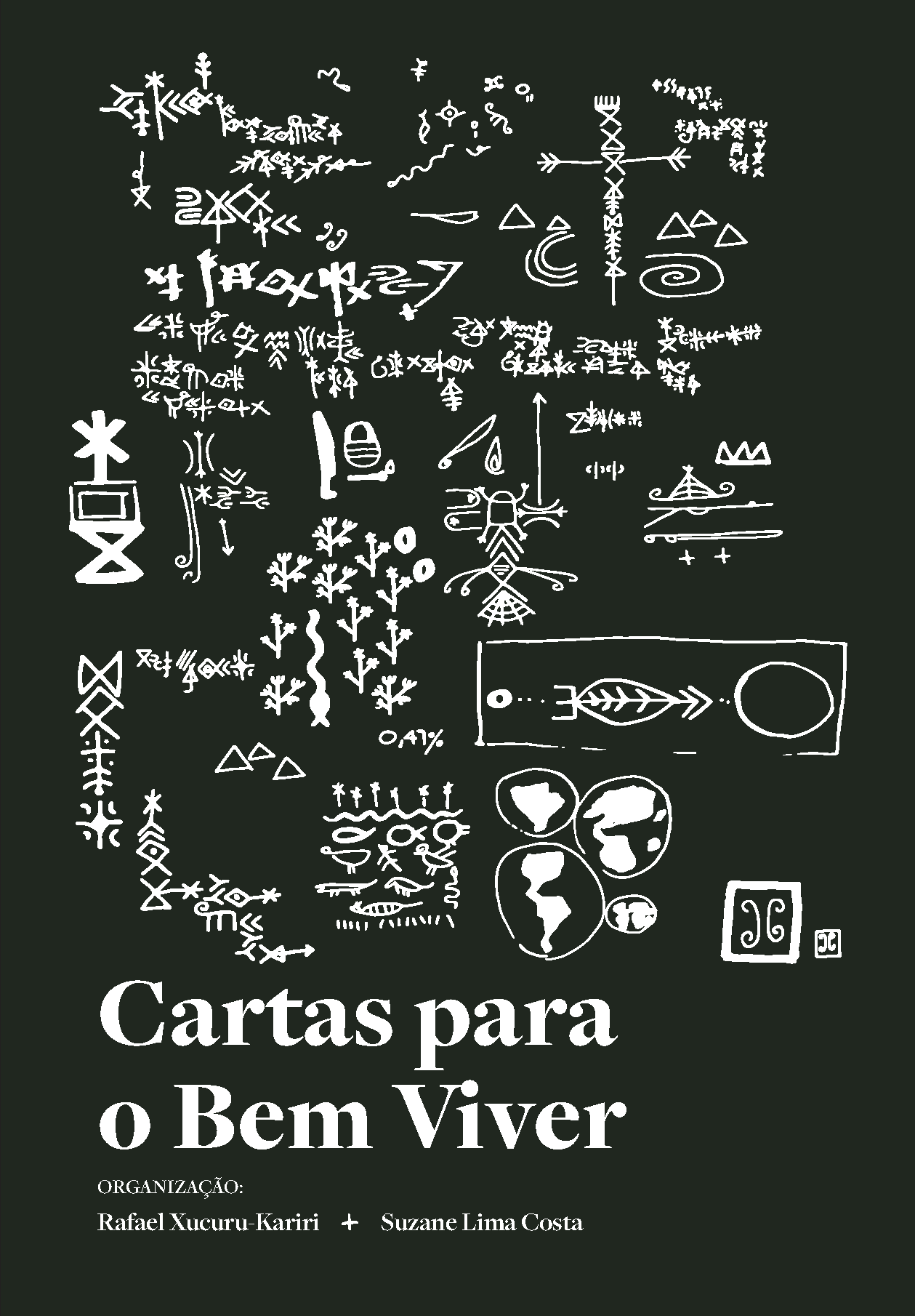
What we seek with this project is quite straightforward: to expand the scope of our collective imagination regarding this history. To allow other questions to be asked, other images to emerge. There is a letter by Gerson Baniwa, in the book Letters for a Good Living, in which he keeps repeating the same opening sentence: “We dream of a Brazil where…” And he describes this country as a place where his body can fully exist.
Imagination is a central dimension of this project. Because, in many cases, records were destroyed, and only the dominant version remained intact. Given this, reconstructing other perspectives also requires a work of imagination—not as arbitrary invention, but as critical elaboration based on the available traces.
That is why these letters are so important. They are not only meant to be informative. They are meant to be transformative, to change the way we think, and to open up space for other possibilities of engagement with history, both in Brazil and in Portugal.
cartas-para-o-bem-viver-capa-frente
Share

Connecting the Dots with Suzane Lima Costa (Letters from Indigenous Peoples to Brazil project)
CtD_SuzaneCosta_WebsiteThumbnail.001
Letters as proof of life: 15 years rescuing Indigenous voices from colonial archives.
Suzane Lima Costa is a professor at the Federal University of Bahia, a researcher at CNPq, and coordinator of the project Letters from Indigenous Peoples to Brazil — an initiative that for 15 years has been collecting, organizing, and making publicly available letters written by Indigenous Peoples throughout different periods of Brazilian history.
The project, which now has more than 1,300 letters in its online archive, proposes a different reading of history, one that can only emerge in parallel with rescuing the Indigenous voices that colonial archives tend, by their very construction, to render invisible.
Azimuth met with Suzane Costa in Lisbon during a research mission that also included visits to other European archives in places such as The Hague and London, where the project team continues to rediscover Indigenous Peoples as authors. This is work for the general public, made available online, but the team also wants to bring it to schools and younger generations. It is, after all, an ambitious challenge, but one that is more necessary than ever: to unlock other imaginaries, to look at our place in the world in a different way.
Archives and Letters
Azimuth World Foundation
You are currently visiting archives in Europe, including in The Hague, London, and Lisbon, as part of your research. What brought you here, and what are you looking for in these colonial archives?
Suzane Lima Costa
I’m here because of a project called Letters from Indigenous Peoples to Brazil, which started 15 years ago. To explain the current stage of this research, I must talk about the journey that brought us to this point.
I am a professor at the Federal University of Bahia and a researcher with CNPq. My first encounter with this topic occurred even before I established a formal relationship with the university. At the time, I was working as a teacher in the Indigenous education program and was still pursuing my master’s degree. I taught in villages, training Indigenous teachers.
One day, as I was finishing one of my classes, I heard the students talking about a meeting they were about to hold, where they planned to write a letter. I asked to participate in this collective meeting, and they agreed. It was then that I witnessed, for the first time, the collective drafting of a letter addressed to the governor of the state of Bahia, in Brazil. In the letter, the Pataxó Indigenous People expressed what kind of Indigenous school they desired, at a time when this process was still in its early stages. This took place in 2007, almost twenty years ago.
That experience was very impactful, it was something entirely new to me. I was left with many questions after that meeting: was this a recurring practice—writing collectively in this way? Was it a practice specific to the Pataxó? Was it practiced by other Indigenous Peoples?
I was also struck by the format in which this collective writing was carried out, with everyone gathered together, as in an assembly. They elected the person who would be responsible for writing down what was discussed and agreed upon collectively. On that occasion, they invited me to assist Anari, a Pataxó Indigenous woman. While I took notes, Anari organized the final text based on what had been decided by the group. That was my first experience with this type of meeting.
View this post on Instagram
When I conducted an initial survey afterwards, I realized that this was a recurring practice. Many communities, belonging to different ethnic groups and situated in diverse contexts, carried out this process of collective writing. Through this initial and basic survey, I found nearly a hundred letters, dating from different periods in Brazilian history. It was at that moment that I thought: we need a deeper understanding about how this practice came to be.
Most of the letters identified in these surveys were signed collectively—for example, “the Pataxó People.” In other cases, numerous signatures were featured—seventy, eighty names—belonging to different individuals from the same People. There were also letters written on behalf of the collective—beginning with phrases such as “We are gathered here…”—and signed only by the chief. Thus, the very forms of signature and of establishing the document’s legitimacy revealed different modes of collective authorship.
Later, while conducting more in-depth studies, I found existing research that explored Indigenous letters, but it was focused on a very specific topic: the so-called letters in the Tupi language. These documents are widely referenced in some studies, but they are not yet taught in schools in Brazil, unfortunately. These are letters written in Tupi in the 17th century, between 1645 and 1646, exchanged among Potiguara chiefs during the conflict known as the Sugar War in colonial Brazil. The Potiguara were then considered a kind of “Indigenous elite” and exchanged correspondence because some groups fought alongside the Portuguese, while others sided with the Dutch. In many of these letters, one leader sought to convince the other to change sides and join his cause.
Within this broader group of studies I was then able to identify records of a 17th-century Indigenous assembly that had a similar format to the contemporary meeting I had witnessed. The work of some Brazilian historians helped me greatly in this research, even though a large part of these studies did not directly address Indigenous writing. These records show us that collective writing was not an uncommon practice. In other words, it is not a recent or exclusively contemporary phenomenon. Based on these surveys and research, I then proposed the creation of a research group.
View this post on Instagram
At first, it wasn’t easy getting this project off the ground. My background is in Literature, not Anthropology. When I shared the proposal with fellow anthropologists, their initial reaction was negative. They told me: “No, this is a false problem. These letters weren’t written by Indigenous people.” In fact, this is one of the major issues that comes up regarding the Indigenous historical subject: the invalidation of his or her voice, as if they were not the ones producing it.
Even so, this rejection of my proposal was also productive. Instead of looking at rejection as a reason to quit, you can use it as a movement that sparks new questions. So at this point I began asking myself: why do Indigenous people sign these letters, if someone else is responsible for the physical writing of the text?
Around this time, Rafael Xukuru-Kariri joined the project. Meeting him was very significant. When we met, I asked Rafael if Indigenous people were, in fact, the ones writing these letters. Right away, Rafael told me: “Of course! I was writing letters like these when I was 10 years old. My parents gave me that role and asked me to be a messenger.” In this role, he was not responsible for the content of the message, nor was he the author of collective decisions. Rather, he was a vehicle for recording those decisions. It’s usually the most literate people in the community who take on this role. Rafael, who is acutely focused on archival work, played a fundamental role in all of this process, as he conducted our first major systematic survey of letters, through which we identified over a thousand documents produced between 1970 and 2020.
It was at this point that Rafael and I found an unpublished letter, written in 1654 by Antônio Paraupaba, that was being kept in an archive in The Hague. When we gained access to this document, it was written entirely in Old Dutch, which initially made deciphering it quite difficult. However, we knew it was a letter written by Paraupaba because in it we identified words of Indigenous origin, such as “caraíba.” Locating this document was challenging. In fact, researchers at Leiden University reacted with surprise upon learning of it, even though they study letters in the Tupi language and the presence of Indigenous people in the Netherlands. “My God, we can’t believe this has been right in front of us this whole time!”, they said.
The way we searched for and found this letter was also very significant. Our approach to the archives stems from an effort to give voice to what has been silenced or ignored over time. I had a particular interest in finding evidences of female presences—a search that continues to this day. That is why we conducted our research using the name “Paulina,” in reference to Paulina Paraupaba, the wife of Antônio Paraupaba. That is how we located the letter: in it, Antônio Paraupaba mentions Paulina Paraupaba while writing to Johan de Witt, who held a position equivalent to that of prime minister. In the correspondence, he requests permission to write to Paulina, expressing his desire to meet her and find out where she was. Based on this information, we came to understand that he was alone at that time—a conclusion that contrasts with previous interpretations of Antônio Paraupaba’s trajectory.
View this post on Instagram
This letter raised some new questions and reinforced others that were already part of our research focus. Questions that we had been investigating through a review of the literature on the topic, produced by scholars we hold in high regard, such as Professor Bartira Ferraz, Professor Bruno Miranda, Professor Huisman, Professor Rafael Ale Rocha, and Professor Eduardo Neumann. These researchers had already pointed to these interpretive possibilities. However, this mention – of this specific name – became a distinguishing factor: this was a letter that clearly listed an addressee and that clearly pointed to an Indigenous authorship being affirmed within that context.
This discovery changed the way we looked at our work and strengthened our desire to think of new ways of imagining the archive. Entering an archive involves dealing with a system organized according to a logic that historically served the interests of a colonial empire. If the archive is built according to these interests, it tends to preserve what somehow justifies and strengthens the maintenance of these powers throughout history. For this reason, it is necessary to maintain a watchful eye, for, in truth, we seek what often should not be there—or what has been silenced.
In this sense, everything interests us, including the physical absence of a letter. We work with the expanded concept of epistolary community, proposed by Lindsay Stanley. This concept encompasses everything involved in the practice of letter-writing, even the physical non-existence of the document, the traces of its existence. For example, I came to Portugal in search of the letters of Diogo de Souza, which, to date, have not been located. In Brazil, there is the Resgate Project, responsible for conducting surveys of much of the documentation related to Brazil that is preserved in Portugal. However, there are still a number of boxes and materials that are not properly catalogued, and it was precisely within this batch that I sought to conduct my investigation.
And it was precisely among these documents, while searching for Diogo de Souza’s letters, that I came upon a document associated with a priest. This document is cataloged as a letter written by Bishop Caetano to Queen Maria I. In this correspondence, the bishop describes the situation faced by Indigenous people in Pará, and warns that if no immediate actions were taken by the queen, these populations could be wiped out. In this context, he recounts the complaints presented to him by Diogo de Souza. Then, among these documents, there is a letter from Diogo de Souza himself, in which he describes the situation and questions the lack of response to his demands. At one point, he writes: “Why are my complaints not being heard? I haven’t received any response to my petitions.” He also describes the deplorable conditions in which these people lived.
What is particularly significant is that the Resgate Project has copies of this material in Brazil, but they are in very poor condition. Some sections barely legible. Without access to the original document, it wouldn’t be possible to make out certain key elements. If I hadn’t come all the way here to Portugal, I wouldn’t have been able to identify Diogo de Souza’s signature. These signatures are decisive, as they allow us to affirm the existence of an authorial body of work linked to this individual. It is not merely a matter of mediation, of using a scribe or messenger. There’s an actual signature there, which confirms this authorship.
View this post on Instagram
Azimuth World Foundation
And how does this process work? Does the project team sit down, open boxes, and go through each document?
Suzane Lima Costa
Generally speaking, yes. It is work that involves reading and interpreting manuscripts, drawing on knowledge related to paleography and philology—but also engaging with historical and anthropological approaches, which help situate these documents within broader contexts of production and circulation. These are highly complex fields. I come from a background in Literature and have been on a learning journey myself, supported by a dialogue with more specialized colleagues, such as Prof. Arys Sacramento and Prof. Rosineide Duarte. Reading the handwriting itself takes time, and there is the added challenge of Old Portuguese.
At the same time, my background in Literature also shapes the way I approach this material. There is a whole approach that considers the tensions between the documentary and the fictional, not in the sense of opposing them, but of perceiving how imagination, mediations, and gaps permeate what has been recorded. Working with these documents also involves dealing with what is not explicitly present—formulating hypotheses, reconstructing contexts, and following clues.
In the case of Diogo de Souza, we know that this is not exactly unpublished documentation. There is a mention in the work of Prof. Rafael Ale Rocha, for example. The contribution of our project is precisely to highlight something that has not always been emphasized: Indigenous participation in these processes.
This is an important point—recognizing that many Indigenous people, at different moments in Brazil’s history, were involved in practices associated with literate culture.
And participating in literate culture is not limited to mastering writing in the colonial way. There are dimensions that go beyond—and even predate—that. For example, the very act of turning to someone to draft a petition already indicates an awareness of rights. Records of this kind have existed since the late 17th century. The archive, in this sense, is merely a starting point. Our work also focuses on what is not explicitly recorded: the indirect evidence, the silences, the traces—everything that fell through the cracks.
Azimuth World Foundation
Apart from Paraupaba and Diogo de Souza, have you found other Indigenous authors in European archives?
Suzane Lima Costa
Yes—and that is one of the most interesting aspects of our research. As we delve deeper into the archives, these names begin to appear more frequently, albeit in a scattered manner.
One example is Antônio Marapirão, author of two letters from 1649 addressed to King João of Portugal. These are political documents in which he presents himself as a leader, a “chief Indian,” and, among other issues, takes a stand against the enslavement of Indigenous people.
But what is most important is to realize that he is not alone. There is a broader set of records pointing to Indigenous participation in writing practices, particularly through letters and petitions.
In this regard, the presence of Indigenous women—such as Josefina, Teresa Joaquina, Apolónia, and Joana Maria—who dictated letters and petitions addressed to the Portuguese monarchy is also noteworthy. Not only do these documents reveal forms of political participation mediated through writing, they also assert positions and serve the purpose of claiming for rights.
When we bring these traces together, the picture expands considerably. In a preliminary survey, I have already identified more than a hundred names referenced and about 30 petition letters throughout the 18th century. This moves us away from the idea of isolated cases and points to a broader and continuous set of practices of Indigenous participation in written culture.
Azimuth World Foundation
There is no awareness—in Portuguese schools, among Portuguese students—that an Indigenous person had the ability to negotiate with the king in this way.
Suzane Lima Costa
Exactly—and it’s important to remember that the king met with Indigenous people. And this isn’t an isolated case. There are records of other names that navigated these circles. For example, I’m trying to locate a letter from Domingos Pessoa Perrasco Arcoverde, which is likely in the “Reino” series. It is a very extensive collection—27 boxes—and, so far, I have only been able to consult a portion of it. Even so, I have already found his signature in the book of royal grants.
This type of research requires persistence. It is very meticulous work, pieced together from fragments. But once we begin putting all these names together, it becomes clear that quite a few Indigenous people went through these processes.
The very fact that a name appears in a book of royal grants is significant. These were definitely not records designed to highlight an Indigenous presence—yet it is there. And this suggests that these individuals were, to some extent, recognized as valid interlocutors within that structure.
At the same time, this does not imply equality. There is a difference between being part of the records and having one’s voice fully recognized. This tension is not merely historical—it persists. Even nowadays, in Brazil, certain groups—especially Indigenous people, Black people, and, even more so, Indigenous and Black women—face challenges when attempting to have their voices legitimized in institutional spaces.
So, looking at these archives is a way to understand both the forms of presence and the limits of this recognition.
View this post on Instagram
Peoples As Authors
Azimuth World Foundation
The creation of a collective letter is fascinating. In our Western framework, a letter is something intimate, personal, and related to the individual. Here, there seems to be an intimacy, but a collective one. Does this express a dichotomy between the Western world and the Indigenous world?
Suzane Lima Costa
It’s a very interesting question, because it directly challenges our idea of what a letter is. I come from a background in Literature; I study literary genres, and the most widespread notion of a letter is precisely that: a space of intimacy, of individual expression.
When we look at Indigenous works, especially those rooted in oral traditions, these notions begin to shift. As they transition to the written record, these forms of expression do not simply adapt to the “letter” genre—they reconfigure it. Instead of an isolated “I,” we often find a “we.” And this “we” does not eliminate the dimension of affection or subjectivity; on the contrary, it reorganizes it in a collective way.
You can see this very clearly in contemporary letters, for example, which begin with phrases such as “We, the Indigenous people, gathered here” or “We, the women gathered here.” Throughout the text, however, there are shifts in tone: direct interjections, vocatives, and questions emerge that invite the reader into a closer dialogue. There is a letter addressed to Dilma Rousseff that illustrates this well—at one point, the authors ask: “But Dilma, aren’t you a mother? Have you ever seen your child suffer?” This kind of shift creates a very particular closeness.
For this reason, when reading these letters one must pay attention to their internal dynamics. Often, the text is constructed in a collective voice, even though it’s signed by a single person. There is an interesting dynamic here: the signatory assumes formal responsibility, yet speaks on behalf of a collective.
If we look at it from a stricter definition of genre, we could say that these texts resemble manifestos. But they retain fundamental elements of the letter: they have an addressee, an address, a salutation, and, above all, a dialogue is at their core.
This might be one of the main points: when it comes to textual genres, the letter is among the most explicitly conversational. And this resonates deeply with Indigenous forms of expression, in which the construction of meaning involves listening, exchange, and relationship. Even in contexts of conflict and violence, there is often an openness to dialogue, an invitation: “let’s talk.”
In this sense, these letters are not merely documents or political statements. They are also spaces for dialogue. And perhaps, on many occasions, they were one of the primary means through which Indigenous voices managed to become part of written culture, and therefore to establish a dialogue.
View this post on Instagram
Azimuth World Foundation
And how has Indigenous authorship evolved over time?
Suzane Lima Costa
It isn’t fixed. It changes according to historical contexts, or to the way the writing is mediated. In older documents, for example, we find very evident traces of these mediations: there are records signed with an “X,” indicating that the text was dictated; in other cases, collective formulas appear, such as “The Indians say…,” without an individual signature.
At the same time, there are also documents signed by Indigenous people who held positions recognized by the colonial administration—especially those who received grants or held offices. In these cases, authorship appears in a more individualized form, albeit embedded within very specific power structures.
It is interesting to observe how this has evolved over time. In the 20th century, particularly from the 1960s and 1970s onward in Brazil, collective signatures became more frequent, associated with more organized forms of political organization. More recently, this has expanded into digital media, where this collective dimension is maintained despite the change in formats.
But at the same time, this doesn’t mean that individual authorship disappears. In a preliminary survey, we have already identified a significant number of letters signed by Indigenous people in their own names, which shows that these forms—collective and individual—do not replace one another, but coexist.
Therefore, when we speak about the People as author, we are not referring solely to the final text, to the letter itself. We are also interested in what comes before that: the political act of gathering, deliberating, constructing a common voice, and deciding how it will be articulated. Authorship, in this sense, is a process—and not merely a signature.
View this post on Instagram
Brazil As Addressee
Azimuth World Foundation
Brazil is the addressee of these letters. But who is this “Brazil” to whom Indigenous People are writing?
Suzane Lima Costa
Currently we have about 1,300 letters collected on the website, and the very name of the project—Letters from Indigenous Peoples to Brazil—arises from this recurring theme. In many texts, this call appears explicitly: a summons to Brazil to enter into conversation. And it is not a distant conversation—often, it is constructed as something direct, almost intimate.
In several cases, the formal addressee is the President of Brazil, across different historical periods, which positions him or her as a recurring interlocutor. But there is an interesting shift within the letters themselves: even when there is a specific addressee, the text often broadens out and begins to address the “Brazilians.” Expressions such as “you, Brazilians” or “Brazilians need to know” appear frequently.
This suggests that “Brazil” is not merely an institutional authority. It is also a contested idea, a construct that varies according to the context and experience of each individual. In many cases, it is a country of which these individuals are formally a part, yet one that, at the same time, does not fully recognize them. Thus, writing to Brazil is also a way of questioning this sense of belonging.
When we read these letters together, they end up mapping out a kind of political cartography of the country—spanning different historical periods and recurring issues. And this, at times, causes a certain discomfort, because it highlights continuities: problems that resurface, demands that are repeated.
There is also an important question regarding the replies to these letters: Brazil is constantly named as the recipient, but rarely responds. We know of some cases where effective dialogue took place, sometimes it is even mentioned in the letters themselves, but these are exceptions. Still, the writing does not cease.
And this is perhaps the main point: the act of writing remains a continuous practice. Not merely as a record, but as a political act. To write is to create a space for speech, to sustain a presence in time, to assert a collective voice. More than a gesture linked solely to literacy or written culture, it is a form of empowerment—of ensuring that these voices exist, circulate, and endure.
View this post on Instagram
Azimuth World Foundation
Azimuth has been a supporter of Batwa communities in Uganda, who were evicted from from their ancestral lands. Recently they had to write to the World Bank about a project being implemented in those territories. And this petition was in many ways exactly like the ones we see from 500 years ago. How is it possible that the European colonial project spans so many centuries?
Suzane Lima Costa
One of the things that strike me the most, when I read these letters, is precisely what is repeated in them: an affirmation of life. There is a very strong core that appears across different forms, at different periods—the desire to continue existing as a People, to live on their own terms, to sustain ways of life that are constantly under threat.
These are often letters written on the brink of collapse. Letters to prevent extinction. Letters that attempt to open up some possibility in the face of situations of expropriation, violence, or loss of territory.
And there is not just a “before” the letter—that collective moment of drafting. There is also an “after.” Many letters are written following concrete events, such as processes of territorial reclamation, often marked by conflict. The letter, then, begins to record, narrate, and denounce what has happened.
There are documents, especially from the 1980s and 1990s, that describe very serious situations, including murders. In some cases, there are lists of people who have been killed. These are direct, public denouncements, exposing ongoing crimes. And this is done deliberately: a large portion of these letters are meant to circulate, to bring visibility to what might otherwise remain invisible.
Of course, there are also more intimate letters, which require a different kind of handling, and which require explicit permission for us to be able to share them. But, in general, the letters that appear most frequently in our archive are letters of denunciation, of protest, political letters. Texts that highlight situations that astonishingly persist to this day.
And perhaps that is what is most unsettling: the repetition. The sense that certain structures of violence keep occurring in time. And the letter remains one of the possible tools for confronting this.
View this post on Instagram
A Reversal of the Imaginary
Azimuth World Foundation
This project aims to install QR codes in locations where the letters were written, and create educational materials for schools. Why is it so important to take these letters out of the academic archive and bring them to schools?
Suzane Lima Costa
Because it’s not just about preserving documents—it’s about transforming the way in which these stories are perceived. When we were in the archives, we were able to identify, for example, the place from which Antônio Paraupaba wrote. These places still exist, even though they often go unnoticed.
The idea of using QR codes stems from this: signalling these places and allowing anyone to access the history and the letter associated with that location, right there on the spot. This would be a way of inscribing these Indigenous presences in the public space and foster a different kind of relationship with memory. In Portugal, this involves dealing with more complex public policies related to heritage sites. It might be easier to develop such initiatives in Brazil.
But beyond that, the key is to get this material circulating. Another part of our project involves going back to villages, bringing the documents we have managed to gather, and deepening this work in partnership with Indigenous teachers. We are already active in Indigenous schools and also in the Indigenous Intercultural Education program at UFBA, and the idea now is to deepen these exchanges.
But our goal is even broader: we want these letters to become part of the curriculum in Brazilian schools. It may seem ambitious, but it is an important step toward expanding the public’s understanding of Indigenous Peoples.
Azimuth World Foundation
And what is the prevailing perception of Indigenous Peoples in Brazilian classrooms?
Suzane Lima Costa
Overall, there is still very little material on this subject. In many schools, the image of Indigenous Peoples remains limited and poorly contextualized. That is why it is so important to highlight the fundamental fact that Indigenous Peoples wrote, developed political strategies, negotiated, and played an active role in historical processes.
Over time, especially since the 19th century, a set of representations has solidified that tends to erase this complexity. And the consequence of that is clear: it becomes difficult to recognize Indigenous Peoples as full-fledged historical subjects, with continuity over time.
A central question posed by studies on memory is: what allows someone to remain a part of history? To a large extent, it is the recognition of their voice—the fact that that voice is recorded, considered, and transmitted. When that voice is not recognized, the subject tends to be erased from narratives.
This is where our project comes in. By gathering, organizing, and disseminating these letters, we seek to reopen this field of perception. The website has been an important tool in that process. We’ve had a significant number of visitors, and the way the website is organized allows the users to be view the documents in a timeline, even if it still has some gaps.
We have also invested in other forms of accessing the archive, such as videos featuring Indigenous leaders commenting on their own letters. For example, there is a statement by Anastácio Peralta, of the Guarani People, regarding a 2012 letter. This video had a lot of resonance. These materials help create other ways to engage with the content.
Ultimately, all of this converges toward a single goal: to amplify the circulation of these voices. Because circulation is not merely a consequence—it is part of the very purpose of these letters.
View this post on Instagram
Azimuth World Foundation
These letters have tremendous power. We really need to circulate them in schools and show them to the younger generations.
Suzane Lima Costa
That is precisely what we are seeking: a reversal of the prevailing narrative—and that is no simple task. Just look at how certain ideas have been historically entrenched. Even today, there are those who say, “It’s impossible that these letters were written by Indigenous people.” This shows just how much work still needs to be done in this area.
At the same time, we want to expand this discussion to include other groups that have also been largely overlooked—especially women, which is a central theme for me. To give you an example, I found a letter addressed to the king that mentions a so-called “Índia Valentona,” and she’s identified through her relationship with a “chief Indian.” This type of record raises a series of questions: how do these women appear in the archives? Under what conditions are they named?
When we broaden the research, we begin to find actual names. Many of them appear in death records—especially in the hinterlands of Bahia, in contexts of conflict. These are harsh descriptions that reveal extreme violence. But at the same time, these records also speak of resistance. There is a presence there that cannot be reduced solely to pain.
And this is important: it is not about constructing a narrative marked solely by violence. It’s about recognizing forms of existence, of agency, of permanence. These names are there. And the question becomes: what do we do with them? How do we make sense of these presences?
That is why the educational materials are so essential. On the website, we have managed to gather and make documents available, along with some explanatory notes. But educational materials will allow us to go further—to also work with the gaps, with what has not been preserved, with the silences. Sometimes, we couldn’t find a letter, but we found traces of it—and this also needs to be interpreted.
We have already created a section on the website dedicated to the senders, and now we are expanding this work with a systematic survey of Indigenous names found in the documents. The idea is to make this visible, organizable, and accessible.
Ultimately, it’s about proposing a different reading of history. And this is urgent—in Brazil, without a doubt, but also in Portugal. Because we’re talking about a shared history, and how it has been narrated up to now. Revisiting this narrative is a fundamental part of this process.
View this post on Instagram
Other Histories
Azimuth World Foundation
You state that these letters tell another story of Brazil. How does this other version change the way we understand the country—and also Portugal?
Suzane Lima Costa
Because, if this history is not incorporated, we will continue to reproduce certain discourses that have particular effects. These discourses can even become the basis of laws. A recent example is the so-called “Marco Temporal” (Time Frame thesis), which attempts to tie access to land rights to specific periods. This type of argument often stems from a very narrow idea of what it means to “be Indigenous,” as if it were a fixed, immutable model constructed from external perspectives.
What these letters show is precisely the opposite: historical trajectories that are not fixed, with transformations, alliances, conflicts, and displacements. The idea that someone “ceased to be Indigenous” because they use certain technologies or because they live in a different context completely ignores the fact that every culture is dynamic.
Making these letters a central part of these discussions also opens up different historical perspectives—often the perspective of those who did not win the conflicts, but who nonetheless continued to act, to write, to intervene. When we acknowledge this authorship, it is not a matter of erasing what has already been said, but of creating tension, of asking questions, of broadening the field of interpretation.
These voices have always existed, but they were frequently downplayed or marginalized in dominant narratives. By bringing these documents together, we realize that there is a continuous Indigenous presence, in different contexts, including in the discussion of central issues such as slavery, land ownership, and living conditions.
This forces us to rethink certain widespread ideas. For example, the notion that Indigenous People were not enslaved still circulates in Brazil, and it just doesn’t hold up when we look at this collection of documents and at the demands recorded in these letters.
The effect of this is not to offer a “new” closed version of history, but to produce shifts. These letters create fissures, raise questions, and reveal contradictions. And this is fundamental, because no social group remains identical over time. However, Indigenous Peoples have often been portrayed as if they were trapped in a fixed image, outside of history—which ultimately serves to justify forms of exclusion and violence.
What we seek with this project is quite straightforward: to expand the scope of our collective imagination regarding this history. To allow other questions to be asked, other images to emerge. There is a letter by Gerson Baniwa, in the book Letters for a Good Living, in which he keeps repeating the same opening sentence: “We dream of a Brazil where…” And he describes this country as a place where his body can fully exist.
Imagination is a central dimension of this project. Because, in many cases, records were destroyed, and only the dominant version remained intact. Given this, reconstructing other perspectives also requires a work of imagination—not as arbitrary invention, but as critical elaboration based on the available traces.
That is why these letters are so important. They are not only meant to be informative. They are meant to be transformative, to change the way we think, and to open up space for other possibilities of engagement with history, both in Brazil and in Portugal.
cartas-para-o-bem-viver-capa-frente
Share


