





Connecting the Dots with Cebaldo Inawinapi
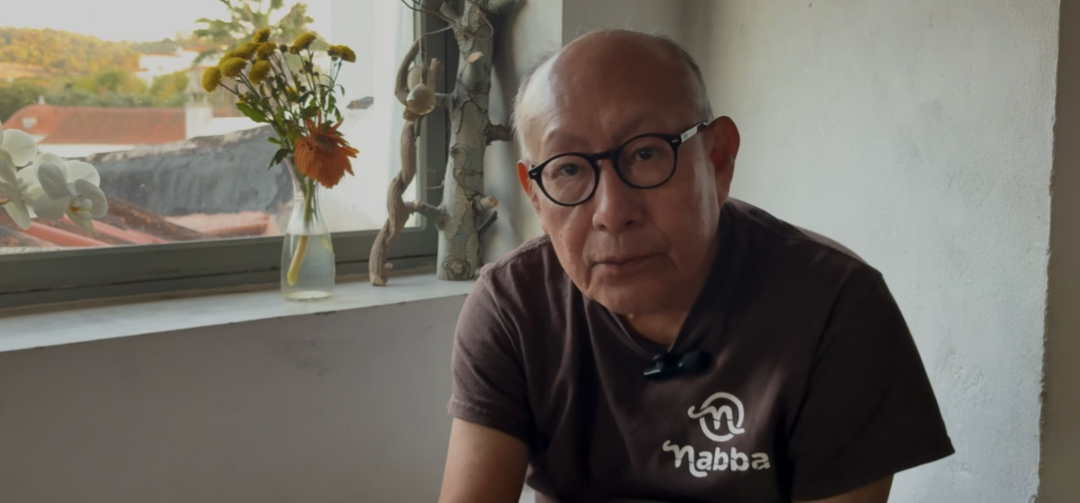
We met the Guna writer, poet and anthropologist for an illuminating conversation on circular storytelling, strategies to bring new life to ancestral tales, and how the Guna have preserved their autonomy and independence.
Cebaldo Inawinapi was born in Usdup, an island in the Guna Yala archipelago in Panama. When he was born, his father planted the placenta and the umbilical cord in the jungle across from the island. From this ritual, a tree sprouted.
In 1979, Cebaldo left for the Soviet Union, where he studied archaeology. It was there that he met a Portuguese woman who would later become his wife. In 1987, they moved to Portugal. Today he is an anthropologist, writer, poet, and researcher at the University of Trás-os-Montes and Alto Douro.
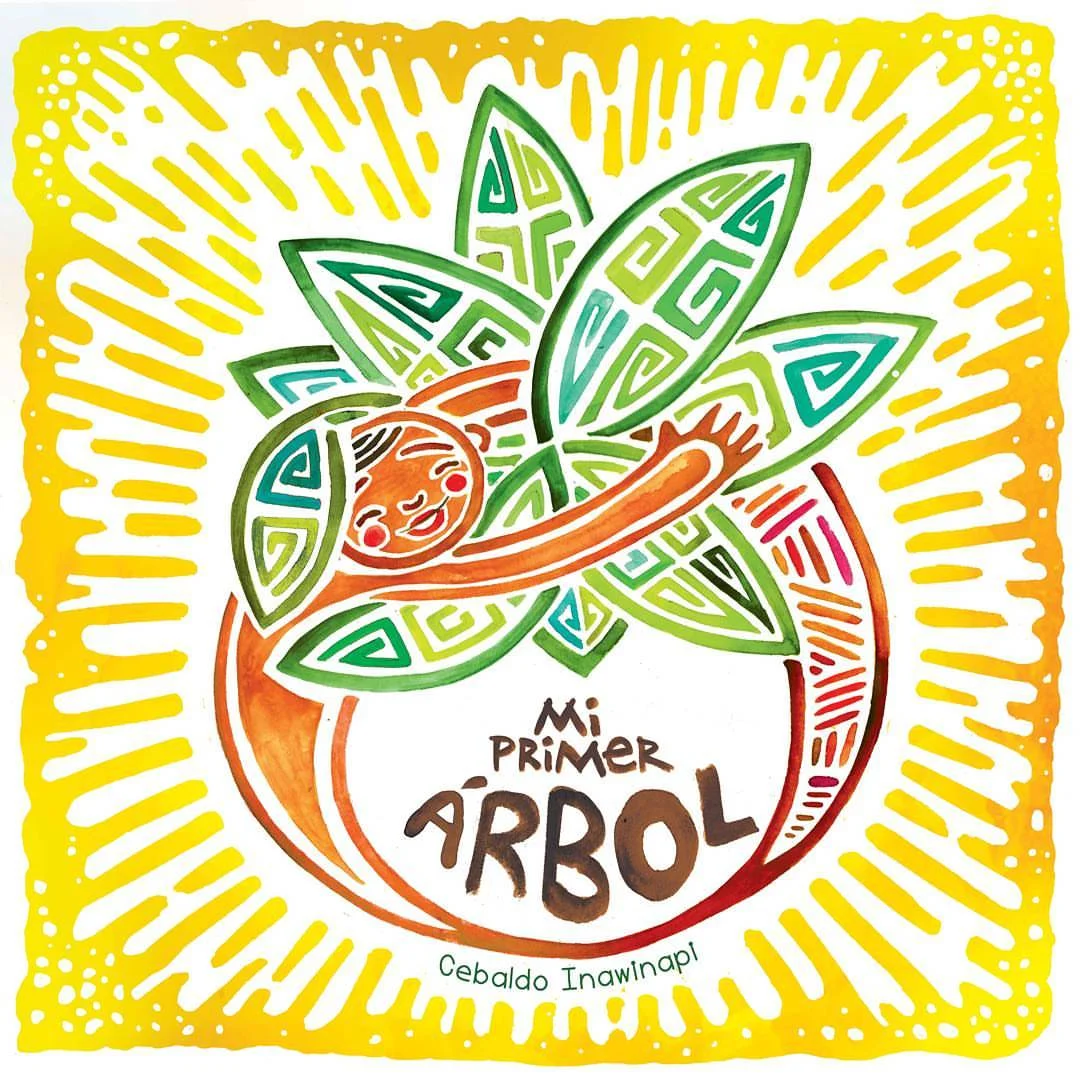
He wrote “Mi primer árbol”, a bilingual book in Guna and Spanish about that initial ritual: when a Guna child is born, the umbilical cord is planted, along with a tree. He acted in the film “Panquiaco”, in which he portrays his own conflicts around belonging and return. He curated an exhibition at Casa da América Latina on “molas”, the textiles made by Guna women that tell stories, prophecies, and dreams.
We spoke with Cebaldo at FOLIO festival, in Óbidos, Portugal.
Make sure you follow Cebaldo’s work at his official website or Instagram account.
Play the video version below (English subtitles available), or scroll down for the podcast version (dubbed in English) and for the English transcript.
CONNECTING THE DOTS – PODCAST
Are you a podcast fan? Make sure you subscribe to the podcast version of our Connecting the Dots series here.
TRANSCRIPT
31739968_437210840054743_8295165579111694336_n
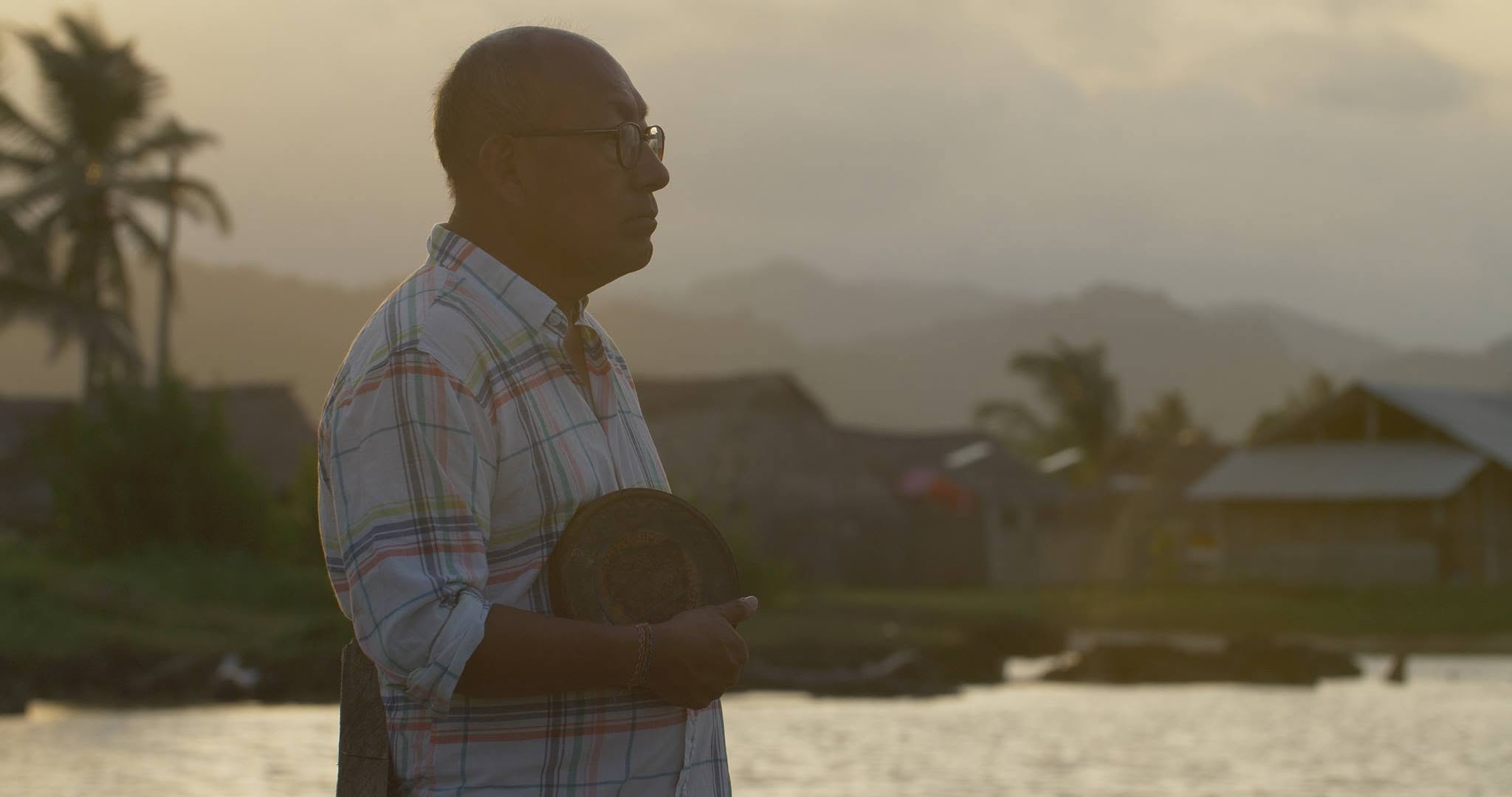
From Cebaldo Inanwinapi’s personal archive
TO BE BORN, TO RETURN, TO WRITE | CIRCULARITY IN GUNA NARRATIVES
And that’s how I try to explain my life, somehow. The story of being born and un-born, as we say. I sometimes think it’s like the way the Guna tell stories. It’s circular. There isn’t really such a thing as “going up” or things ascending. Everything circulates.
That’s why, among the Guna, when someone passes away, the main chant is about someone expressing gratitude for being able to return to the earth. Gratitude for the food, for life, and so on. So it’s a process that’s constantly circulating.
Furthermore, the Guna, from the 17th century, more or less, when they started forming alliances with pirates and buccaneers to fight against the Spanish Empire, they began to sail. In other words, they’ve always led this life of migration, of sailing. Sailing to learn, to see, and then to return. Because the process of returning is also very complex and highly metaphorical.
I don’t know if you’ve seen a movie I was in, called “Panquiaco”. It was shown at the Rotterdam Film Festival. It’s kind of the same thing. There’s a Guna man who’s lived in Europe for many years and wants to go back. And the shaman tells him, “The only way to go back is to die.”
A lot of people ask the classic question: “How come you talk like that, and say that culture is something fantastic, fabulous, but you’re still in Portugal? What’s the reason?” The Guna have a tradition regarding marriage. When a man gets married, he moves to his wife’s house. So, for me, my home is where Alice, my partner, is. That’s where we are, together.
Many years ago, a lot of my younger colleagues would say the same thing: “Cebaldo, you talk and do all these things, but you’re still living in Europe. You have to come back here.” And then a mentor, an elder poet, said: “No, Cebaldo has done the right thing, because he went to live with his girlfriend, his wife.”
But I also have many projects in Panama that have allowed me to return often. Because all my anthropological projects, and now the films I’ve been making, are connected to the Guna world in one way or another. So writing is also a way of coming back. I write chronicles and poems, and it’s like returning home.
mi-primer-arbol-book-cover.jpg
Cover of “Mi Primer Árbol” by Cebaldo Inawinapi
MI PRIMER ÁRBOL | RITUAL, TALE, BOOK, ANIMATION
The book isn’t that long, but it has the power to tell those stories that are actually part of the Guna community’s daily life, like the story of the umbilical cord and the placenta.
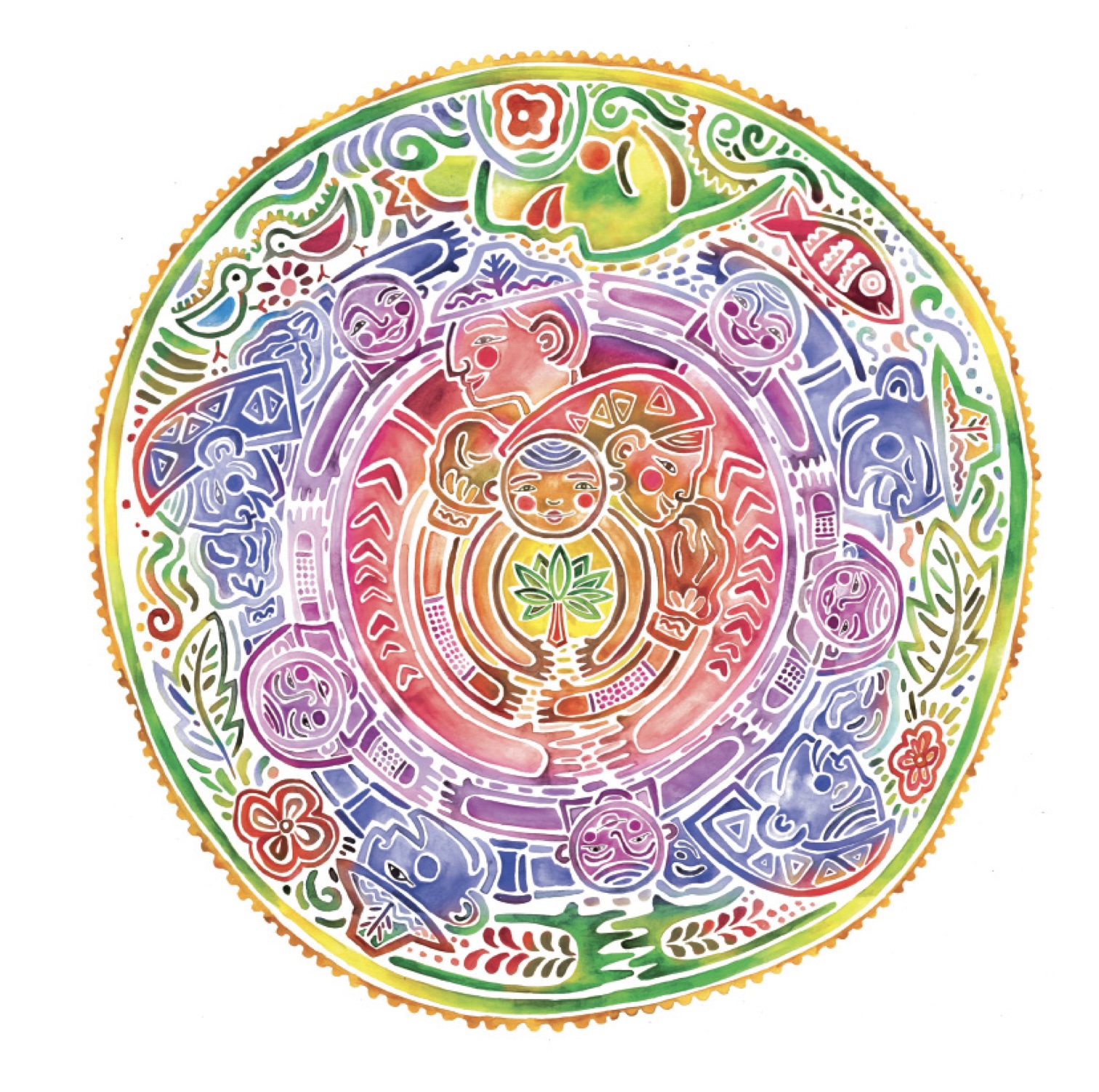
At first, it was a tribute to my parents. To my mother and father, who were teachers and are no longer with us. And a way to tell that story. But there also the illustrations, this book has many illustrations. They were created by an Afro-Panamanian artist and a Guna painter.
And on top of that, it had to be bilingual. That was a challenge for us. Because even for those of us, like myself, who champion Guna culture, who are Guna, in written form, the Guna language is hard to transcribe into a version that can be read. And Guna is primarily an oral language. And now, in some places, it’s being written down. But I continue to advocate for the oral tradition. And that’s why one of the ideas now, with this book, is to bring it to life through animation, where words and images can also come together.
We’re working with a young Guna filmmaker, Duiren, who, by the way, has a film that was screened at the Amsterdam Film Festival called “Bila Burba.” Duiren is the director. And we’re all participating in and collaborating on the film. So, together with him and a Wayuu sister from Colombia, who is also a filmmaker, we’re preparing the animated film. It will be an animation based not only on the book but also incorporating ideas from other Indigenous communities.
Screenshot
Illustration from “Mi Primer Árbol” by Marta Noemi Noriega
For example, one of the things we want to include in the animation is a text of mine that didn’t make it into the book. It’s about a tree that dreams of becoming a cayuco, a boat, a pirogue. And that’s because trees have this ability to dream. So, it attempts to bring together this story about trees with the story of Cebaldo, Cebaldito, who is growing up and feels he can’t be a doctor, feels he won’t be a great hunter, and wants to be a writer. In other words, it connects the Western concept of the writer with the Indigenous, natural world, through the umbilical cord, the tree that is about to be born.
And I think that films, just like literature, also serve this function of awakening. Right now, in this complex world, with wars raging and all that, it becomes a way to showcase alternatives, to show that building a world of greater solidarity is possible. This is the case not only with the Guna but also with other communities that are doing just that.
We’re now in conversations with Panama’s Ministry of Education, to see if they are interested in reissuing it, so that non-Guna people can read it, too. And one beautiful thing is that the introduction was narrated by a Guna chief, my uncle. He passed away about four or five months after he narrated his version as the introduction. Now I dream of creating a Guna-Portuguese version, since there’s already a Guna-Spanish one.
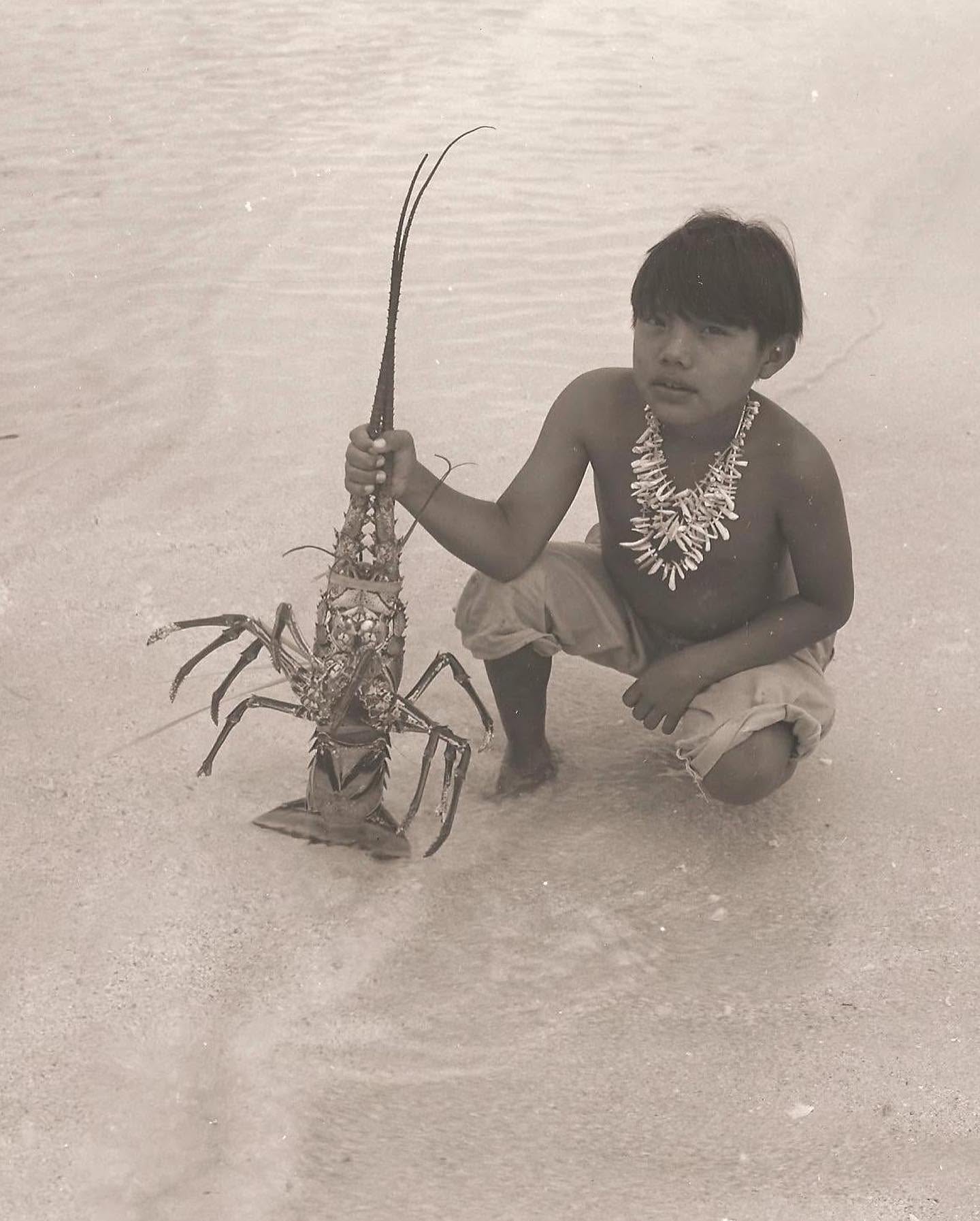
472082937_1142701677863228_7742379334709694970_n
From Cebaldo Inanwinapi’s personal archive
GUNA AUTONOMY & IDENTITY | A LIVING MATRIARCHAL SOCIETY
When I was 10, I left home to go to school in [Panama] City. And for me, that’s when I felt the first impact. I had some advantage, because my parents spoke both languages. And I think I was fluent in Guna and Spanish even as a child. That’s not the case for the vast majority of Guna people. I didn’t experience a profound culture shock, but I did notice differences. From playing and eating to the importance of women.
My mother’s mother is the central figure. That’s why we say she’s a local matriarch. She’s the one who defines the roles. And when there’s a dispute, about anything, she’s the one who has the final say. And the initiation ceremonies are all for women. Men have to hunt and study, but they don’t have a ceremony like the women do. For example, the hair-cutting ceremony. Receiving their given name. The same goes for marriage, where the woman is central. All of these things. And then to see a culture where the man is deemed lord and master, it’s not easy.
Today, when I presented the book, I mentioned what one of my grandmothers told me once: “When you go to live in Panama [City], be careful. You can’t walk around the islands…” In the afternoon, around this time, we’d take walks with our friends… It’s a tiny island. And we’d hold hands. And holding hands, we’d walk along. And she said: “In Panama [City], you can’t do that. You can’t walk down the street holding hands with your male friends.” But she didn’t say why. I learned it the hard way, as they say. That in the city you can’t walk hand in hand with a male friend, because it’s another way of… Well, all that.
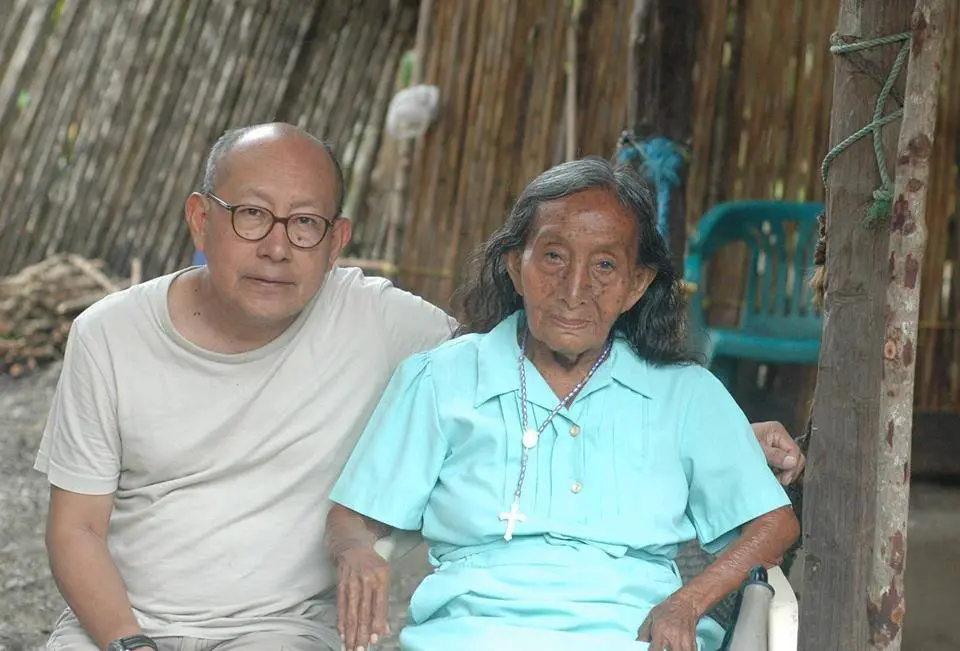
Cebaldo-y-su-madre.jpeg
Cebaldo with his mother. From Cebaldo Inanwinapi’s personal archive
Even laughing. Laughing in a certain way. The Guna have this trait. They laugh out loud, especially the women, they have a hearty laughter. Even these things that seem simple have to do with how a community like this lives, where laughter is a form of therapy. So, I had to learn that there were other worlds where that wasn’t looked upon favorably.
And the same applies to clothing, the way we dress. Guna women don’t wear tops. I grew up in that reality. I saw my sisters’ breasts, and my relatives’ breasts. And then, suddenly, I was living in a world where that’s something you’re supposed to hide, and it becomes taboo. But it also becomes a temptation. So, these are things you experience and learn as you go.
And the same goes for language. I had to speak Spanish. And in that regard, Guna women played a fundamental role. In the 1960s, more women began migrating. When the men migrated, they tried to speak Castilian, Spanish. Why? So they wouldn’t be discriminated against. When the Guna women arrived, they spoke Guna, even if they were able to speak Spanish. And that was so strong, so powerful, that many people began to realize the importance of the language.
Nowadays in Panama, Indigenous languages are official. Panama’s official languages are Spanish (Castilian) and the Indigenous languages. At least that’s how it’s written down in the Constitution. But in practice, it’s very complex. So this was a struggle led by Guna women, related to their traditional clothing and their language.
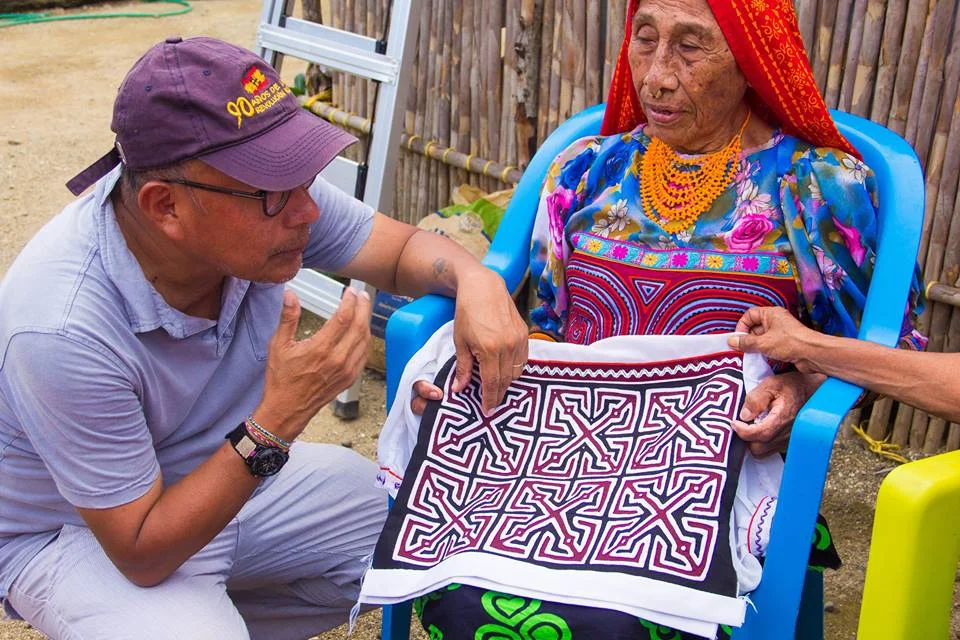
Luciamor2.jpg
From Cebaldo Inanwinapi’s personal archive
We also have extremely high migration rates. Nearly 40% of the Guna community, and perhaps even more, already lives in urban centers. However, the way the Guna community is organized, and the way they defend their autonomy, has had a very interesting effect. That’s why I mentioned the issue of language. In the city, in urban areas, you hear Guna spoken as if it were a “normal” language, and that was due to the strength of the women, and it was crucial.
As far back as 1871, the Guna were already fighting, when Panama was still part of Colombia. But in the 20th century, Panama gained independence from Colombia due to the issue of the Panama Canal. And a few years later, the Guna end up revolting, as many countries in Latin America had developed policies that sought to eradicate Indigenous languages and traditional clothing so that Indigenous people would be “civilized,” would convert to Catholicism, would speak Spanish, would consider property as private, all of that.
And the Guna took up arms. This happened on a Tuesday during Carnival in 1925, between February 20 and 25. But it was the first step toward Panama sitting down to negotiate with the Guna. Also, the Americans didn’t want any trouble near the Canal. The Canal had been built 11 or 12 years earlier. And that gave the Guna a chance to begin negotiating, little by little. Because, in reality, we never wanted war. Nobody wants it. Everyone wants to live in peace. But we were basically forced into it. And then, in ’50 and ’53 of the last century, the Guna were able to secure strong legislation.
Panama wanted to take over, but it was already difficult, or impossible, really, because the Guna community was so well organized. There are 52 communities. Of the 400 islands, 52 are inhabited, and that’s where they practice this “Guna-style democracy,” as they call it. A community of 200 has a local congress. A community of 1,000 also has its own local congress. These meet every day. Every single day. Not only to discuss current issues, but also for traditional songs and to discuss political matters.
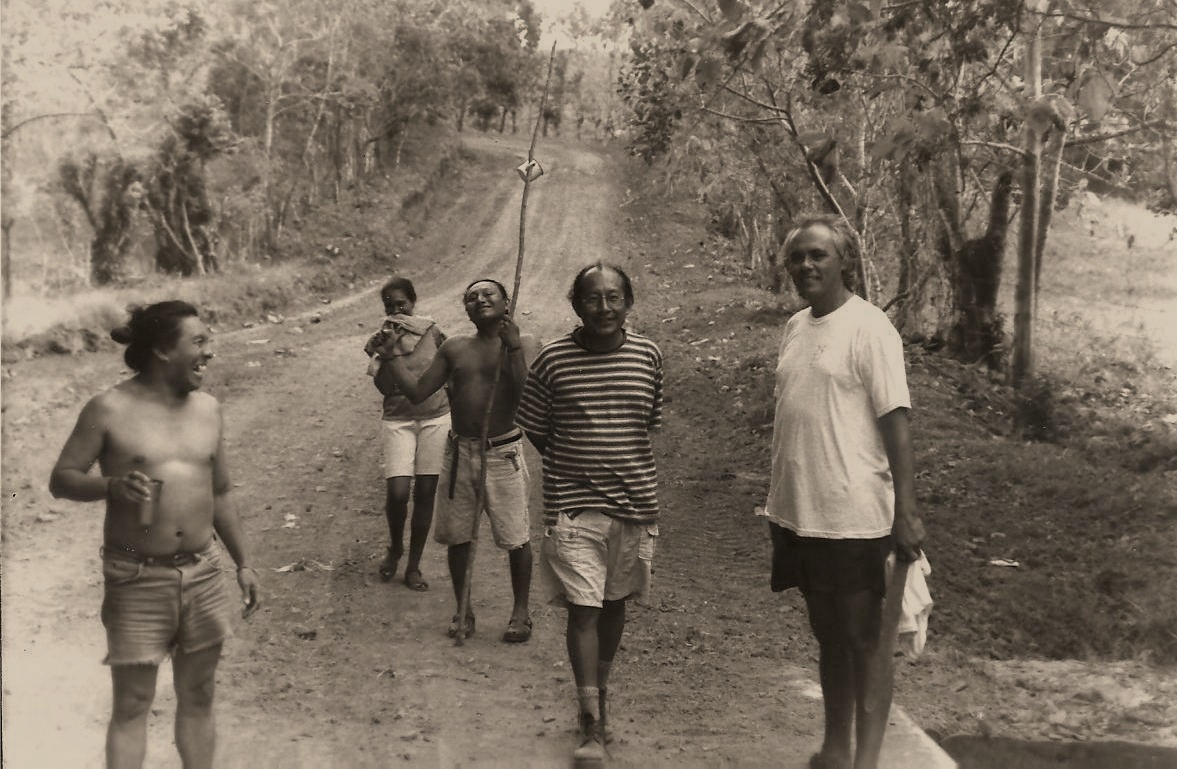
amigos
From Cebaldo Inanwinapi’s personal archive
To become the leader, or the “Saila”, as it is called in Guna, one must first know the oral history. That’s a requirement for any candidate. One must know all of that oral history and be able to recount and sing it.
And besides that, he might be a doctor, he might be a hunter, whatever, but the most important thing is to be the most supportive person in the village. And then there’s another thing that’s fundamental. He’s the only person in the village who can’t have any privileges whatsoever. Because his main task is to serve the community. That’s the classic Guna system.
And here’s another interesting point: in the past, it was the women who held this role in the forest. And then we moved from the forest to the islands, due to colonial pressure and conquest. And that happened because women were in control of agriculture. That’s where the women’s strength comes from. It was gradually lost as we moved to the islands, but it’s now being regained. Economically, women are the the most powerful, because of the textiles they sell.
They also have power in terms of production. Tourism has now taken hold, and tourists buy all these handicrafts. Nearly 70% or 80% of the handicrafts produced are made by women. So the men have to borrow from them.
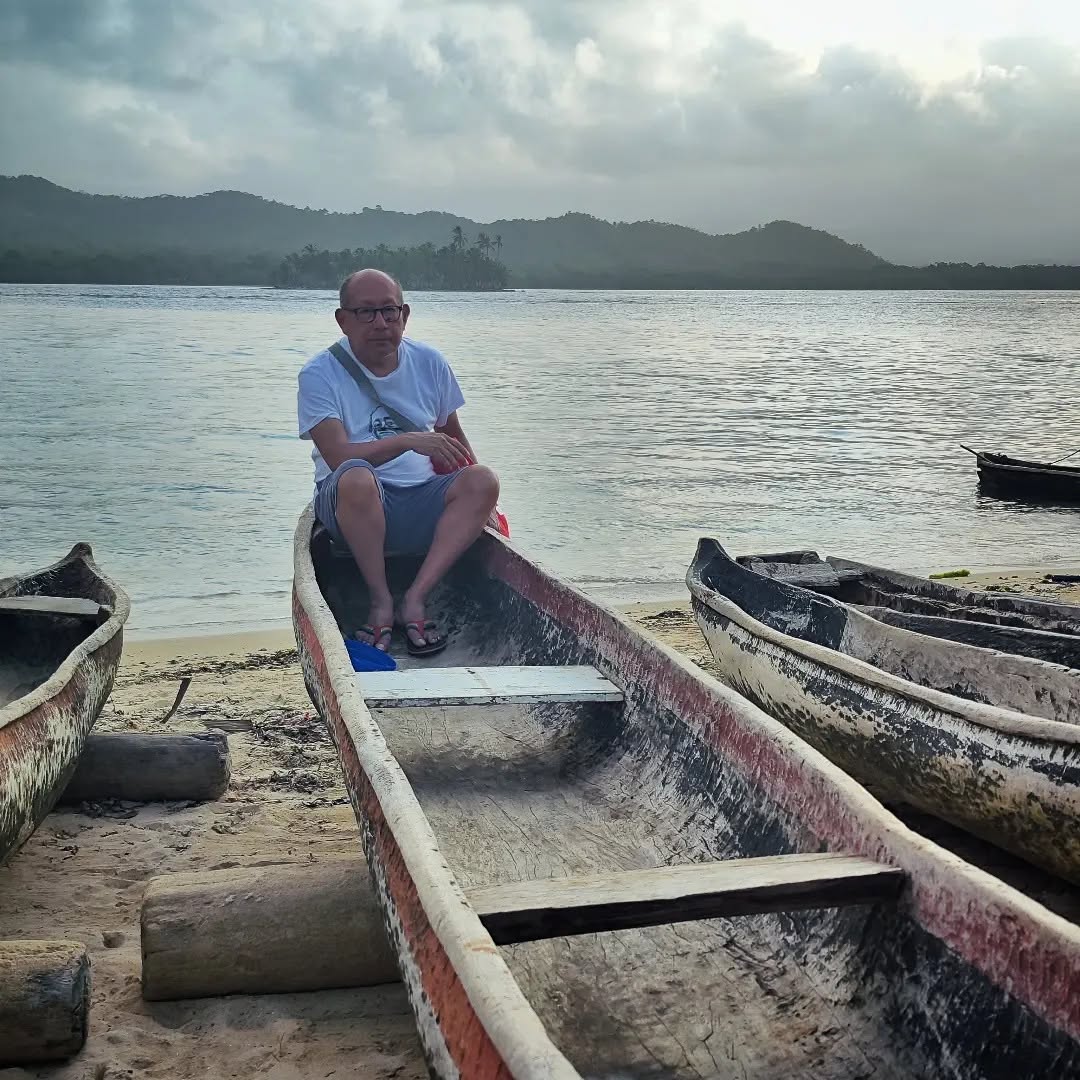
490272517_1226763329457062_4607927605798644921_n
From Cebaldo Inanwinapi’s personal archive
Share

Connecting the Dots with Cebaldo Inawinapi
We met the Guna writer, poet and anthropologist for an illuminating conversation on circular storytelling, strategies to bring new life to ancestral tales, and how the Guna have preserved their autonomy and independence.
Cebaldo Inawinapi was born in Usdup, an island in the Guna Yala archipelago in Panama. When he was born, his father planted the placenta and the umbilical cord in the jungle across from the island. From this ritual, a tree sprouted.
In 1979, Cebaldo left for the Soviet Union, where he studied archaeology. It was there that he met a Portuguese woman who would later become his wife. In 1987, they moved to Portugal. Today he is an anthropologist, writer, poet, and researcher at the University of Trás-os-Montes and Alto Douro.
He wrote “Mi primer árbol”, a bilingual book in Guna and Spanish about that initial ritual: when a Guna child is born, the umbilical cord is planted, along with a tree. He acted in the film “Panquiaco”, in which he portrays his own conflicts around belonging and return. He curated an exhibition at Casa da América Latina on “molas”, the textiles made by Guna women that tell stories, prophecies, and dreams.
We spoke with Cebaldo at FOLIO festival, in Óbidos, Portugal.
Make sure you follow Cebaldo’s work at his official website or Instagram account.
Play the video version below (English subtitles available), or scroll down for the podcast version (dubbed in English) and for the English transcript.
CONNECTING THE DOTS – PODCAST
Are you a podcast fan? Make sure you subscribe to the podcast version of our Connecting the Dots series here.
TRANSCRIPT
31739968_437210840054743_8295165579111694336_n
From Cebaldo Inanwinapi’s personal archive
TO BE BORN, TO RETURN, TO WRITE | CIRCULARITY IN GUNA NARRATIVES
And that’s how I try to explain my life, somehow. The story of being born and un-born, as we say. I sometimes think it’s like the way the Guna tell stories. It’s circular. There isn’t really such a thing as “going up” or things ascending. Everything circulates.
That’s why, among the Guna, when someone passes away, the main chant is about someone expressing gratitude for being able to return to the earth. Gratitude for the food, for life, and so on. So it’s a process that’s constantly circulating.
Furthermore, the Guna, from the 17th century, more or less, when they started forming alliances with pirates and buccaneers to fight against the Spanish Empire, they began to sail. In other words, they’ve always led this life of migration, of sailing. Sailing to learn, to see, and then to return. Because the process of returning is also very complex and highly metaphorical.
I don’t know if you’ve seen a movie I was in, called “Panquiaco”. It was shown at the Rotterdam Film Festival. It’s kind of the same thing. There’s a Guna man who’s lived in Europe for many years and wants to go back. And the shaman tells him, “The only way to go back is to die.”
A lot of people ask the classic question: “How come you talk like that, and say that culture is something fantastic, fabulous, but you’re still in Portugal? What’s the reason?” The Guna have a tradition regarding marriage. When a man gets married, he moves to his wife’s house. So, for me, my home is where Alice, my partner, is. That’s where we are, together.
Many years ago, a lot of my younger colleagues would say the same thing: “Cebaldo, you talk and do all these things, but you’re still living in Europe. You have to come back here.” And then a mentor, an elder poet, said: “No, Cebaldo has done the right thing, because he went to live with his girlfriend, his wife.”
But I also have many projects in Panama that have allowed me to return often. Because all my anthropological projects, and now the films I’ve been making, are connected to the Guna world in one way or another. So writing is also a way of coming back. I write chronicles and poems, and it’s like returning home.
mi-primer-arbol-book-cover.jpg
Cover of “Mi Primer Árbol” by Cebaldo Inawinapi
MI PRIMER ÁRBOL | RITUAL, TALE, BOOK, ANIMATION
The book isn’t that long, but it has the power to tell those stories that are actually part of the Guna community’s daily life, like the story of the umbilical cord and the placenta.
At first, it was a tribute to my parents. To my mother and father, who were teachers and are no longer with us. And a way to tell that story. But there also the illustrations, this book has many illustrations. They were created by an Afro-Panamanian artist and a Guna painter.
And on top of that, it had to be bilingual. That was a challenge for us. Because even for those of us, like myself, who champion Guna culture, who are Guna, in written form, the Guna language is hard to transcribe into a version that can be read. And Guna is primarily an oral language. And now, in some places, it’s being written down. But I continue to advocate for the oral tradition. And that’s why one of the ideas now, with this book, is to bring it to life through animation, where words and images can also come together.
We’re working with a young Guna filmmaker, Duiren, who, by the way, has a film that was screened at the Amsterdam Film Festival called “Bila Burba.” Duiren is the director. And we’re all participating in and collaborating on the film. So, together with him and a Wayuu sister from Colombia, who is also a filmmaker, we’re preparing the animated film. It will be an animation based not only on the book but also incorporating ideas from other Indigenous communities.
Screenshot
Illustration from “Mi Primer Árbol” by Marta Noemi Noriega
For example, one of the things we want to include in the animation is a text of mine that didn’t make it into the book. It’s about a tree that dreams of becoming a cayuco, a boat, a pirogue. And that’s because trees have this ability to dream. So, it attempts to bring together this story about trees with the story of Cebaldo, Cebaldito, who is growing up and feels he can’t be a doctor, feels he won’t be a great hunter, and wants to be a writer. In other words, it connects the Western concept of the writer with the Indigenous, natural world, through the umbilical cord, the tree that is about to be born.
And I think that films, just like literature, also serve this function of awakening. Right now, in this complex world, with wars raging and all that, it becomes a way to showcase alternatives, to show that building a world of greater solidarity is possible. This is the case not only with the Guna but also with other communities that are doing just that.
We’re now in conversations with Panama’s Ministry of Education, to see if they are interested in reissuing it, so that non-Guna people can read it, too. And one beautiful thing is that the introduction was narrated by a Guna chief, my uncle. He passed away about four or five months after he narrated his version as the introduction. Now I dream of creating a Guna-Portuguese version, since there’s already a Guna-Spanish one.
472082937_1142701677863228_7742379334709694970_n
From Cebaldo Inanwinapi’s personal archive
GUNA AUTONOMY & IDENTITY | A LIVING MATRIARCHAL SOCIETY
When I was 10, I left home to go to school in [Panama] City. And for me, that’s when I felt the first impact. I had some advantage, because my parents spoke both languages. And I think I was fluent in Guna and Spanish even as a child. That’s not the case for the vast majority of Guna people. I didn’t experience a profound culture shock, but I did notice differences. From playing and eating to the importance of women.
My mother’s mother is the central figure. That’s why we say she’s a local matriarch. She’s the one who defines the roles. And when there’s a dispute, about anything, she’s the one who has the final say. And the initiation ceremonies are all for women. Men have to hunt and study, but they don’t have a ceremony like the women do. For example, the hair-cutting ceremony. Receiving their given name. The same goes for marriage, where the woman is central. All of these things. And then to see a culture where the man is deemed lord and master, it’s not easy.
Today, when I presented the book, I mentioned what one of my grandmothers told me once: “When you go to live in Panama [City], be careful. You can’t walk around the islands…” In the afternoon, around this time, we’d take walks with our friends… It’s a tiny island. And we’d hold hands. And holding hands, we’d walk along. And she said: “In Panama [City], you can’t do that. You can’t walk down the street holding hands with your male friends.” But she didn’t say why. I learned it the hard way, as they say. That in the city you can’t walk hand in hand with a male friend, because it’s another way of… Well, all that.
Cebaldo-y-su-madre.jpeg
Cebaldo with his mother. From Cebaldo Inanwinapi’s personal archive
Even laughing. Laughing in a certain way. The Guna have this trait. They laugh out loud, especially the women, they have a hearty laughter. Even these things that seem simple have to do with how a community like this lives, where laughter is a form of therapy. So, I had to learn that there were other worlds where that wasn’t looked upon favorably.
And the same applies to clothing, the way we dress. Guna women don’t wear tops. I grew up in that reality. I saw my sisters’ breasts, and my relatives’ breasts. And then, suddenly, I was living in a world where that’s something you’re supposed to hide, and it becomes taboo. But it also becomes a temptation. So, these are things you experience and learn as you go.
And the same goes for language. I had to speak Spanish. And in that regard, Guna women played a fundamental role. In the 1960s, more women began migrating. When the men migrated, they tried to speak Castilian, Spanish. Why? So they wouldn’t be discriminated against. When the Guna women arrived, they spoke Guna, even if they were able to speak Spanish. And that was so strong, so powerful, that many people began to realize the importance of the language.
Nowadays in Panama, Indigenous languages are official. Panama’s official languages are Spanish (Castilian) and the Indigenous languages. At least that’s how it’s written down in the Constitution. But in practice, it’s very complex. So this was a struggle led by Guna women, related to their traditional clothing and their language.
Luciamor2.jpg
From Cebaldo Inanwinapi’s personal archive
We also have extremely high migration rates. Nearly 40% of the Guna community, and perhaps even more, already lives in urban centers. However, the way the Guna community is organized, and the way they defend their autonomy, has had a very interesting effect. That’s why I mentioned the issue of language. In the city, in urban areas, you hear Guna spoken as if it were a “normal” language, and that was due to the strength of the women, and it was crucial.
As far back as 1871, the Guna were already fighting, when Panama was still part of Colombia. But in the 20th century, Panama gained independence from Colombia due to the issue of the Panama Canal. And a few years later, the Guna end up revolting, as many countries in Latin America had developed policies that sought to eradicate Indigenous languages and traditional clothing so that Indigenous people would be “civilized,” would convert to Catholicism, would speak Spanish, would consider property as private, all of that.
And the Guna took up arms. This happened on a Tuesday during Carnival in 1925, between February 20 and 25. But it was the first step toward Panama sitting down to negotiate with the Guna. Also, the Americans didn’t want any trouble near the Canal. The Canal had been built 11 or 12 years earlier. And that gave the Guna a chance to begin negotiating, little by little. Because, in reality, we never wanted war. Nobody wants it. Everyone wants to live in peace. But we were basically forced into it. And then, in ’50 and ’53 of the last century, the Guna were able to secure strong legislation.
Panama wanted to take over, but it was already difficult, or impossible, really, because the Guna community was so well organized. There are 52 communities. Of the 400 islands, 52 are inhabited, and that’s where they practice this “Guna-style democracy,” as they call it. A community of 200 has a local congress. A community of 1,000 also has its own local congress. These meet every day. Every single day. Not only to discuss current issues, but also for traditional songs and to discuss political matters.
amigos
From Cebaldo Inanwinapi’s personal archive
To become the leader, or the “Saila”, as it is called in Guna, one must first know the oral history. That’s a requirement for any candidate. One must know all of that oral history and be able to recount and sing it.
And besides that, he might be a doctor, he might be a hunter, whatever, but the most important thing is to be the most supportive person in the village. And then there’s another thing that’s fundamental. He’s the only person in the village who can’t have any privileges whatsoever. Because his main task is to serve the community. That’s the classic Guna system.
And here’s another interesting point: in the past, it was the women who held this role in the forest. And then we moved from the forest to the islands, due to colonial pressure and conquest. And that happened because women were in control of agriculture. That’s where the women’s strength comes from. It was gradually lost as we moved to the islands, but it’s now being regained. Economically, women are the the most powerful, because of the textiles they sell.
They also have power in terms of production. Tourism has now taken hold, and tourists buy all these handicrafts. Nearly 70% or 80% of the handicrafts produced are made by women. So the men have to borrow from them.
490272517_1226763329457062_4607927605798644921_n
From Cebaldo Inanwinapi’s personal archive
Share


