





Connecting the Dots with Alex Ahimbisibwe
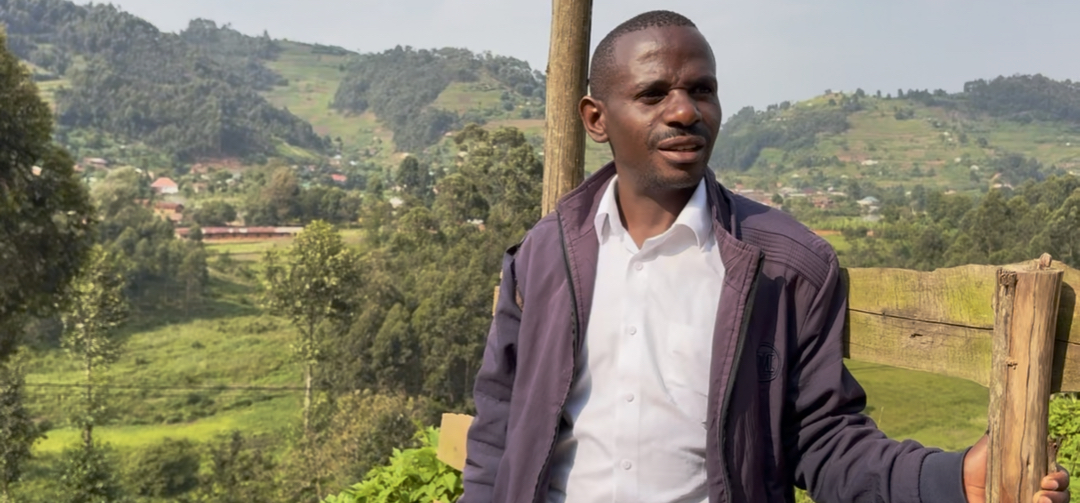
A conversation with the director of the Batwa Indigenous Development Organisation (BIDO), on how the Batwa of South-western Uganda are reclaiming food security, education, and cultural pride on their own terms.
The Batwa are an Indigenous People of Africa’s Great Lakes region. For thousands of years, the Batwa of South-western Uganda lived as hunter-gatherers in the Bwindi Impenetrable Forest. In the early 1990s, the creation of a national park led to their eviction from their ancestral home, leaving Batwa communities landless and pushed to the margins of society.
In this episode, we travel to Kashija village, in Kisoro District, to meet Alex Ahimbisibwe, the director of the Batwa Indigenous Development Organisation, or BIDO. Founded in 2015, BIDO works to overcome this marginalization through community development led by the Batwa themselves.
Azimuth has been a partner of BIDO since 2022. We continue to support two crucial BIDO initiatives: an agriculture project building food security and food sovereignty in the community, and an education project accompanying Batwa children — and their parents — along their school journey.
We recorded this conversation during our visit to Kashija. We hope it brings you closer to the Batwa, and to the work BIDO is doing in Uganda.
Play the video version below, or scroll down for the podcast version and for the transcript.
CONNECTING THE DOTS – PODCAST
Are you a podcast fan? Make sure you subscribe to the podcast version of our Connecting the Dots series here.
TRANSCRIPT
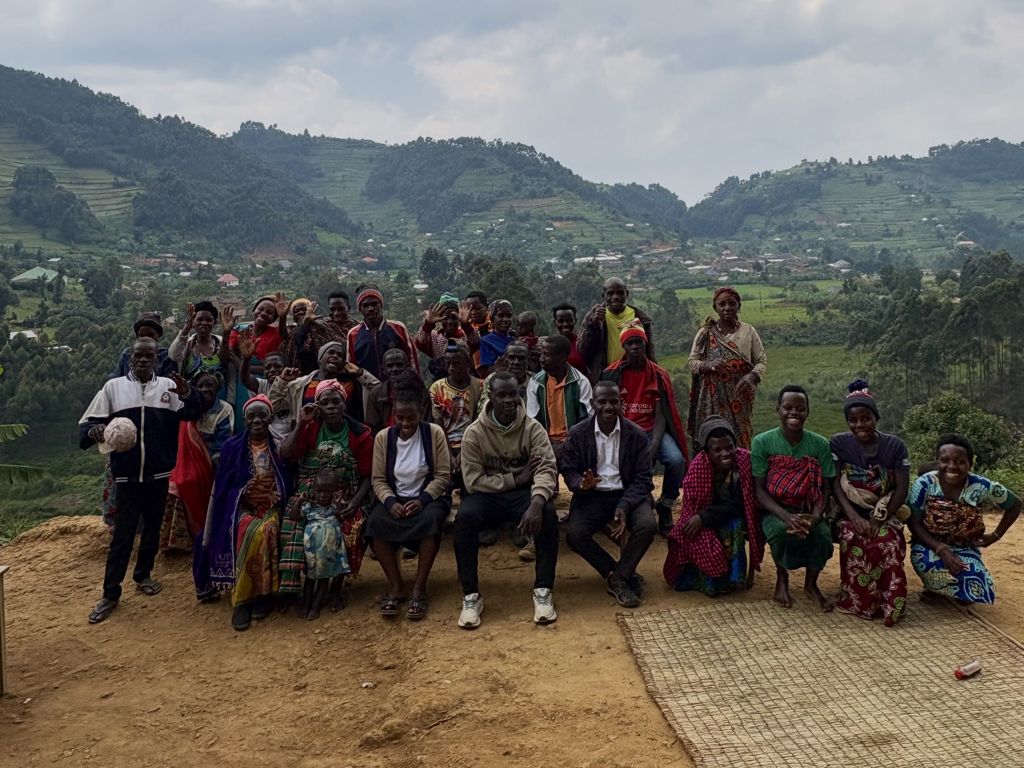
CtD_BIDO_WebsitePhotos.001
Batwa community from Kashija village, Kisoro district, Uganda
My name is Ahimbisibwe Alex, from the Kashija Batwa community. I’m the director of Batwa Indigenous Development Organisation. And we started this organization in 2015.
The community is located in Uganda, in Kisoro District, Rubuguri Town Council. The community is about 5 to 7 kilometers from Bwindi forest.
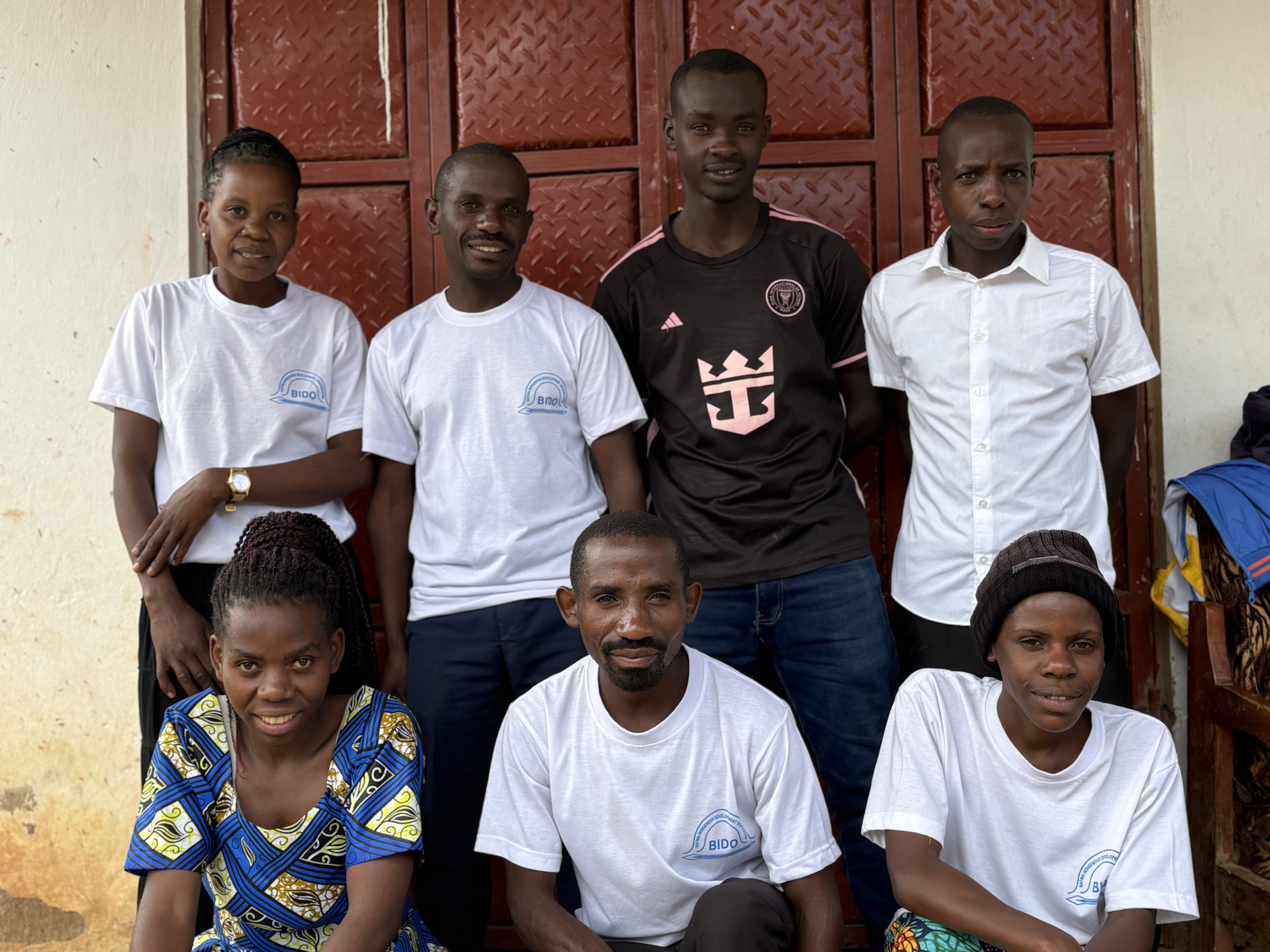
IMG_5518
The BIDO staff, from left to right, top to bottom: Kate Bekuna (Secretary), Alex Ahimbisibwe (Executive Director), Julius Banshekura (Education Coordinator), Laban Friday (Sports Coordinator), Ameria Nyabutono (Accountant), Shallon Kyomugisha (Health Coordinator) and Felix Batuma (Agriculture Coordinator),
NOURISHING THE COMMUNITY | BIDO’S AGRICULTURE PROJECT
With the agriculture project, we started with community mobilization. and sensitization. We got some support from Azimuth World Foundation, and started putting our thoughts into the actual practice on the ground.
We felt like this community, and Batwa communities in general, face the issue of food insecurity and too much hunger. And also malnutrition among children. The Batwa used to do forest hunting and they cannot do it anymore, because of the restrictions that have been put on national parks and game reserves. So we felt like there is a need for the Batwa people to have another source of food.
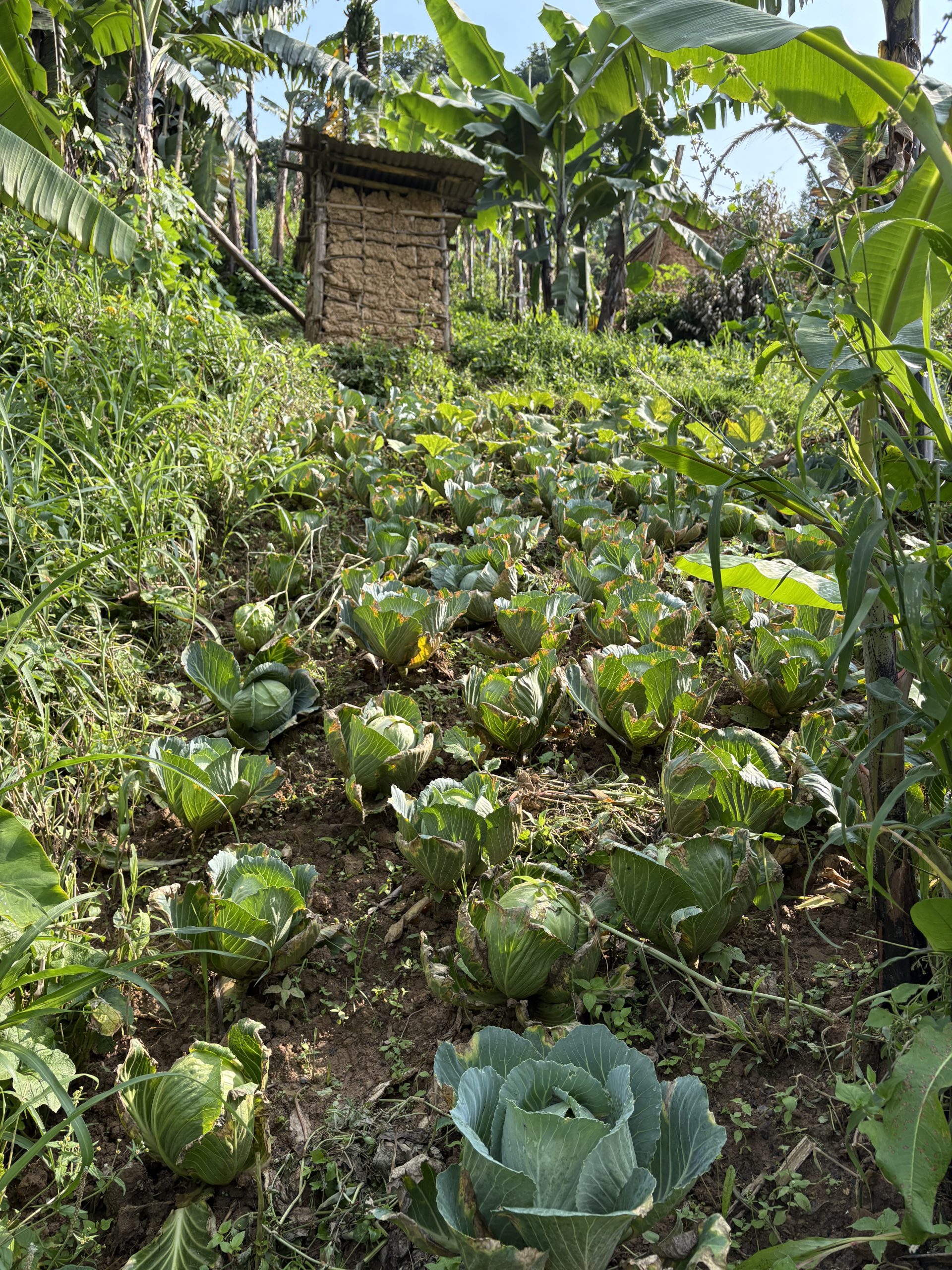
IMG_5627
Family vegetable garden in the Batwa settlement in Kashija
We got support from Azimuth to travel to Kenya. And the main purpose of this trip was to learn about transformation. We used to think we cannot manage to do farming. But when we reached Yatta in Kenya, we realized that there are people that are transforming the dry land and making it reliable in terms of food production.
They realized that the land was not dry. Only their minds were dry. That inspired us, how they transformed their dry mind. They made the soil reliable in terms of irrigation. They put much effort into digging water ponds that would harvest rain. That actually gave us hope. Things that may seem impossible in our eyes, are very possible in other ways.
At some point we realized that our mind was also full of forest. Every time we felt like we needed food, we thought about the forest. But then we realized that we must put the forest aside, because we don’t have access to it. And then we realized, “Here, we are already blessed, because we have rain, the environment is not dry, the soil is fertile.” So all we need to do is utilize it. That’s when we started turning the other way, and using the available land to have food.
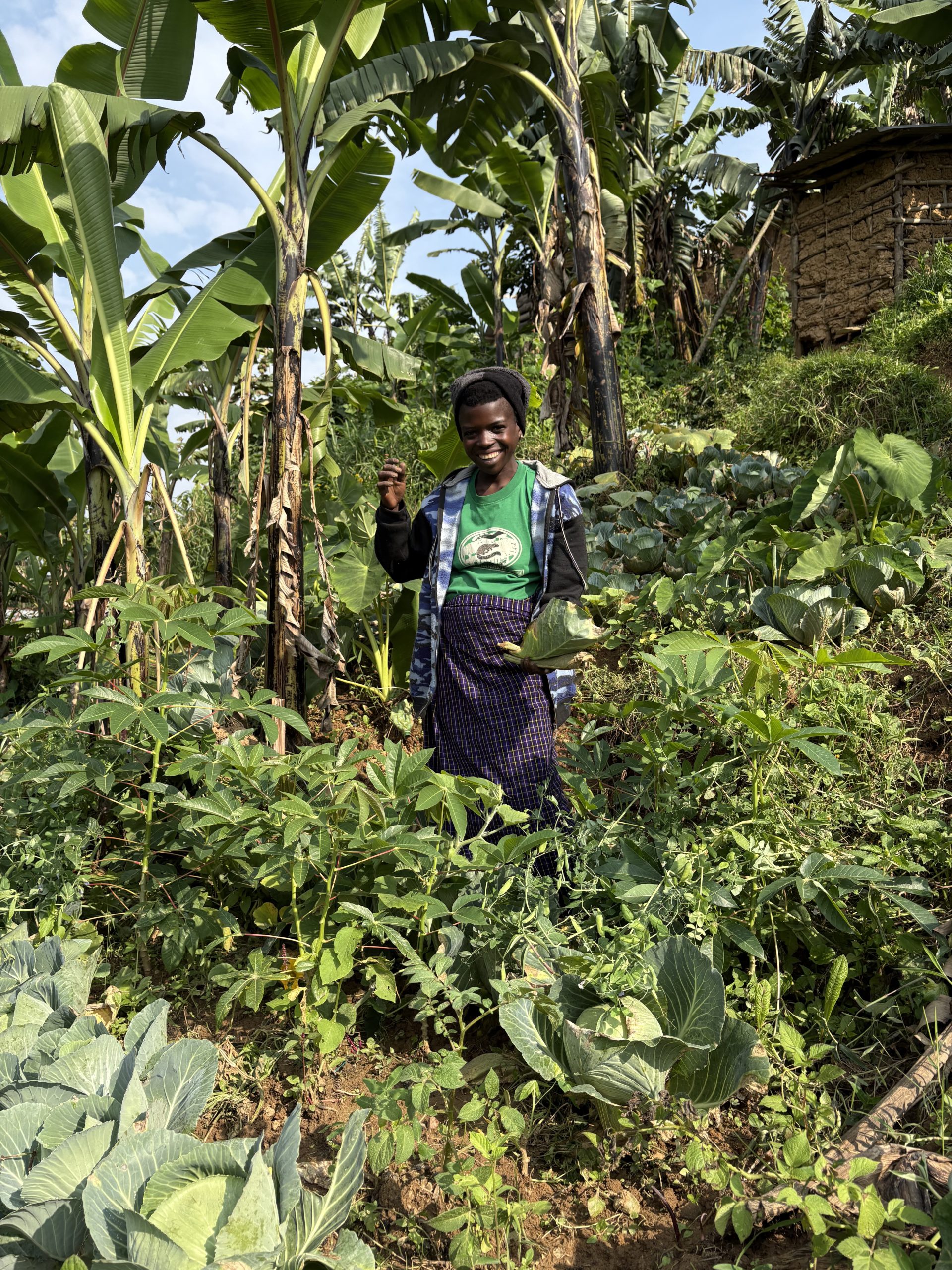
IMG_5642
Aweka Gerardina, Kashija village farmer
John [from Yatta Farm] came here, after our visit to Kenya. And we got another grant, that allowed us to have some training in agricultural skills, like compost manure making. We also learned about farming methods: how to form the sunken beds, how to make zai pit gardens, how to make vertical gardens. And we are slowly trying to apply these methods and skills in our farming. We can already see the changes and how this knowledge contributes to productivity.
So far we have planted modern crops. We plant Irish potatoes, arrowroots (here we call them yams), sweet potato. Those are the staple foods. And we also plant vegetables, including green peppers, carrots, onions and spinach.
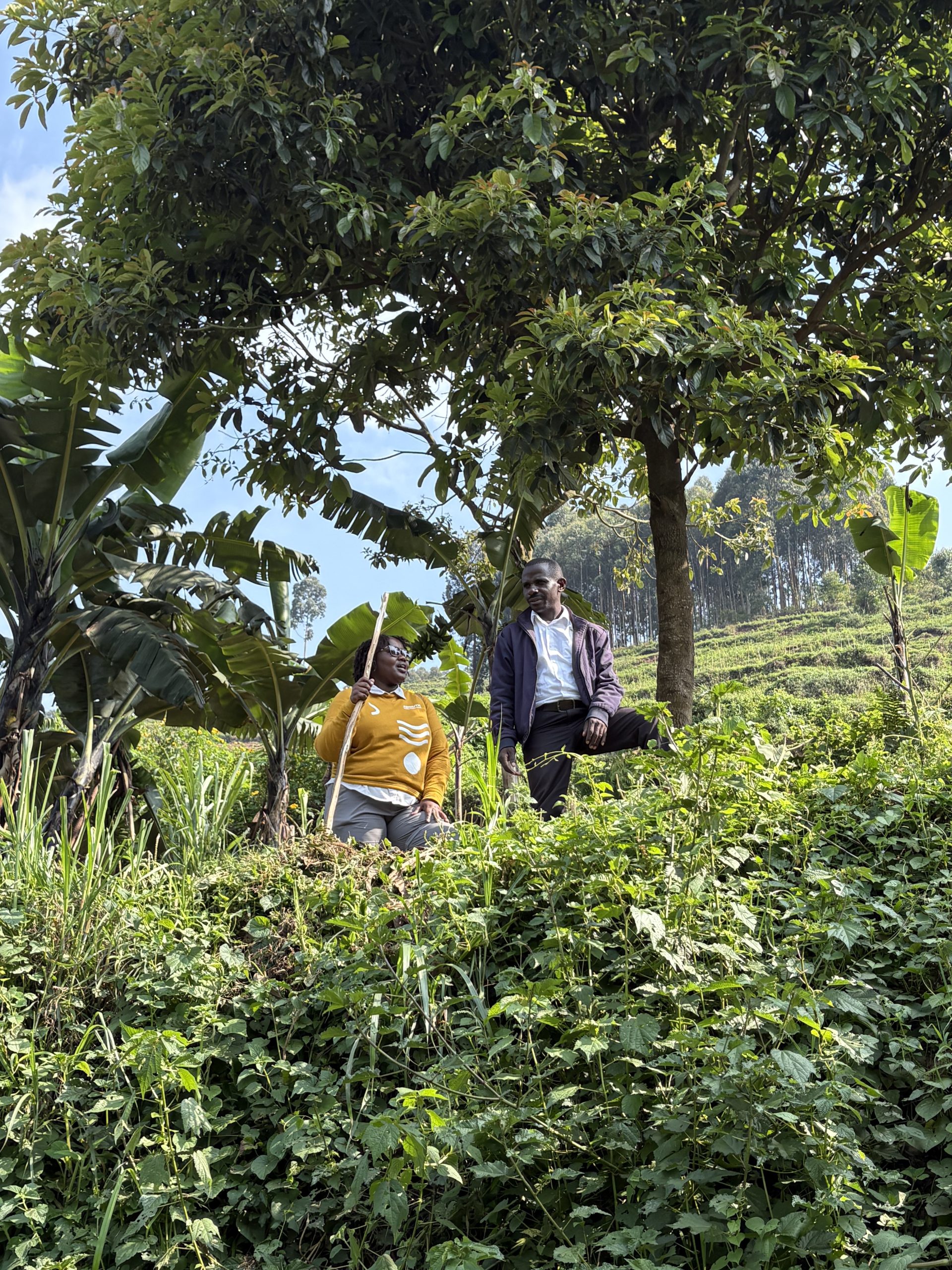
IMG_5725
Jacque Macharia (Azimuth’s Africa Program officer) with Alex Ahimbisibwe from BIDO, during our visit to Kashija village
We are still trying to see how we can also integrate some of our indigenous plants in these very gardens. And some of the community members have started planting seeds of indigenous crops, like Etsura. Because we realized we need to have our indigenous food system integrated.
Echisura, it cures ulcers. Endema helps with the fluids that make joints flexible. And other plants, like Entakara, help in deworming and making sure that children are not affected by internal worms.
This is what we are going for. Because from every angle, our culture has to be respected, it has to be conserved. We are trying to see how we can bring it back to life.
To be honest, in the past, we didn’t know we would be able to plant, to do farming, to achieve something through it and put food on the plate. But nowadays, hope is growing. And this is the kind of thing that brings unity to the community. The community is working together, people are learning from each other. We are nourishing the community. When they have access to good food, they are not malnourished. They are healthy. And actually, the children also look healthier than they did before. So we are nourishing them towards a better life.
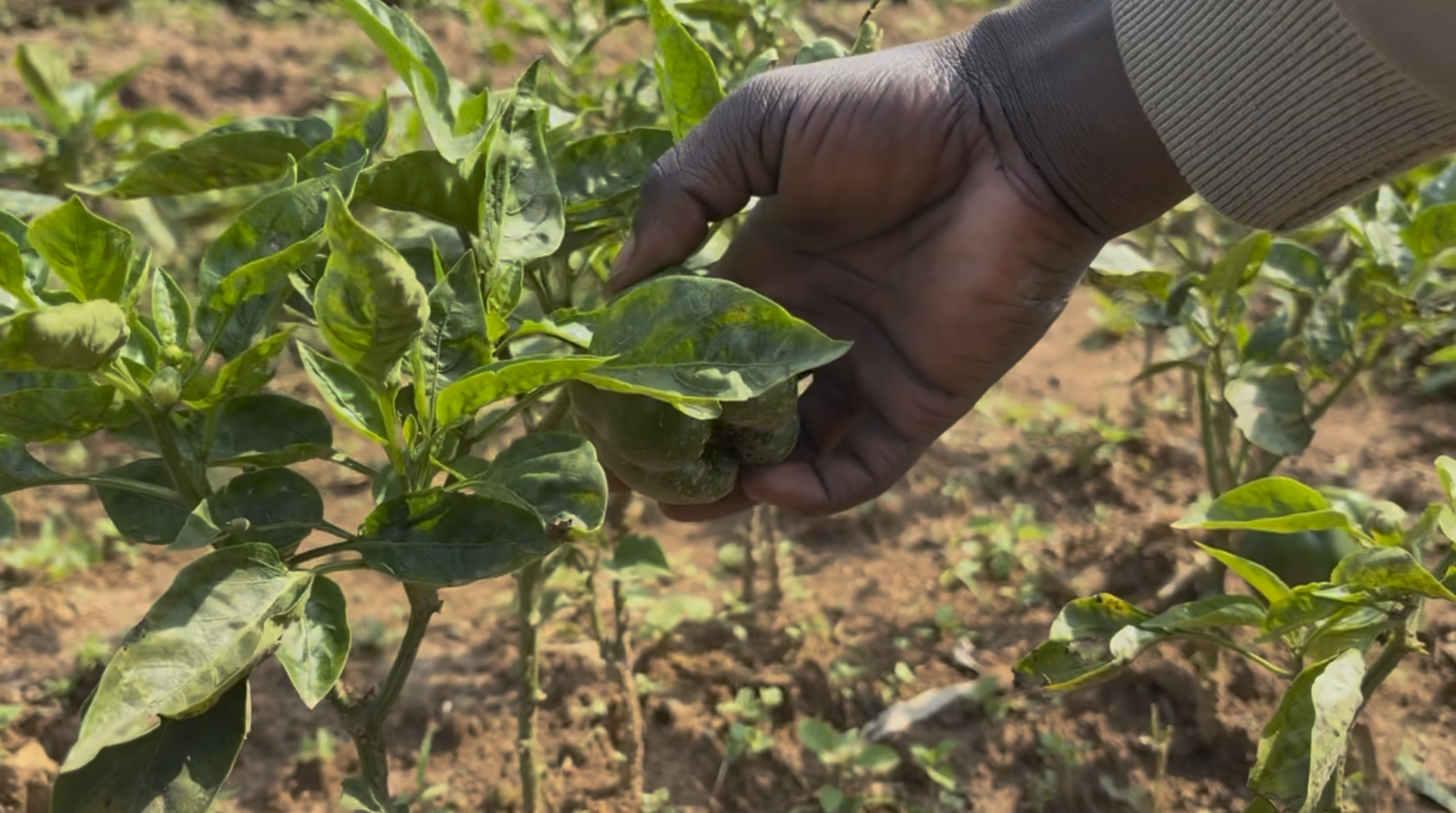
Screenshot 2026-05-29 at 13.58.38
Vegetables planted in the communal farm at the Batwa settlement in Kashija
Along the way, one of our partners advised us to also include some kind of economic activity within the project. So that once community members have enough to provide for their households, they can also sell vegetables in the market, like any other person here. This will bring economic empowerment in terms of financial household support. Because people in our community also need clothes. They need soap, for their health. And they need a saucepan, cups, and other utensils to use within the house.
When you are poor, everyone looks at you as a vulnerable and marginalized person. But when you are empowered, when you have food, and you’re self-reliant and you depend on your own garden, then you are not exploited. So having economic support and building the community to be self-reliant is something that changes the appearance of the community members, turning marginalization into respect.
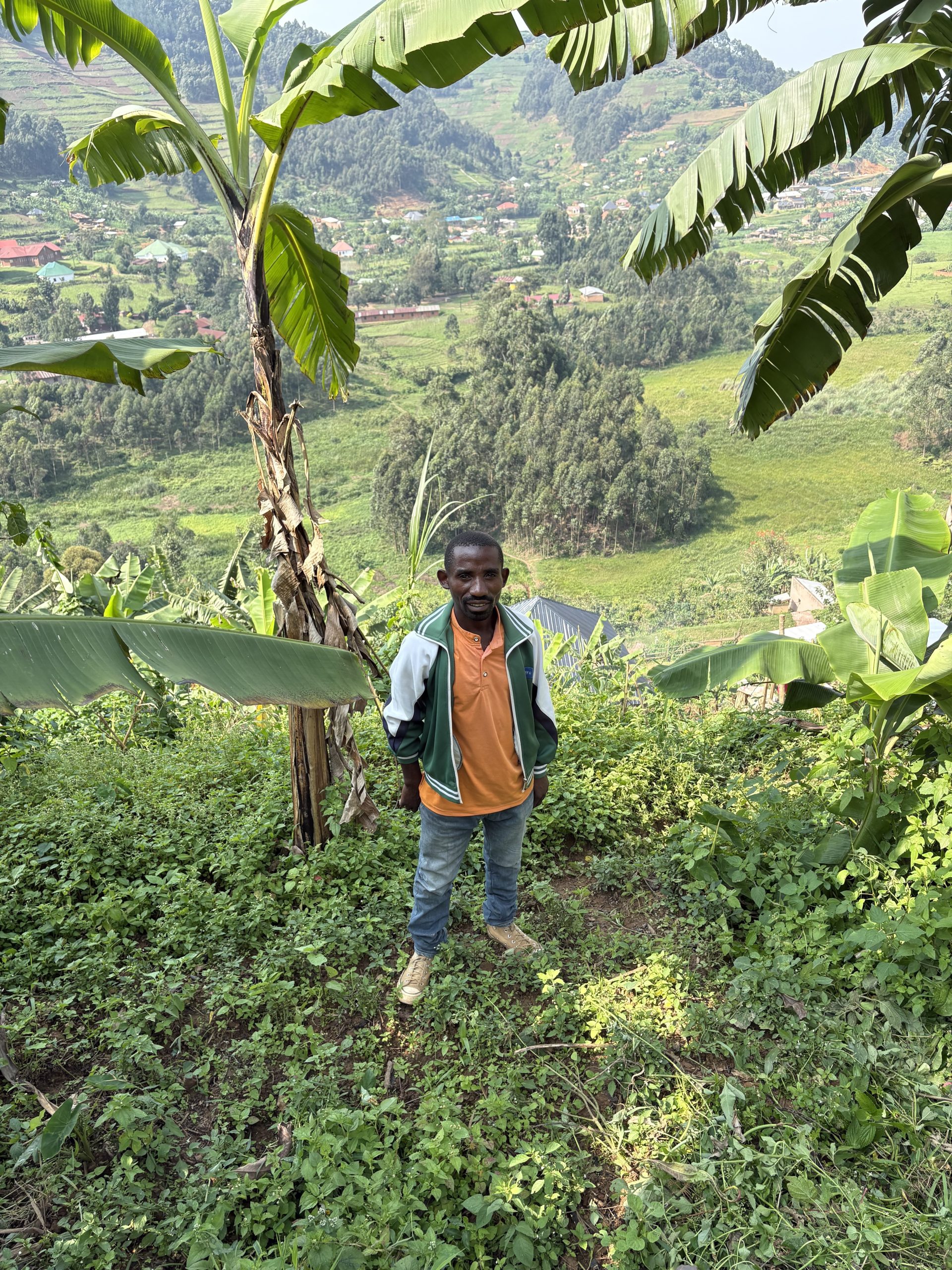
IMG_5752
BIDO’s Agriculture Coordinator Felix Batuma in his vegetable garden
A NEW PATH FOR BATWA CHILDREN | BIDO’S EDUCATION PROJECT
We thought about developing the education project because we see education as one of the ways we can understand what is happening in the world. For most uneducated Batwa, it can be very difficult to realize the situation they are in. They are just exploited, even without realizing it.
We no longer have much access to the informal education that taught us how to survive within the forest. And also the life we are in, it is changing. And has already changed, actually. We changed from the forest life to the modern life. So we need knowledge for this moment, so we can manage our current living situation.
Also, most of our Batwa children, at that point, were dropping out of school. And I felt like the children would be losing a lot, if we allowed them to stay out of school. They will also end up poor and vulnerable, like other Batwa who didn’t go to school. And that’s when we thought, “What if we can also give them a hand, as an organization?” Give them a hand, give them a push.
We put together a proposal, to make sure that we support our children and that they can pursue their education path. I see the children improving their performance. I see the children settling in school. Not being interrupted. They have actually started to realize their future. And that’s what is giving them the kind of motivation to stay and concentrate in school.
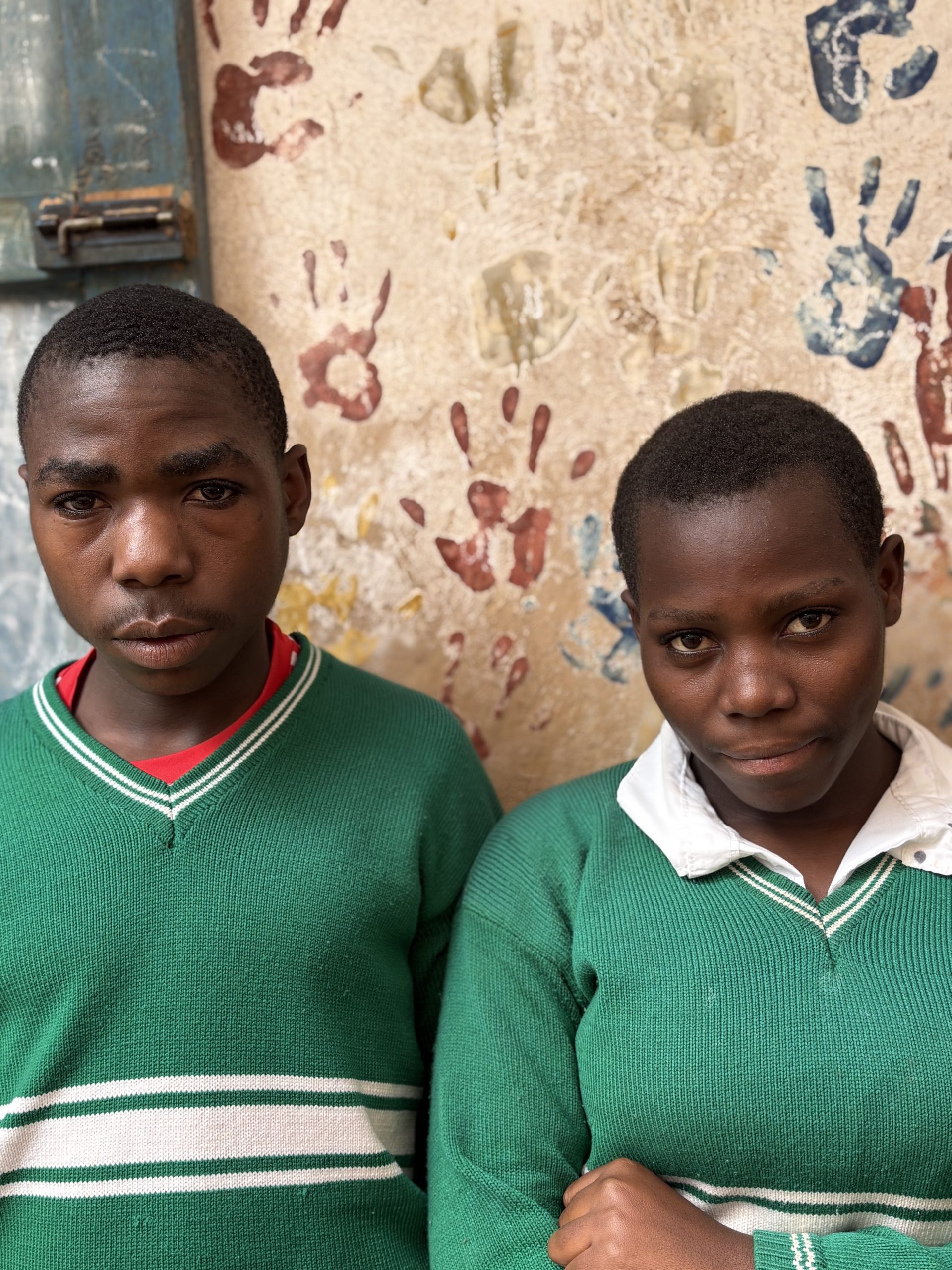
IMG_5950
Muhwezi Laban and Tumwirigire Aphia, primary school students supported by BIDO's education program.
Actually, some of the parents appreciate this, and say, “At least, maybe in the near future, if [Alex] is no longer in the office, they may can replace [him].” These children might also be able to help community members, either by developing a project, or by bringing knowledge from school that can support alternative livelihoods. They can also support their fellow Batwa children in this way.
Actually, in the past, some parents used to look at this modern, formal education, negatively. Because it was not part of the culture within the forest. Some of the educated children also wanted to somehow separate themselves from their parents, because they had gone to boarding schools far away, and were coming back with a lot of knowledge their parents don’t have. But at BIDO, we try to fulfil this gap through our mentorship program. We mentor the children, make sure that they respect their parents, that they don’t forget where they are come from. And we also try to improve their lives at home, and make sure they fit in.
The very parents for the very children we are supporting, we felt like they also had to be sensitized and mentored, to make sure they also are part of the journey. This way, we don’t feel like we are doing it alone. We feel like the journey belongs to BIDO, the parents, the children, the teachers and even the businesses around us.
So, one of the ideas is providing some economic support for the parents, so that at some point the can also contribute to their children’s journey of education. We give them small projects to start with, and they are appreciating that and are willing to keep expanding those projects. And also nowadays they are following-up with their children in school. Some of them visit their children in school and also meet with teachers. Which is something that never used to happen.
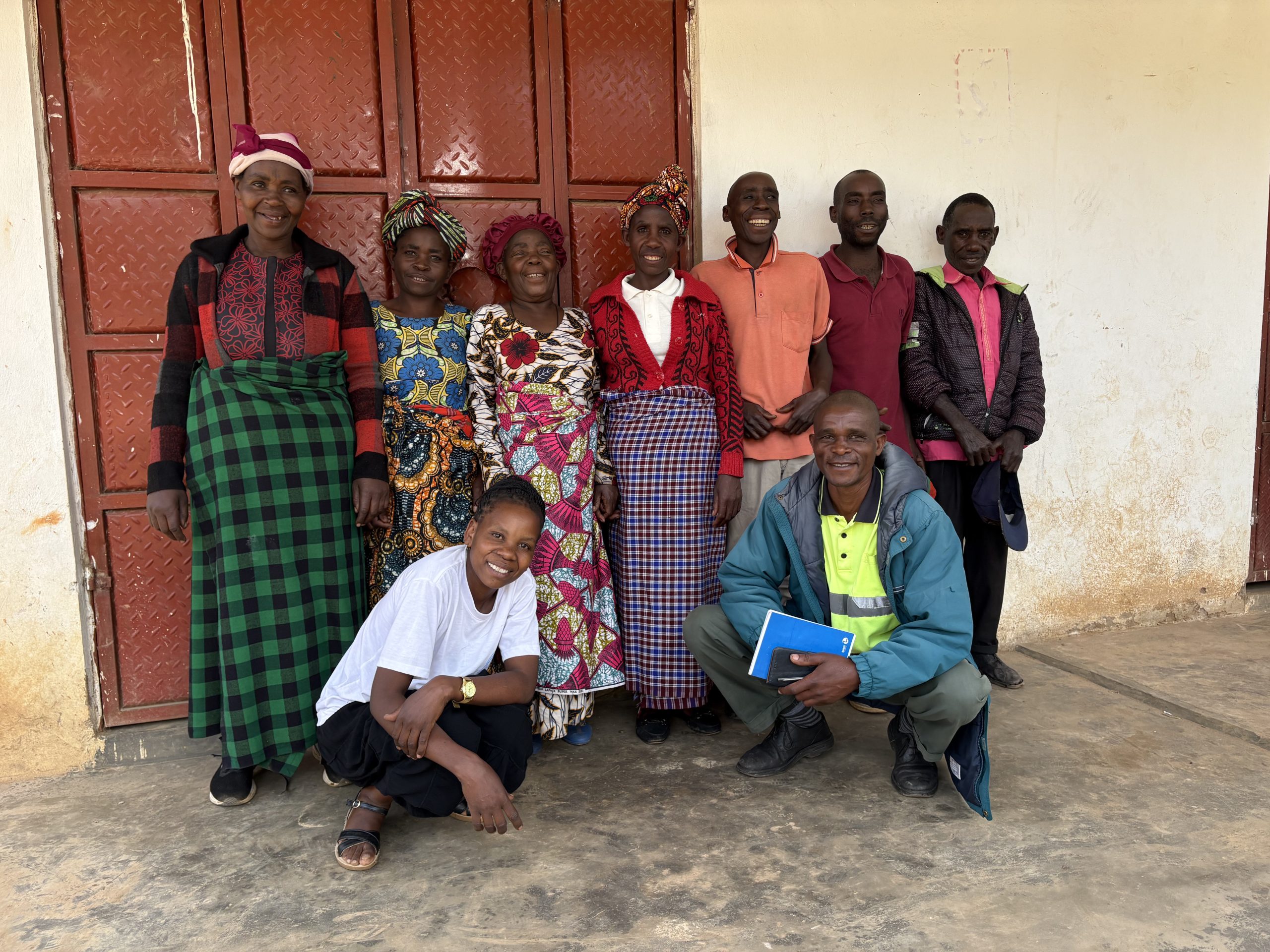
IMG_5585
The parent group, an essential element in the success of BIDO’s education project.
RECLAIMING BATWA CULTURE | BUILDING A SELF-RELIANT FUTURE
To be honest, I realized this by looking at my parents: it must have been difficult to understand the importance of our culture, considering that the new life they faced was composed of criticism of our traditional culture.
But when I got educated, I read many books, I read many concepts. I also tried to explore other Indigenous cultures, drawing comparisons between us and them. We, who have gone to the modern life. And them, who are still in their traditional culture, practicing. So it gives me this capacity to weigh, to make comparisons, to see what exactly our culture was all about, and how it was important to us. And how losing it completely is not good.
If I was not educated, my mind wouldn’t be able to manage all of this, the life we are in, where nobody wants you to practice your culture. Calling it primitive, some people calling it ungodly. But I practice it. I practice it wherever I want. And I’m proud of it, in the sense that I know that it is my identity. I know it’s where I come from, and I respect it. And I’m working hard to make sure that in the near future, I teach other Batwa about the importance of our culture. And then we can build up the knowledge on how to bring it back to life.
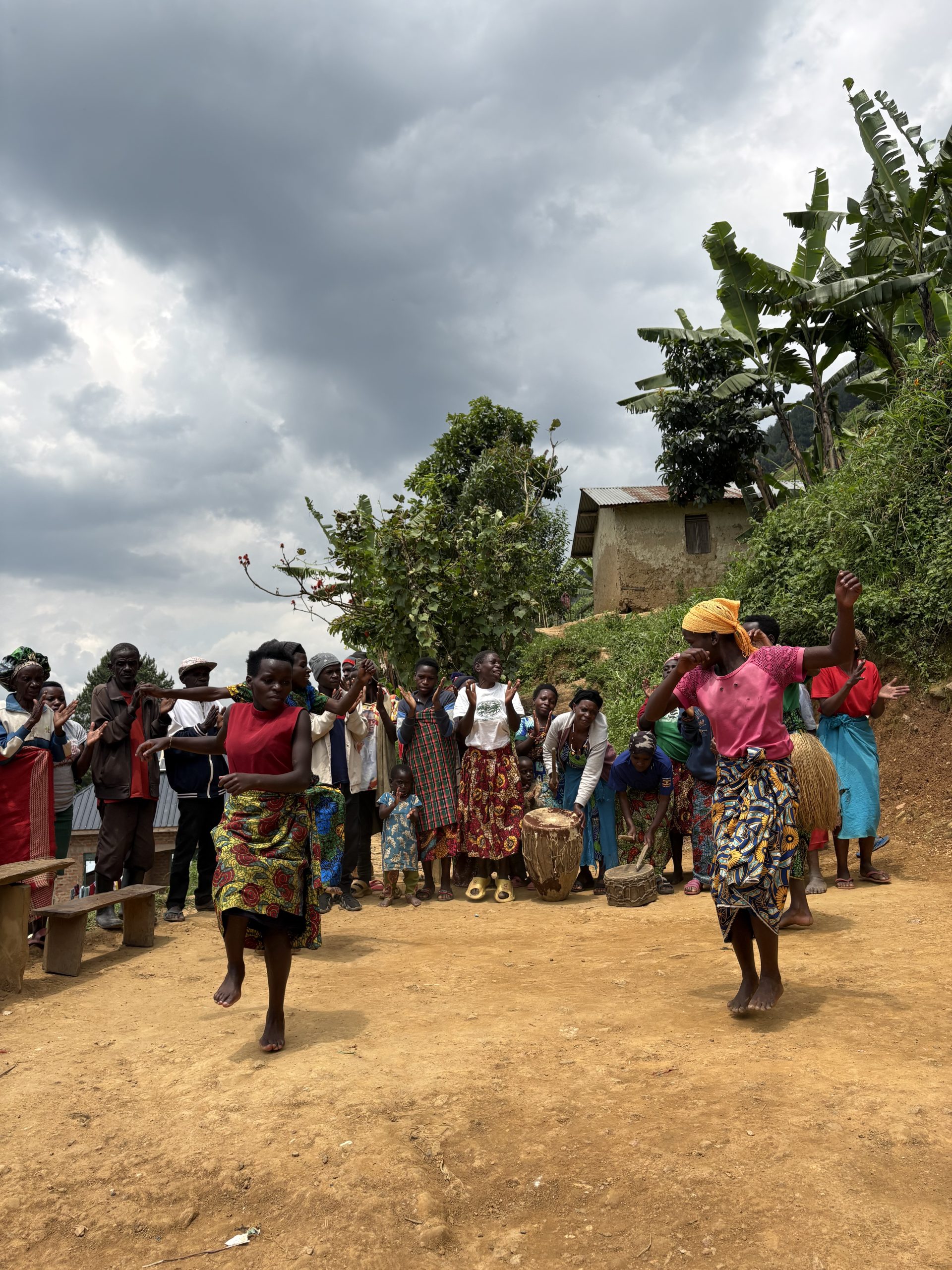
IMG_5846
Celebration after a community meeting in Kashija
I want to see a community that is self-reliant. A community that is economically empowered. Empowered in the sense that they are able to do what they need to do without being exploited at all.
Many friends, including Azimuth World Foundation, are realizing that we, as Batwa, have the ideas that can transform our communities for the best. So I’m happy for Azimuth. Thanks for giving us a hand. And others who are also giving us a hand, in other projects like human rights, I also appreciate them. So thank you very much.
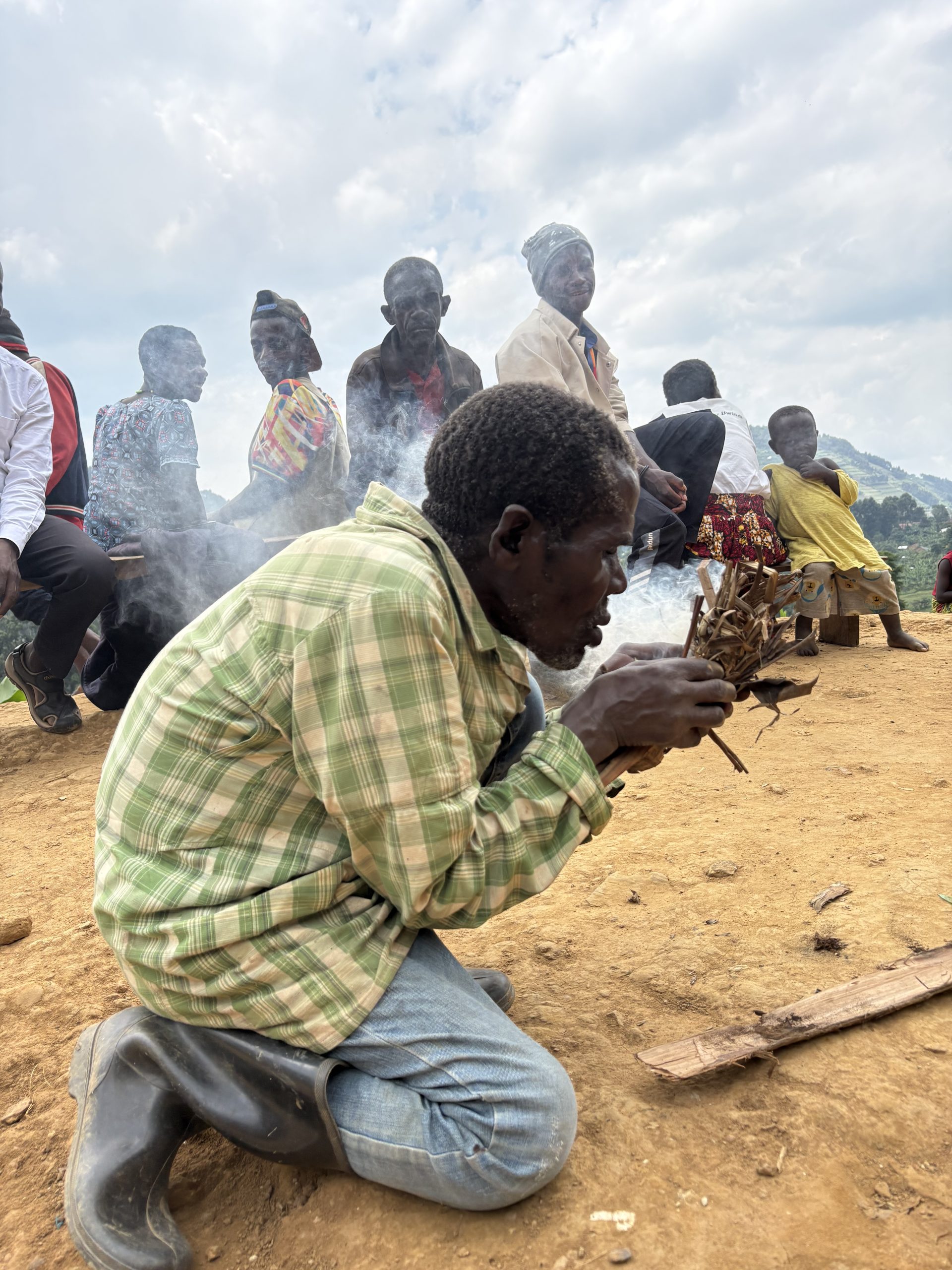
IMG_5879
Preserving traditional Batwa culture is an important part of BIDO’s mission
Share

Connecting the Dots with Alex Ahimbisibwe
A conversation with the director of the Batwa Indigenous Development Organisation (BIDO), on how the Batwa of South-western Uganda are reclaiming food security, education, and cultural pride on their own terms.
The Batwa are an Indigenous People of Africa’s Great Lakes region. For thousands of years, the Batwa of South-western Uganda lived as hunter-gatherers in the Bwindi Impenetrable Forest. In the early 1990s, the creation of a national park led to their eviction from their ancestral home, leaving Batwa communities landless and pushed to the margins of society.
In this episode, we travel to Kashija village, in Kisoro District, to meet Alex Ahimbisibwe, the director of the Batwa Indigenous Development Organisation, or BIDO. Founded in 2015, BIDO works to overcome this marginalization through community development led by the Batwa themselves.
Azimuth has been a partner of BIDO since 2022. We continue to support two crucial BIDO initiatives: an agriculture project building food security and food sovereignty in the community, and an education project accompanying Batwa children — and their parents — along their school journey.
We recorded this conversation during our visit to Kashija. We hope it brings you closer to the Batwa, and to the work BIDO is doing in Uganda.
Play the video version below, or scroll down for the podcast version and for the transcript.
CONNECTING THE DOTS – PODCAST
Are you a podcast fan? Make sure you subscribe to the podcast version of our Connecting the Dots series here.
TRANSCRIPT
CtD_BIDO_WebsitePhotos.001
Batwa community from Kashija village, Kisoro district, Uganda
My name is Ahimbisibwe Alex, from the Kashija Batwa community. I’m the director of Batwa Indigenous Development Organisation. And we started this organization in 2015.
The community is located in Uganda, in Kisoro District, Rubuguri Town Council. The community is about 5 to 7 kilometers from Bwindi forest.
IMG_5518
The BIDO staff, from left to right, top to bottom: Kate Bekuna (Secretary), Alex Ahimbisibwe (Executive Director), Julius Banshekura (Education Coordinator), Laban Friday (Sports Coordinator), Ameria Nyabutono (Accountant), Shallon Kyomugisha (Health Coordinator) and Felix Batuma (Agriculture Coordinator),
NOURISHING THE COMMUNITY | BIDO’S AGRICULTURE PROJECT
With the agriculture project, we started with community mobilization. and sensitization. We got some support from Azimuth World Foundation, and started putting our thoughts into the actual practice on the ground.
We felt like this community, and Batwa communities in general, face the issue of food insecurity and too much hunger. And also malnutrition among children. The Batwa used to do forest hunting and they cannot do it anymore, because of the restrictions that have been put on national parks and game reserves. So we felt like there is a need for the Batwa people to have another source of food.
IMG_5627
Family vegetable garden in the Batwa settlement in Kashija
We got support from Azimuth to travel to Kenya. And the main purpose of this trip was to learn about transformation. We used to think we cannot manage to do farming. But when we reached Yatta in Kenya, we realized that there are people that are transforming the dry land and making it reliable in terms of food production.
They realized that the land was not dry. Only their minds were dry. That inspired us, how they transformed their dry mind. They made the soil reliable in terms of irrigation. They put much effort into digging water ponds that would harvest rain. That actually gave us hope. Things that may seem impossible in our eyes, are very possible in other ways.
At some point we realized that our mind was also full of forest. Every time we felt like we needed food, we thought about the forest. But then we realized that we must put the forest aside, because we don’t have access to it. And then we realized, “Here, we are already blessed, because we have rain, the environment is not dry, the soil is fertile.” So all we need to do is utilize it. That’s when we started turning the other way, and using the available land to have food.
IMG_5642
Aweka Gerardina, Kashija village farmer
John [from Yatta Farm] came here, after our visit to Kenya. And we got another grant, that allowed us to have some training in agricultural skills, like compost manure making. We also learned about farming methods: how to form the sunken beds, how to make zai pit gardens, how to make vertical gardens. And we are slowly trying to apply these methods and skills in our farming. We can already see the changes and how this knowledge contributes to productivity.
So far we have planted modern crops. We plant Irish potatoes, arrowroots (here we call them yams), sweet potato. Those are the staple foods. And we also plant vegetables, including green peppers, carrots, onions and spinach.
IMG_5725
Jacque Macharia (Azimuth’s Africa Program officer) with Alex Ahimbisibwe from BIDO, during our visit to Kashija village
We are still trying to see how we can also integrate some of our indigenous plants in these very gardens. And some of the community members have started planting seeds of indigenous crops, like Etsura. Because we realized we need to have our indigenous food system integrated.
Echisura, it cures ulcers. Endema helps with the fluids that make joints flexible. And other plants, like Entakara, help in deworming and making sure that children are not affected by internal worms.
This is what we are going for. Because from every angle, our culture has to be respected, it has to be conserved. We are trying to see how we can bring it back to life.
To be honest, in the past, we didn’t know we would be able to plant, to do farming, to achieve something through it and put food on the plate. But nowadays, hope is growing. And this is the kind of thing that brings unity to the community. The community is working together, people are learning from each other. We are nourishing the community. When they have access to good food, they are not malnourished. They are healthy. And actually, the children also look healthier than they did before. So we are nourishing them towards a better life.
Screenshot 2026-05-29 at 13.58.38
Vegetables planted in the communal farm at the Batwa settlement in Kashija
Along the way, one of our partners advised us to also include some kind of economic activity within the project. So that once community members have enough to provide for their households, they can also sell vegetables in the market, like any other person here. This will bring economic empowerment in terms of financial household support. Because people in our community also need clothes. They need soap, for their health. And they need a saucepan, cups, and other utensils to use within the house.
When you are poor, everyone looks at you as a vulnerable and marginalized person. But when you are empowered, when you have food, and you’re self-reliant and you depend on your own garden, then you are not exploited. So having economic support and building the community to be self-reliant is something that changes the appearance of the community members, turning marginalization into respect.
IMG_5752
BIDO’s Agriculture Coordinator Felix Batuma in his vegetable garden
A NEW PATH FOR BATWA CHILDREN | BIDO’S EDUCATION PROJECT
We thought about developing the education project because we see education as one of the ways we can understand what is happening in the world. For most uneducated Batwa, it can be very difficult to realize the situation they are in. They are just exploited, even without realizing it.
We no longer have much access to the informal education that taught us how to survive within the forest. And also the life we are in, it is changing. And has already changed, actually. We changed from the forest life to the modern life. So we need knowledge for this moment, so we can manage our current living situation.
Also, most of our Batwa children, at that point, were dropping out of school. And I felt like the children would be losing a lot, if we allowed them to stay out of school. They will also end up poor and vulnerable, like other Batwa who didn’t go to school. And that’s when we thought, “What if we can also give them a hand, as an organization?” Give them a hand, give them a push.
We put together a proposal, to make sure that we support our children and that they can pursue their education path. I see the children improving their performance. I see the children settling in school. Not being interrupted. They have actually started to realize their future. And that’s what is giving them the kind of motivation to stay and concentrate in school.
IMG_5950
Muhwezi Laban and Tumwirigire Aphia, primary school students supported by BIDO's education program.
Actually, some of the parents appreciate this, and say, “At least, maybe in the near future, if [Alex] is no longer in the office, they may can replace [him].” These children might also be able to help community members, either by developing a project, or by bringing knowledge from school that can support alternative livelihoods. They can also support their fellow Batwa children in this way.
Actually, in the past, some parents used to look at this modern, formal education, negatively. Because it was not part of the culture within the forest. Some of the educated children also wanted to somehow separate themselves from their parents, because they had gone to boarding schools far away, and were coming back with a lot of knowledge their parents don’t have. But at BIDO, we try to fulfil this gap through our mentorship program. We mentor the children, make sure that they respect their parents, that they don’t forget where they are come from. And we also try to improve their lives at home, and make sure they fit in.
The very parents for the very children we are supporting, we felt like they also had to be sensitized and mentored, to make sure they also are part of the journey. This way, we don’t feel like we are doing it alone. We feel like the journey belongs to BIDO, the parents, the children, the teachers and even the businesses around us.
So, one of the ideas is providing some economic support for the parents, so that at some point the can also contribute to their children’s journey of education. We give them small projects to start with, and they are appreciating that and are willing to keep expanding those projects. And also nowadays they are following-up with their children in school. Some of them visit their children in school and also meet with teachers. Which is something that never used to happen.
IMG_5585
The parent group, an essential element in the success of BIDO’s education project.
RECLAIMING BATWA CULTURE | BUILDING A SELF-RELIANT FUTURE
To be honest, I realized this by looking at my parents: it must have been difficult to understand the importance of our culture, considering that the new life they faced was composed of criticism of our traditional culture.
But when I got educated, I read many books, I read many concepts. I also tried to explore other Indigenous cultures, drawing comparisons between us and them. We, who have gone to the modern life. And them, who are still in their traditional culture, practicing. So it gives me this capacity to weigh, to make comparisons, to see what exactly our culture was all about, and how it was important to us. And how losing it completely is not good.
If I was not educated, my mind wouldn’t be able to manage all of this, the life we are in, where nobody wants you to practice your culture. Calling it primitive, some people calling it ungodly. But I practice it. I practice it wherever I want. And I’m proud of it, in the sense that I know that it is my identity. I know it’s where I come from, and I respect it. And I’m working hard to make sure that in the near future, I teach other Batwa about the importance of our culture. And then we can build up the knowledge on how to bring it back to life.
IMG_5846
Celebration after a community meeting in Kashija
I want to see a community that is self-reliant. A community that is economically empowered. Empowered in the sense that they are able to do what they need to do without being exploited at all.
Many friends, including Azimuth World Foundation, are realizing that we, as Batwa, have the ideas that can transform our communities for the best. So I’m happy for Azimuth. Thanks for giving us a hand. And others who are also giving us a hand, in other projects like human rights, I also appreciate them. So thank you very much.
IMG_5879
Preserving traditional Batwa culture is an important part of BIDO’s mission
Share


