





Connecting the Dots with Denilson Baniwa
CtD_DenilsonBaniwa_PostCover.001
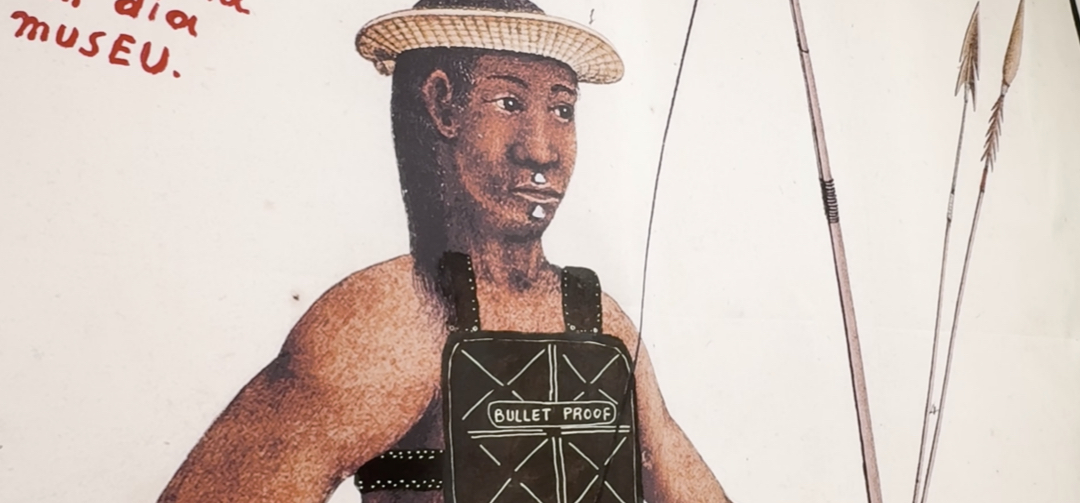
“Contra-Feitiço” exhibition view - Galeria Quadrum (Lisbon)
Art as counter-spell: reclaiming narratives, memories and technology on Indigenous terms.
During the tenth edition of FOLIO – Óbidos International Literary Festival, which had “Borders” as its main theme, we had the privilege of speaking with artist Denilson Baniwa, from the Baniwa People of the Upper Rio Negro, in Amazonas, Brazil.
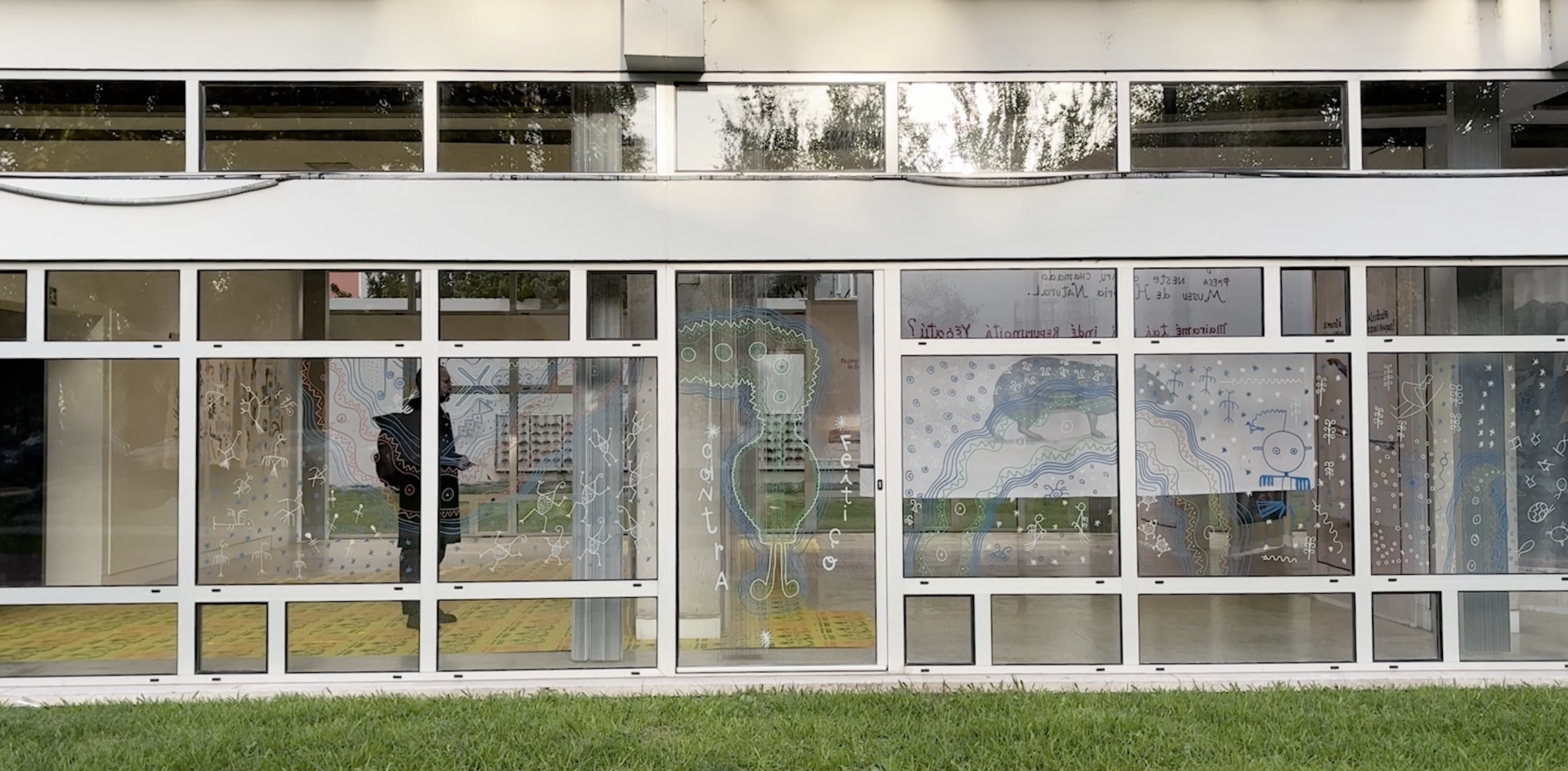
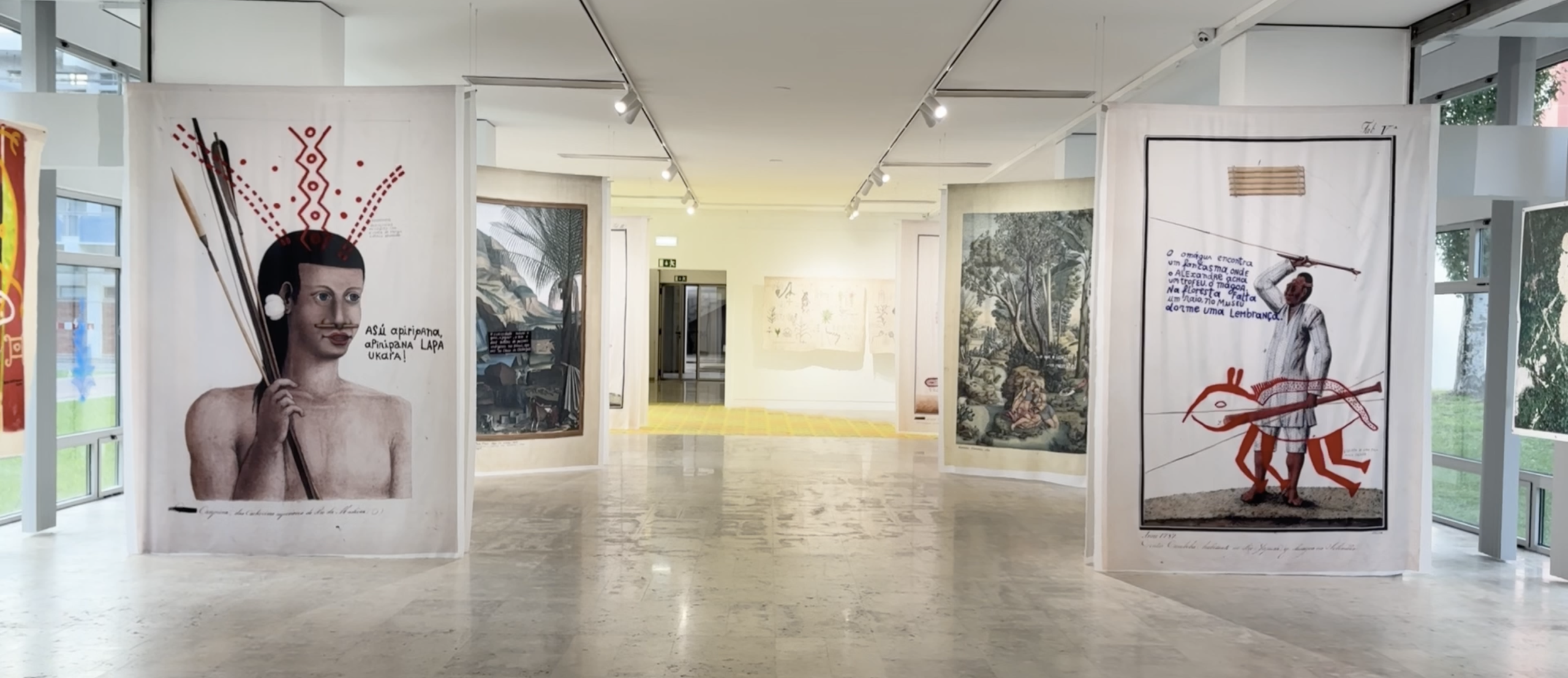
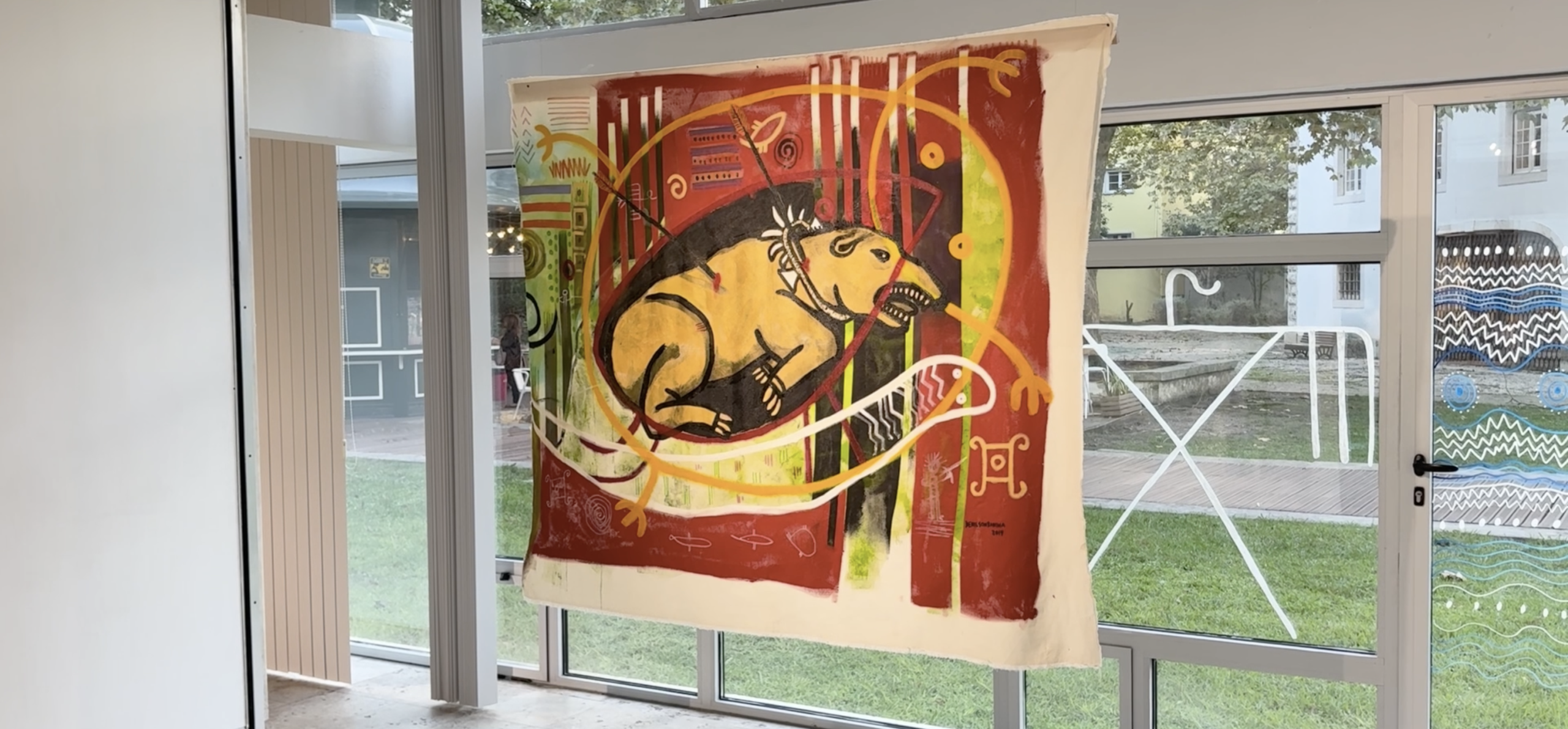
Another highlight of Denilson’s visit to Portugal was the opening of his first solo exhibition in Lisbon. “Contra-Feitiço” (Counter-Spell), on display at Galeria Quadrum until February 15, 2026, includes new works created during his stay in Portugal, and was curated by Ritó Natálio and the Terra Batida platform.
Winner of the 2019 PIPA award and one of the curators of the Brazilian Pavilion at the 2024 Venice Biennale, Denilson Baniwa has become an essential voice in the Brazilian contemporary art scene. During this conversation, we touch on some of the multiple directions opened up by his work, which moves in the spaces between technology and ancestry, protest and poetry, the Rio Negro and the world.
Play the video version below (English subtitles available), or scroll down for the podcast version (dubbed in English) and for the transcript (in English).
CONNECTING THE DOTS – PODCAST
Are you a podcast fan? Make sure you subscribe to the podcast version of our Connecting the Dots series here.
ENGLISH TRANSCRIPT (TRANSLATION)
Screenshot 2026-01-12 at 15.07.30
“Contra-Feitiço” exhibition view - Galeria Quadrum (Lisbon)
IN BETWEEN WORLDS | MOVEMENT AS TERRITORY
Currently, movement itself has been my territory. But I do have a house in Niterói, where I sometimes return and stay for a while. But my home is in the Rio Negro, in the Amazonas state, where I return every year, to stay with my family. There, I eat food that tastes familiar, I visit the rivers that I know so well.
But my current life really happens in between worlds. Since I was very young, I have been part of the Indigenous movement in my region. And that was what to led me to know many, many places, to go to many places, to meet many people. And I believe that currently, this is an aspect of my life that has been greatly expanded. But this state of transition is also a great learning experience for me. So I try to make the most of it.
Screenshot 2026-01-12 at 15.07.55
“Contra-Feitiço” exhibition view - Galeria Quadrum (Lisbon)
COLONIAL EDUCATION | FORBIDDEN WAYS OF BEING
In Brazil, there was a prohibition on being Indigenous, or acting like an Indigenous person, or thinking like an Indigenous person, or eating like an Indigenous person.
All the children in my class, including me, were required to know the names of cutlery, dishes, to have table manners, public manners. And at the same time, we were not allowed to eat Indigenous food or speak Indigenous languages.
So that context is there, too. The way we were educated to become Western and to forget who we are as people from that region. Who we are as Indigenous people, too.
Screenshot 2026-01-12 at 15.08.15
“Contra-Feitiço” exhibition view - Galeria Quadrum (Lisbon)
A REVERSAL OF THE ANTHROPOPHAGIC MOVEMENT | ON FINDING RESPONSES TO MODERNISM
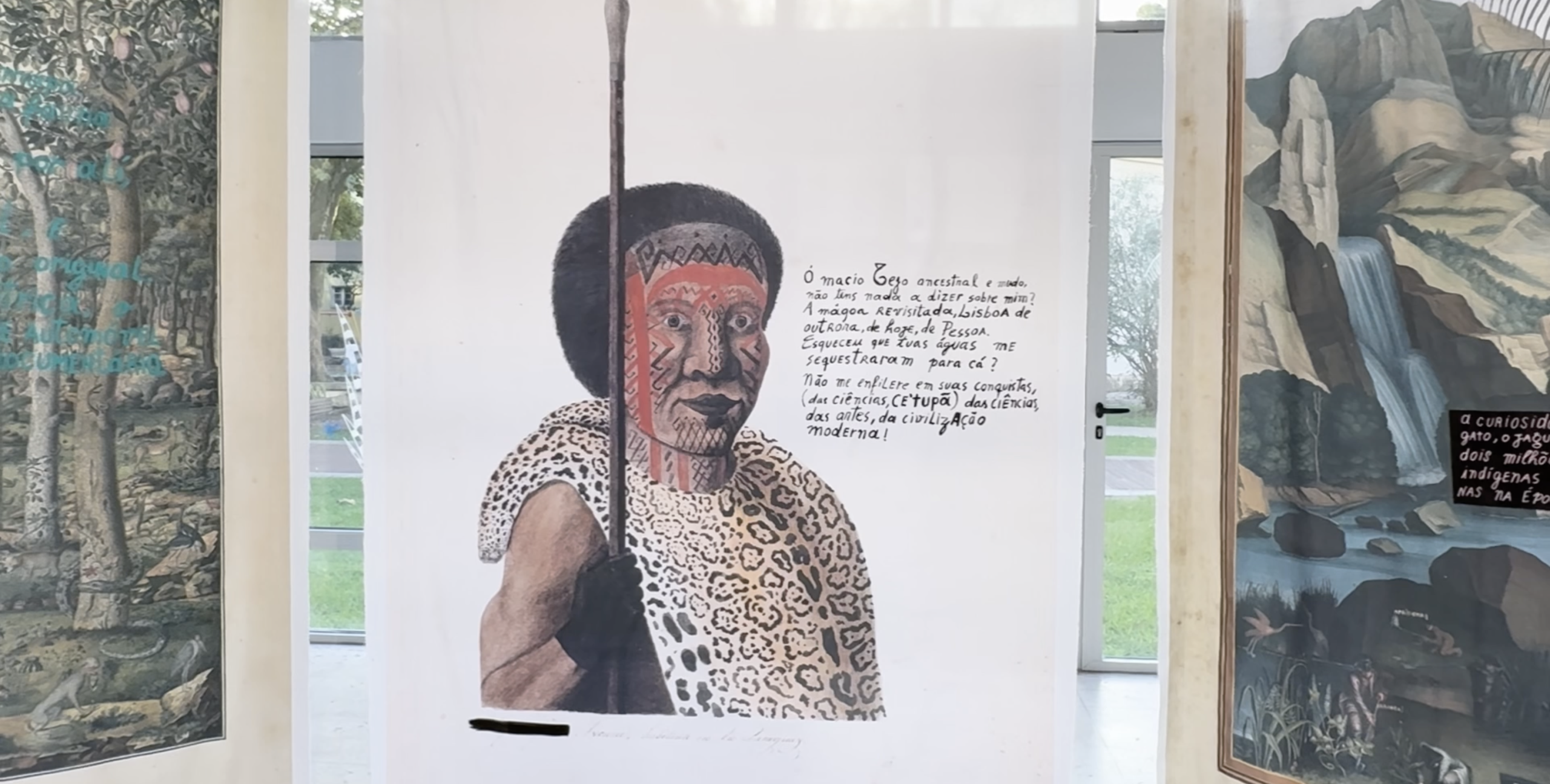
First, I need to talk about the context of modern art in Brazil, about what we call “Modernismo”. This was a movement created by a group of people, by artists, ailing from Brazil’s upper class, who had the opportunity to learn about the artistic movements that were happening around the world. Especially those taking place in France, in Paris, where Picasso, Modigliani, Matisse, and a range of other artists were thinking about their identity and their territory based on their contact with other identities and other territories. In France, this concerned mostly their contacts with Africa and Asia.
And these artists from Brazil, in this context, began to perceive themselves as inhabitants of a territory that carried deep Indigenous memory. They then returned to Brazil, and through their research and study of Indigenous culture and art, built a new intellectual approach to art, which became what we know as Brazilian Modernism. This movement is also known as the Anthropophagic Movement. Anthropophagy, in this sense, means a construction of oneself based on the other, on what’s external to oneself.
The movement I attempt to create with my own work is a reinterpretation of these previous movements. We learned how you’re supposed to eat using French cutlery. Now we need to see what we can do with that knowledge. The Anthropophagic Movement in Brazilian art took place. But what can we learn from this movement? What can we build going forward?
Screenshot 2026-01-12 at 15.09.30
“Contra-Feitiço” exhibition view - Galeria Quadrum (Lisbon)
TECHNOLOGY AND RESISTANCE | CONFRONTING THE IRREVERSIBLE
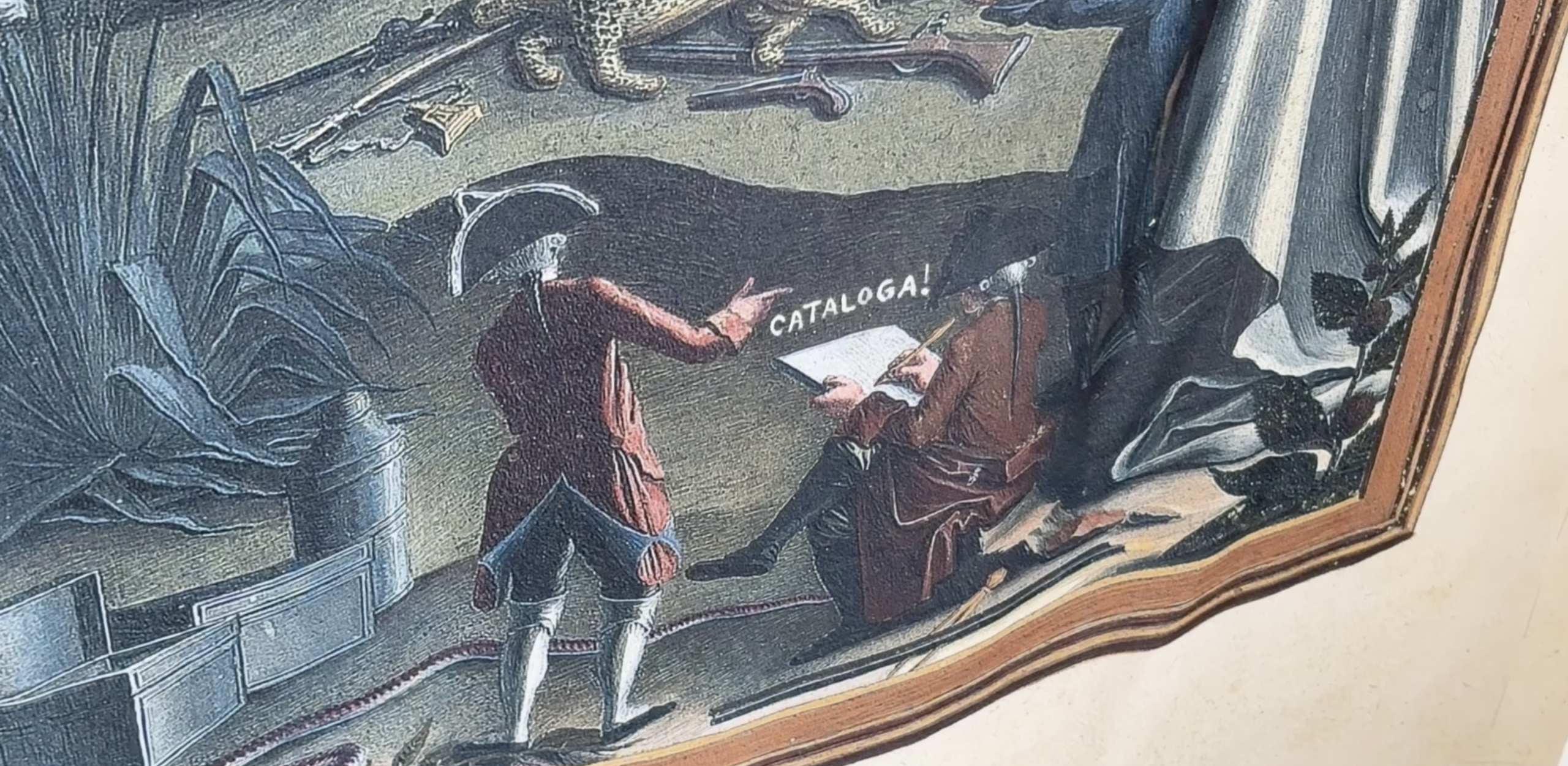
For example, if someone asks me why I use certain tools, this or that technology, I always reply that not only do we have the right to use them, but all this technology and knowledge is also entering Indigenous communities in an irreversible way.
It began with education, of course. With documents, books, and things like that. Then television came along. Now it’s the internet. Basically, all of this technology has been invading Indigenous communities in ways that they are not able to avoid.
If something is beyond our control, and goes against our will, and it’s impossible to fight it, we must be aware of that. We need to understand what these technologies are, what kind of knowledge this is, so that we can use them to our advantage, or eventually eradicate them from these places. External influences are increasingly present. And if we don’t react to them in some way, I don’t know what might happen.
Screenshot 2026-01-12 at 15.09.47
“Contra-Feitiço” exhibition view - Galeria Quadrum (Lisbon)
THE PANAPÁ PROJECT | A SCHOOL INSIDE THE MUSEUM
The Panapaná School, for example, is a movement I started where we set up a school inside a museum, more specifically an educational museum. After all, the Pinacoteca (in São Paulo) used to be an art school, before it became a museum.
When an Indigenous person is invited by such an institution, there is an expectation that this person will answer every single question related to Indigenous issues. I am just one person, I come from one People, from a very specific region. I couldn’t possibly provide answers on behalf of other Indigenous people. So my response to the invitation was: I myself will invite many Indigenous people, so that they can provide their own answers to all of these questions.
That was the exercise behind me wanting to do the Panapaná School. My goal was to bring together all these different people. I think it was very interesting, and it raised quite a lot of issues for the institution. It’s much easier to deal with a single artist, with one body of work, than it is to interact with a diverse group of people.
For me, it was also interesting to confront the institution with that kind of provocation. And to see how it would react. It often reacted well, to certain people, because they spoke Portuguese fluently, or because they had graduate degrees. But then someone from a remote village would come along, someone who almost didn’t speak Portuguese, and it caused an embarrassment, it immediately exposed the need for better mediation approaches.
Screenshot 2026-01-12 at 15.08.30
“Contra-Feitiço” exhibition view - Galeria Quadrum (Lisbon)
OPENING DOORS | DEMOCRATIZING THE SACRED
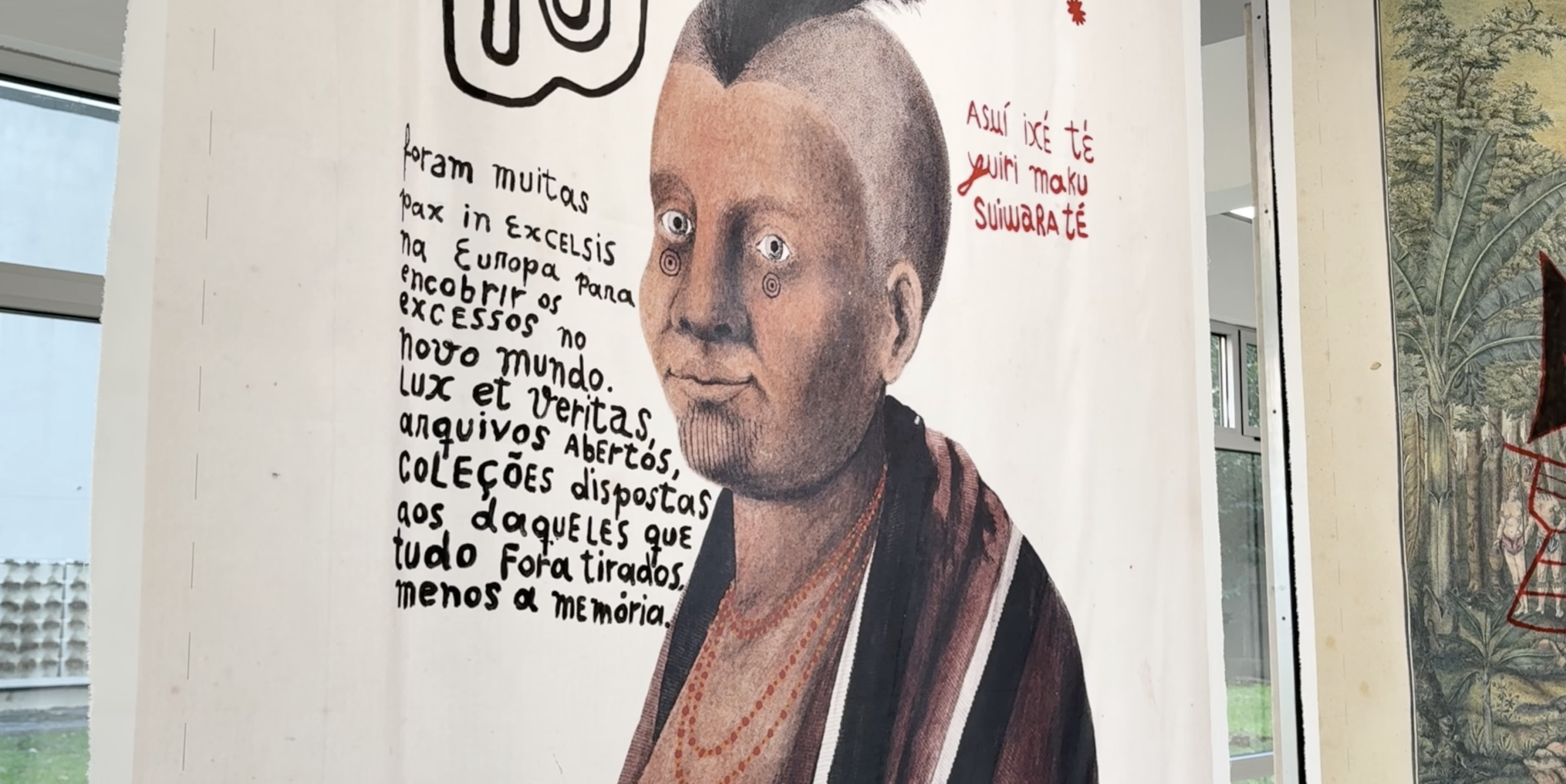
For me provoking both the museum and the audience, this was the interesting part. And of course this was an educational project at its core. So, the people I invited were there to teach something, to share their knowledge with the audience. For me, this brought back to the front the idea that that building was once a school. A place meant for knowledge to be shared and learned, a place meant to welcome people from different social and economic backgrounds.
In Brazil, art institutions, or museums like the Pinacoteca, can be seen as very sacred and unattainable places. So most people in Brazil will be born, live, and die without ever setting foot in a museum. It’s not that museums keep certain people from coming in. But these people don’t feel able to visit, they don’t feel invited by the institution.
The Panapaná School was an attempt to let everyone know that they are welcome, that they will be well received in an art institution. I believe that’s the purpose of the work.
Screenshot 2026-01-12 at 15.10.49
“Contra-Feitiço” exhibition view - Galeria Quadrum (Lisbon)
GOING WHERE PROTESTS CAN’T REACH | THE SINGULAR POWER OF ART
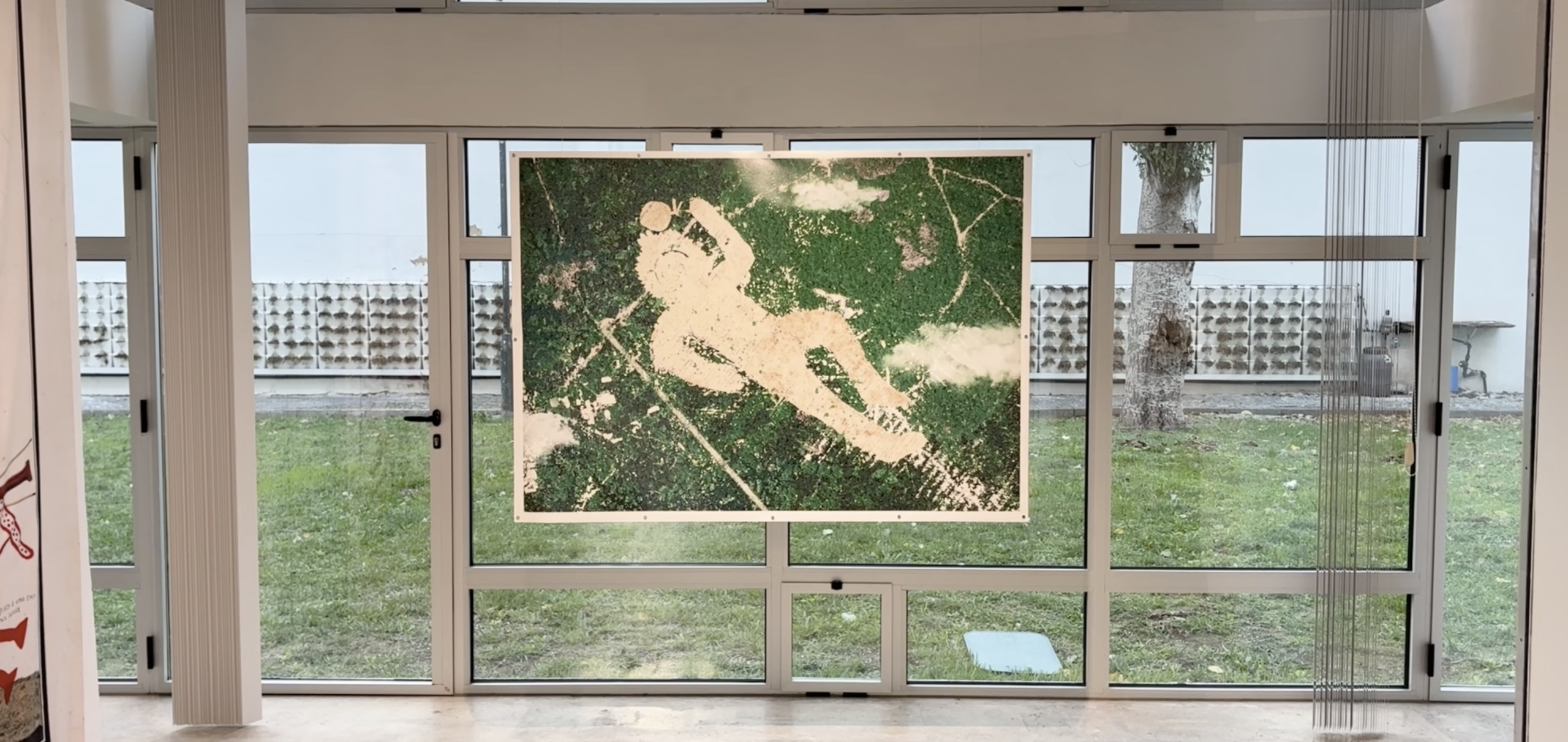
I look at all these works as artistic exercises. I know that these are different media, different ways of doing things, different methodologies, of course. But I’m always looking for spaces where I can make the Indigenous presence visible, where I can bring about Indigenous participation, and I’m always looking for ways to bring other people to these spaces, whether with me, or after me.
Because I do miss seeing people who look like me, who come from situations similar to mine. That happens in many places. Not just in art. It happens in hospitals. I don’t miss seeing them as patients, but as professionals. In courts, or in forums, I miss seeing them, not as people that are arrested or prosecuted, but acting as judges, as lawyers. In academia, I miss seeing them as teachers.
A protest, a political statement, these approaches can work. But art has a power that these actions don’t have. Art has an invisible ability to stir our bodies, our sensibilities, our feelings, our memories. Art is able to do that.
I believe the main difference between the Indigenous movement rooted in action, protest, and demands—which is a legitimate movement, one that produces results—and the work of an Indigenous artist, both in exhibitions and public places, is that the latter touches on the audiences’ sensibility, it engages the audience when it isn’t taking a defensive stance, so to speak. It finds the audience at a point where it is open to receiving, to dialoguing with those ideas, to feel in other ways.
I’ve learned countless things from looking at works of art. About the history of a place. About the history of a person. Art is capable of invading our bodies, invading our sensibilities. It really is. And I truly believe that it can help us change our ways of thinking. I hope that when people have access to my work, they think about that work, but also about the place I come from. About who I am and what is in that work.
And looking at all of this as an Indigenous person, I also believe that my work is there to support the Indigenous movement. To amplify the movement’s voice. To amplify the desires, the demands of this movement. Those related to the recognition of our territories by the State, related to the recognition of our languages, our cultures. So I think there is a connection between these two strategies, even if they operate based on different sensibilities.


Share

Connecting the Dots with Denilson Baniwa
CtD_DenilsonBaniwa_PostCover.001
“Contra-Feitiço” exhibition view - Galeria Quadrum (Lisbon)
Art as counter-spell: reclaiming narratives, memories and technology on Indigenous terms.
During the tenth edition of FOLIO – Óbidos International Literary Festival, which had “Borders” as its main theme, we had the privilege of speaking with artist Denilson Baniwa, from the Baniwa People of the Upper Rio Negro, in Amazonas, Brazil.
Another highlight of Denilson’s visit to Portugal was the opening of his first solo exhibition in Lisbon. “Contra-Feitiço” (Counter-Spell), on display at Galeria Quadrum until February 15, 2026, includes new works created during his stay in Portugal, and was curated by Ritó Natálio and the Terra Batida platform.
Winner of the 2019 PIPA award and one of the curators of the Brazilian Pavilion at the 2024 Venice Biennale, Denilson Baniwa has become an essential voice in the Brazilian contemporary art scene. During this conversation, we touch on some of the multiple directions opened up by his work, which moves in the spaces between technology and ancestry, protest and poetry, the Rio Negro and the world.
Play the video version below (English subtitles available), or scroll down for the podcast version (dubbed in English) and for the transcript (in English).
CONNECTING THE DOTS – PODCAST
Are you a podcast fan? Make sure you subscribe to the podcast version of our Connecting the Dots series here.
ENGLISH TRANSCRIPT (TRANSLATION)
Screenshot 2026-01-12 at 15.07.30
“Contra-Feitiço” exhibition view - Galeria Quadrum (Lisbon)
IN BETWEEN WORLDS | MOVEMENT AS TERRITORY
Currently, movement itself has been my territory. But I do have a house in Niterói, where I sometimes return and stay for a while. But my home is in the Rio Negro, in the Amazonas state, where I return every year, to stay with my family. There, I eat food that tastes familiar, I visit the rivers that I know so well.
But my current life really happens in between worlds. Since I was very young, I have been part of the Indigenous movement in my region. And that was what to led me to know many, many places, to go to many places, to meet many people. And I believe that currently, this is an aspect of my life that has been greatly expanded. But this state of transition is also a great learning experience for me. So I try to make the most of it.
Screenshot 2026-01-12 at 15.07.55
“Contra-Feitiço” exhibition view - Galeria Quadrum (Lisbon)
COLONIAL EDUCATION | FORBIDDEN WAYS OF BEING
In Brazil, there was a prohibition on being Indigenous, or acting like an Indigenous person, or thinking like an Indigenous person, or eating like an Indigenous person.
All the children in my class, including me, were required to know the names of cutlery, dishes, to have table manners, public manners. And at the same time, we were not allowed to eat Indigenous food or speak Indigenous languages.
So that context is there, too. The way we were educated to become Western and to forget who we are as people from that region. Who we are as Indigenous people, too.
Screenshot 2026-01-12 at 15.08.15
“Contra-Feitiço” exhibition view - Galeria Quadrum (Lisbon)
A REVERSAL OF THE ANTHROPOPHAGIC MOVEMENT | ON FINDING RESPONSES TO MODERNISM
First, I need to talk about the context of modern art in Brazil, about what we call “Modernismo”. This was a movement created by a group of people, by artists, ailing from Brazil’s upper class, who had the opportunity to learn about the artistic movements that were happening around the world. Especially those taking place in France, in Paris, where Picasso, Modigliani, Matisse, and a range of other artists were thinking about their identity and their territory based on their contact with other identities and other territories. In France, this concerned mostly their contacts with Africa and Asia.
And these artists from Brazil, in this context, began to perceive themselves as inhabitants of a territory that carried deep Indigenous memory. They then returned to Brazil, and through their research and study of Indigenous culture and art, built a new intellectual approach to art, which became what we know as Brazilian Modernism. This movement is also known as the Anthropophagic Movement. Anthropophagy, in this sense, means a construction of oneself based on the other, on what’s external to oneself.
The movement I attempt to create with my own work is a reinterpretation of these previous movements. We learned how you’re supposed to eat using French cutlery. Now we need to see what we can do with that knowledge. The Anthropophagic Movement in Brazilian art took place. But what can we learn from this movement? What can we build going forward?
Screenshot 2026-01-12 at 15.09.30
“Contra-Feitiço” exhibition view - Galeria Quadrum (Lisbon)
TECHNOLOGY AND RESISTANCE | CONFRONTING THE IRREVERSIBLE
For example, if someone asks me why I use certain tools, this or that technology, I always reply that not only do we have the right to use them, but all this technology and knowledge is also entering Indigenous communities in an irreversible way.
It began with education, of course. With documents, books, and things like that. Then television came along. Now it’s the internet. Basically, all of this technology has been invading Indigenous communities in ways that they are not able to avoid.
If something is beyond our control, and goes against our will, and it’s impossible to fight it, we must be aware of that. We need to understand what these technologies are, what kind of knowledge this is, so that we can use them to our advantage, or eventually eradicate them from these places. External influences are increasingly present. And if we don’t react to them in some way, I don’t know what might happen.
Screenshot 2026-01-12 at 15.09.47
“Contra-Feitiço” exhibition view - Galeria Quadrum (Lisbon)
THE PANAPÁ PROJECT | A SCHOOL INSIDE THE MUSEUM
The Panapaná School, for example, is a movement I started where we set up a school inside a museum, more specifically an educational museum. After all, the Pinacoteca (in São Paulo) used to be an art school, before it became a museum.
When an Indigenous person is invited by such an institution, there is an expectation that this person will answer every single question related to Indigenous issues. I am just one person, I come from one People, from a very specific region. I couldn’t possibly provide answers on behalf of other Indigenous people. So my response to the invitation was: I myself will invite many Indigenous people, so that they can provide their own answers to all of these questions.
That was the exercise behind me wanting to do the Panapaná School. My goal was to bring together all these different people. I think it was very interesting, and it raised quite a lot of issues for the institution. It’s much easier to deal with a single artist, with one body of work, than it is to interact with a diverse group of people.
For me, it was also interesting to confront the institution with that kind of provocation. And to see how it would react. It often reacted well, to certain people, because they spoke Portuguese fluently, or because they had graduate degrees. But then someone from a remote village would come along, someone who almost didn’t speak Portuguese, and it caused an embarrassment, it immediately exposed the need for better mediation approaches.
Screenshot 2026-01-12 at 15.08.30
“Contra-Feitiço” exhibition view - Galeria Quadrum (Lisbon)
OPENING DOORS | DEMOCRATIZING THE SACRED
For me provoking both the museum and the audience, this was the interesting part. And of course this was an educational project at its core. So, the people I invited were there to teach something, to share their knowledge with the audience. For me, this brought back to the front the idea that that building was once a school. A place meant for knowledge to be shared and learned, a place meant to welcome people from different social and economic backgrounds.
In Brazil, art institutions, or museums like the Pinacoteca, can be seen as very sacred and unattainable places. So most people in Brazil will be born, live, and die without ever setting foot in a museum. It’s not that museums keep certain people from coming in. But these people don’t feel able to visit, they don’t feel invited by the institution.
The Panapaná School was an attempt to let everyone know that they are welcome, that they will be well received in an art institution. I believe that’s the purpose of the work.
Screenshot 2026-01-12 at 15.10.49
“Contra-Feitiço” exhibition view - Galeria Quadrum (Lisbon)
GOING WHERE PROTESTS CAN’T REACH | THE SINGULAR POWER OF ART
I look at all these works as artistic exercises. I know that these are different media, different ways of doing things, different methodologies, of course. But I’m always looking for spaces where I can make the Indigenous presence visible, where I can bring about Indigenous participation, and I’m always looking for ways to bring other people to these spaces, whether with me, or after me.
Because I do miss seeing people who look like me, who come from situations similar to mine. That happens in many places. Not just in art. It happens in hospitals. I don’t miss seeing them as patients, but as professionals. In courts, or in forums, I miss seeing them, not as people that are arrested or prosecuted, but acting as judges, as lawyers. In academia, I miss seeing them as teachers.
A protest, a political statement, these approaches can work. But art has a power that these actions don’t have. Art has an invisible ability to stir our bodies, our sensibilities, our feelings, our memories. Art is able to do that.
I believe the main difference between the Indigenous movement rooted in action, protest, and demands—which is a legitimate movement, one that produces results—and the work of an Indigenous artist, both in exhibitions and public places, is that the latter touches on the audiences’ sensibility, it engages the audience when it isn’t taking a defensive stance, so to speak. It finds the audience at a point where it is open to receiving, to dialoguing with those ideas, to feel in other ways.
I’ve learned countless things from looking at works of art. About the history of a place. About the history of a person. Art is capable of invading our bodies, invading our sensibilities. It really is. And I truly believe that it can help us change our ways of thinking. I hope that when people have access to my work, they think about that work, but also about the place I come from. About who I am and what is in that work.
And looking at all of this as an Indigenous person, I also believe that my work is there to support the Indigenous movement. To amplify the movement’s voice. To amplify the desires, the demands of this movement. Those related to the recognition of our territories by the State, related to the recognition of our languages, our cultures. So I think there is a connection between these two strategies, even if they operate based on different sensibilities.
Share


